Complete Guide to Madinah Ziyarat Places: Sites, Order and Transport
Madinah Ziyarat means visiting the places in Madinah (also spelled Medina) that are linked to the Prophet Muhammad ﷺ, his Companions and the first Muslim community. The main Madinah Ziyarat places are Masjid an-Nabawi and the Rawdah, Jannat al-Baqi, Quba Mosque, Masjid al-Qiblatayn, Mount Uhud with the Martyrs of Uhud, and the Seven Mosques at the site of the Battle of the Trench.
This guide explains what each place marks, where it is, and how most visitors fit them into one or two days. It also covers the practical side that many lists skip: permits, access rules, the best time of day, and how to get between sites that are too far apart to walk.
the main Madinah Ziyarat places
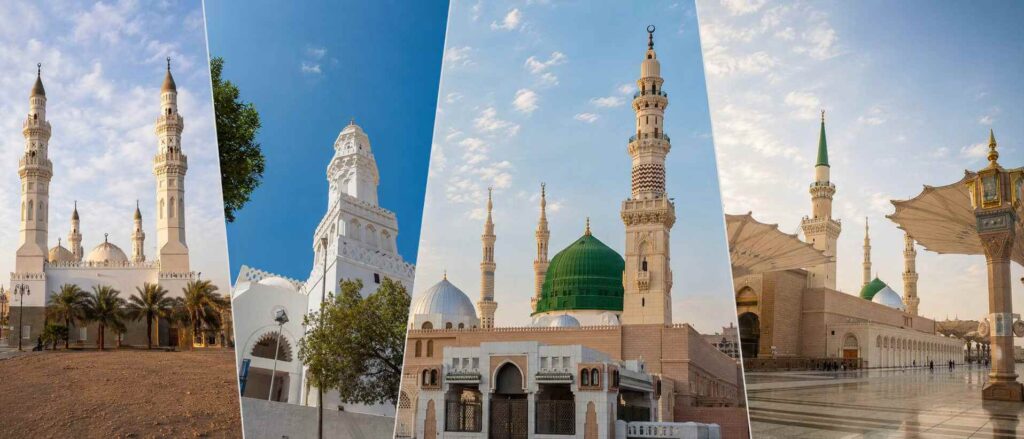
- Masjid an-Nabawi and the Rawdah: the Prophet’s Mosque and the place where he is buried.
- Jannat al-Baqi: the main cemetery of Madinah, beside the Prophet’s Mosque.
- Quba Mosque: the first mosque built in Islam.
- Masjid al-Qiblatayn: the mosque of the two qiblas, where the prayer direction changed.
- Mount Uhud and the Martyrs of Uhud: the site of the Battle of Uhud.
- The Seven Mosques: small mosques at the site of the Battle of the Trench (Khandaq).
Most visitors can see numbers 3 to 6 in about half a day by road. Numbers 1 and 2 are usually reached on foot from hotels near the Prophet’s Mosque.
What is Ziyarat in Madinah?
Ziyarat is the Arabic word for “visit”. In Madinah it means visiting places tied to the Prophet’s life, the Hijrah (his migration from Makkah in 622 CE) and the early Muslim community.
These visits are not part of the rites of Umrah or Hajj, and Umrah and Hajj do not depend on them. Many pilgrims add them to their trip because Madinah is close to Makkah and the sites carry so much history. Scholars differ on some points of practice at graves and historic sites, so a visitor with a question about what to say or do should ask a qualified scholar rather than rely on a travel guide.
Madinah Ziyarat places at a glance
| Place | What it marks | Where it is (approximate) | Usually needs transport? |
|---|---|---|---|
| Masjid an-Nabawi and the Rawdah | The Prophet’s Mosque and his resting place | City centre | No, on foot from nearby hotels |
| Jannat al-Baqi | Main cemetery of Madinah | Southeast of the Prophet’s Mosque | No |
| Quba Mosque | First mosque built in Islam | About 3.5 km south of the Prophet’s Mosque | Yes |
| Masjid al-Qiblatayn | Change of prayer direction toward the Kaaba | Northwest of the city centre, about 1 km from the Seven Mosques | Yes |
| Mount Uhud and the Martyrs of Uhud | Battle of Uhud | North of the Prophet’s Mosque, about 4 km according to Saudipedia | Yes |
| Seven Mosques | Battle of the Trench, 627 CE | Western side of Sela Mountain | Yes |
Distances are approximate. Sources measure them differently, and the road distance is usually longer than the straight line. Travel time depends on traffic and prayer times, so treat any single number as a guide only.
The main Madinah Ziyarat places
Masjid an-Nabawi and the Rawdah
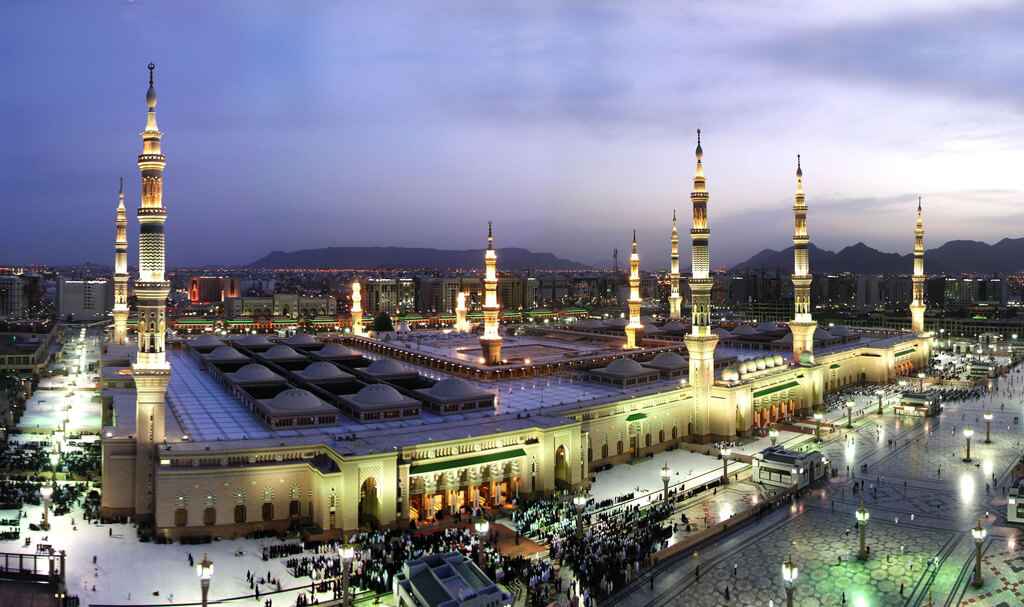
The Prophet’s Mosque was built by the Prophet ﷺ after the Hijrah, and it holds his resting place together with Abu Bakr and Umar, may Allah be pleased with them. The Rawdah is the area between his house and his pulpit, which a hadith in Sahih al-Bukhari and Sahih Muslim describes as a garden from the gardens of Paradise.
The mosque is open around the clock and entry is free, but the Rawdah needs a permit. Wego’s Rawdah guide and Saudi Gazette both describe the same system:
- The permit is booked in the Nusuk app and is free. Anyone who asks you to pay for one is not using the official route.
- Slots fill quickly, so book before you arrive in Madinah.
- Men and women have separate entry times, and the rules and hours are updated from time to time. Read the details inside Nusuk for your date.
Jannat al-Baqi
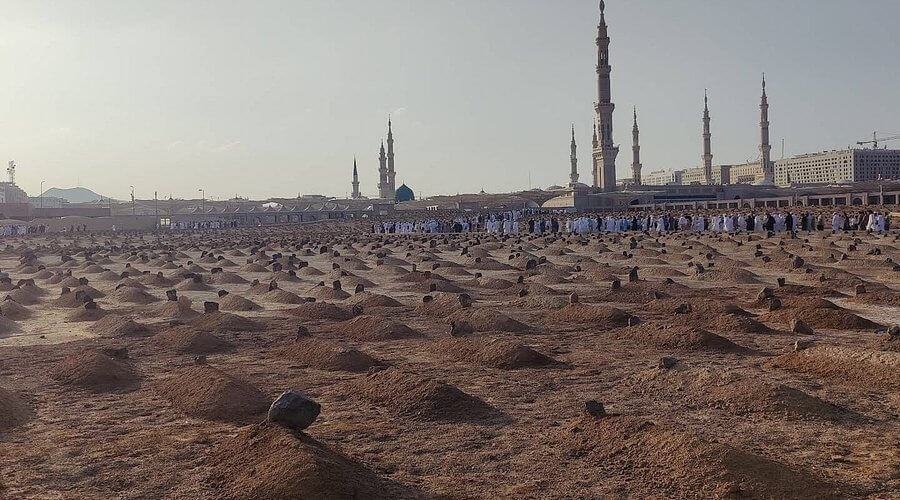
Jannat al-Baqi (Baqi al-Gharqad) is the main cemetery of Madinah, southeast of the Prophet’s Mosque. Many Companions and members of the Prophet’s family are buried there. The graves are simple mounds of earth.
Access is limited. Men can usually enter for short periods after Fajr and after Asr, and women are generally not admitted. Times can change, so follow the staff at the gate. Keep your voice low, do not photograph other visitors, and use the greeting for cemeteries that the Prophet ﷺ taught.
Quba Mosque
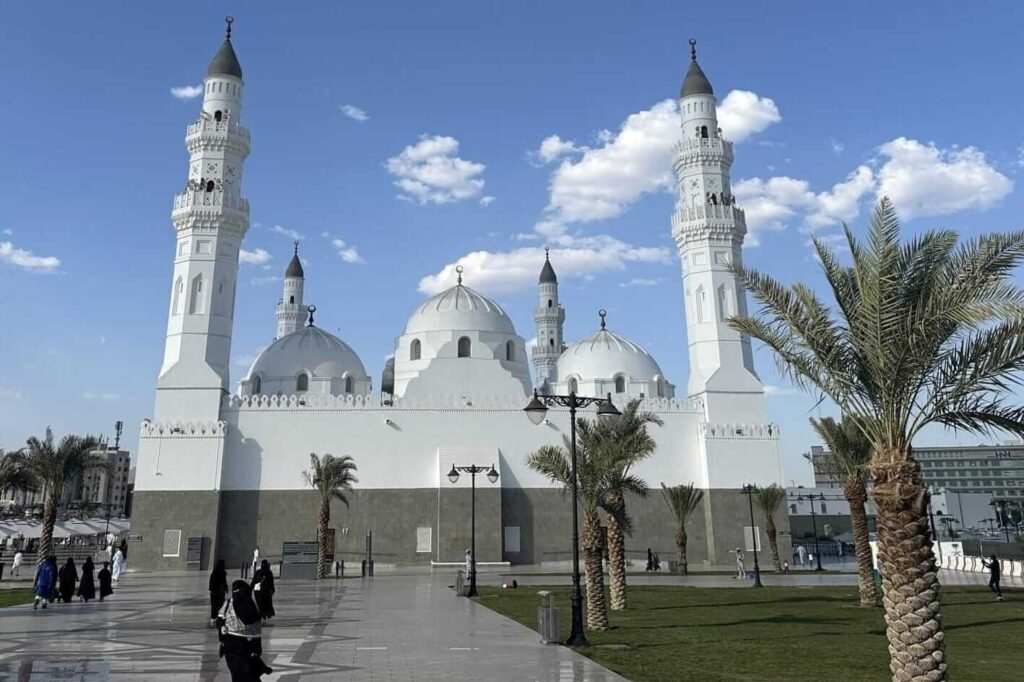
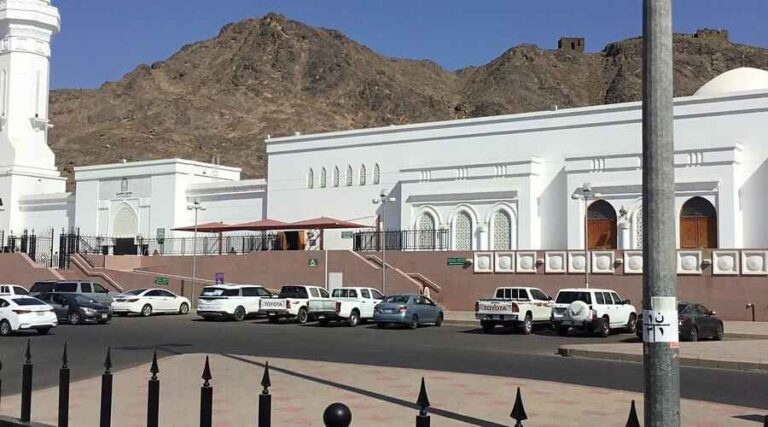
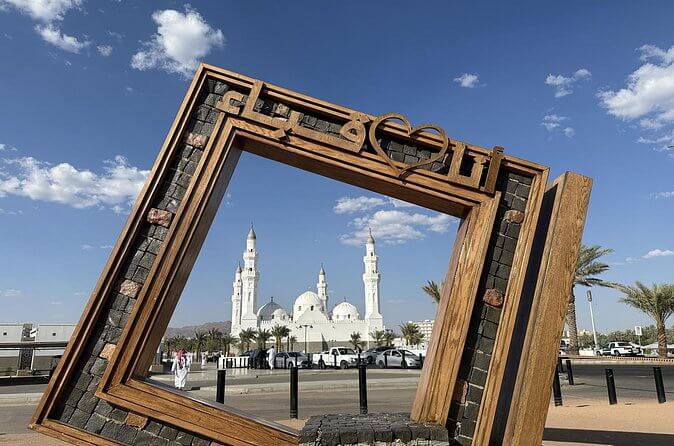
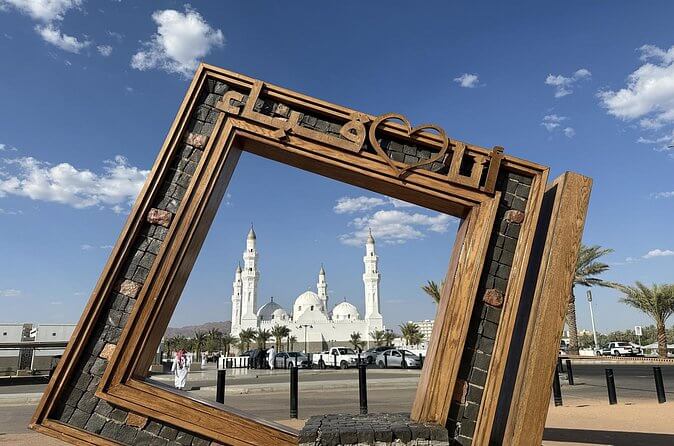
Quba Mosque is the first mosque built in Islam. According to Saudipedia, it stands on the Hijrah road south of Madinah and was founded by the Prophet ﷺ when he arrived. It is about 3.5 km south of the Prophet’s Mosque.
Two hadiths explain why many visitors go. Sahih al-Bukhari reports that the Prophet ﷺ visited Quba every Saturday, on foot or riding. Sunan Ibn Majah reports that whoever purifies himself at home, then comes to Quba and prays there, will have a reward like that of Umrah.
Most visitors make wudu before they leave the hotel and pray two rakahs. It is usually open at all hours, and it can be busy in the early morning and in peak seasons.
Masjid al-Qiblatayn

Masjid al-Qiblatayn means the Mosque of the Two Qiblas. It is named after the moment when revelation told a group of Muslims who were praying toward Jerusalem to turn toward the Kaaba. Saudipedia dates the mosque to 623.
This is usually a short stop. Visitors come to remember the change of direction and to pray.
Mount Uhud and the Martyrs of Uhud
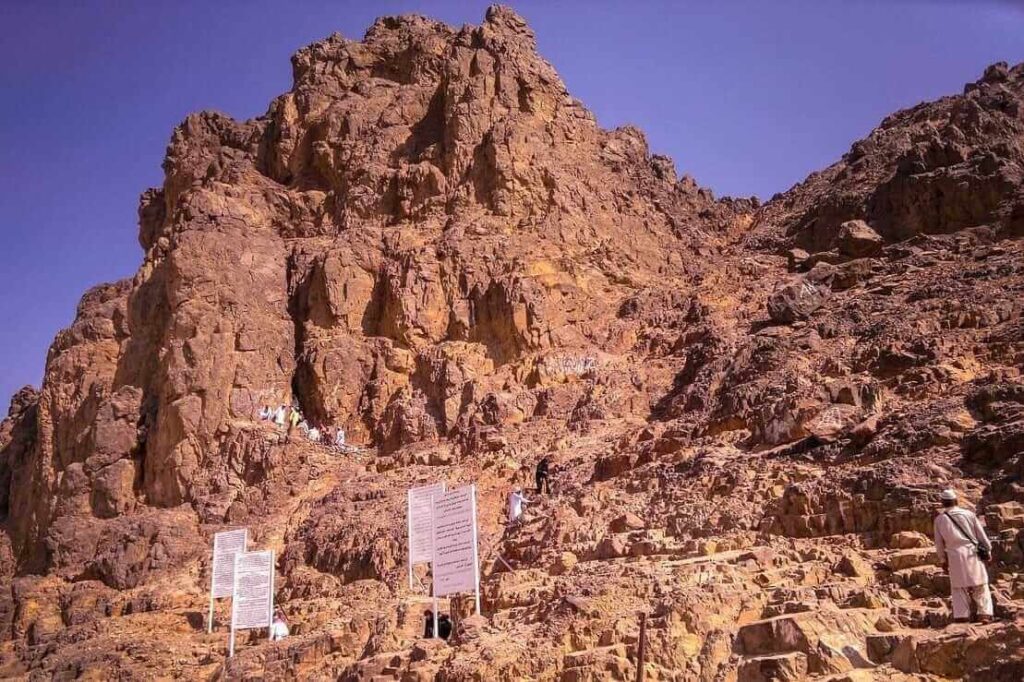
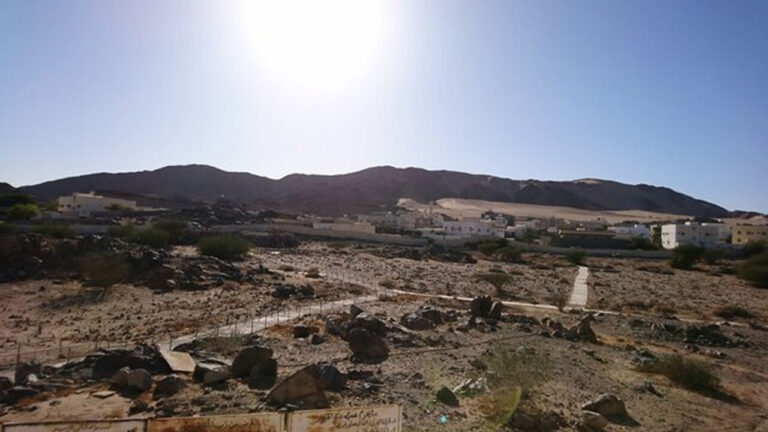
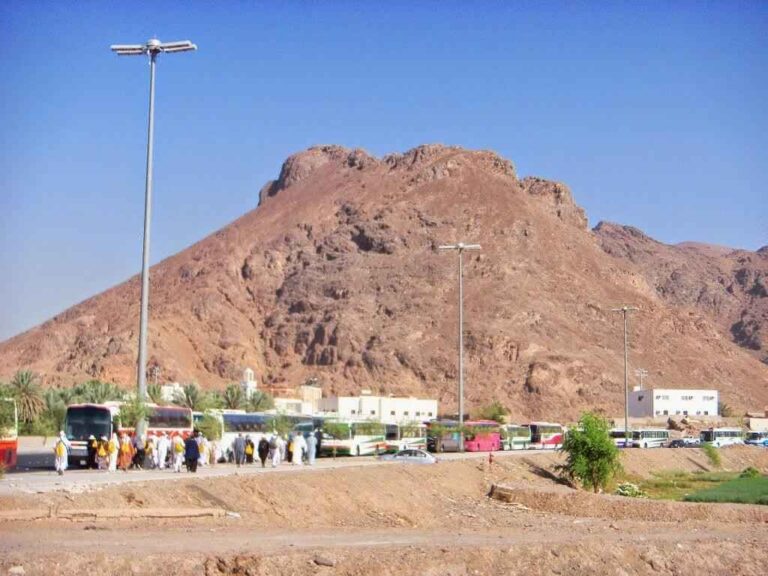
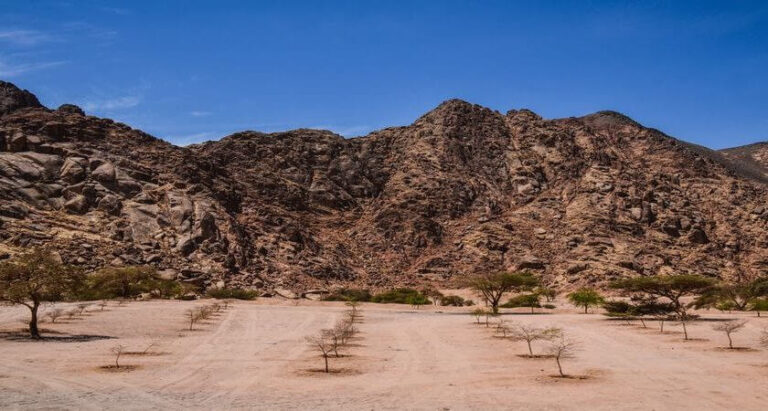
The Battle of Uhud took place in 3 AH (625 CE). Saudipedia describes Uhud as a reddish rocky mountain about 4 km north of the Prophet’s Mosque and about 7 km long. The cemetery of the martyrs lies between Mount Uhud and Jabal al-Rumat. About seventy Companions are buried there, among them Hamza ibn Abd al-Muttalib, may Allah be pleased with them.
Visitors pay their respects and reflect on the battle. Sahih al-Bukhari reports the Prophet ﷺ saying that Uhud is a mountain that loves us and that we love. There is little shade, so bring water and follow any signs or staff directions about where visitors may stand.
The Seven Mosques
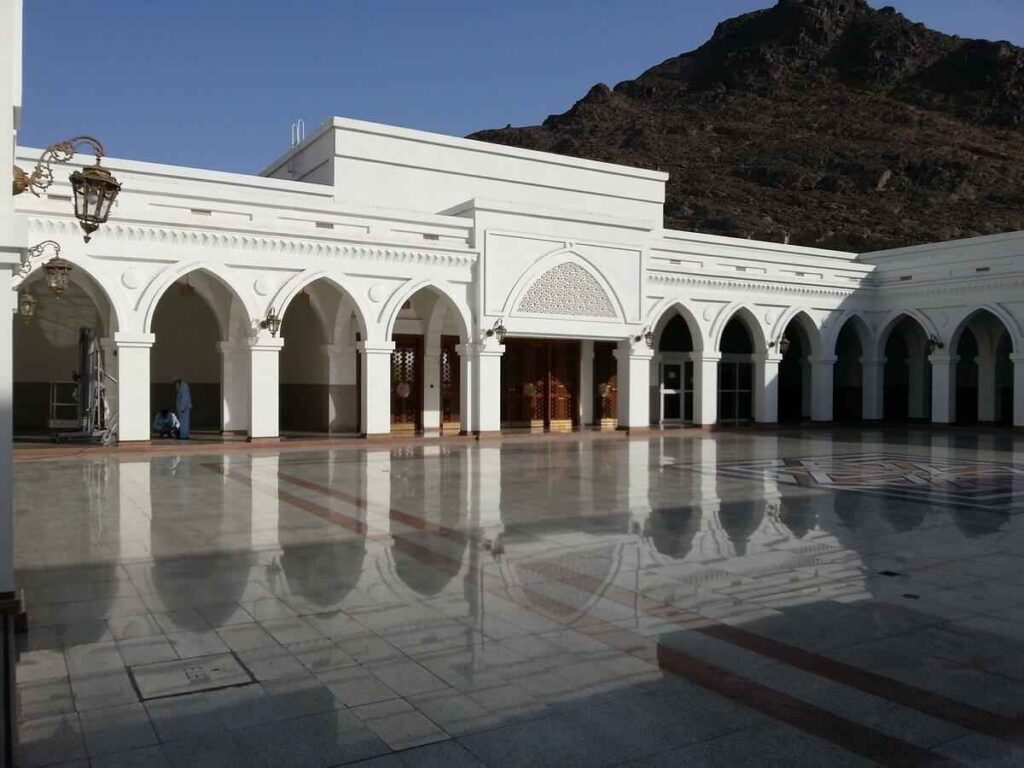
The Seven Mosques stand on the western side of Sela Mountain, where the Battle of the Trench took place in 627 CE. Saudipedia counts six small mosques: Fatimah, Ali ibn Abi Talib, Umar ibn al-Khattab, Abu Bakr al-Siddiq, Salman al-Farsi and al-Fath, the largest. The name “Seven” comes from some historians adding Masjid al-Qiblatayn, which is about 1 km away and is usually visited on the same trip.
The mosques are close together, so the visit is a short walk between small buildings. Some paths slope or have steps, so tell your driver in advance if anyone in your group finds walking difficult.
More Madinah Ziyarat places to add if you have time
| Place | Why visitors go | Note |
|---|---|---|
| Masjid al-Jumuah | Commonly described as where the Prophet ﷺ led the first Friday prayer in Madinah | Often added on the Quba side of the city |
| Masjid al-Ghamamah | Commonly linked to Eid prayers in the Prophet’s time | Close to the Prophet’s Mosque |
| Masjid al-Ijabah | Commonly described as a place where the Prophet ﷺ made supplications | Short stop |
| Well of Uthman (Bir Uthman, also called Rumah) | A well owned by Uthman ibn Affan that supplied water to Madinah for many years | Northwest of the Prophet’s Mosque, per Saudipedia |
| Salman al-Farsi garden | Linked to the story of Salman al-Farsi’s freedom | A date farm, where many visitors buy dates |
| Bir Ghars | A well that traditional accounts link to the Prophet ﷺ | Details vary between sources |
The stories at these smaller places come from traditional accounts, and sources do not always agree on details. If a site’s history matters to you, check it with a trusted scholar or reference.
How to plan a Madinah Ziyarat
How long does Madinah Ziyarat take?
Most visitors see Quba, Qiblatayn, the Seven Mosques and Uhud in about half a day. Add the extra stops, or travel with young children or elderly parents, and a full day or two shorter trips are more comfortable. The exact time depends on traffic, prayer times and how long you stay at each place. Some booking marketplaces list stops of roughly 15 to 25 minutes each, but allow more if you want to pray.
A half-day route that avoids doubling back
- Start at Quba after Fajr and pray two rakahs.
- If you have time, add Masjid al-Jumuah or the Salman al-Farsi garden on the same side of the city.
- Go to Masjid al-Qiblatayn.
- Visit the Seven Mosques, which is about 1 km from Qiblatayn.
- Continue north to Mount Uhud and the martyrs’ cemetery.
- Return to your hotel, or stop at the Prophet’s Mosque for Zuhr.
This order goes from the south round the west to the north, so the car does not cross the city twice. Your driver may change the order to suit traffic and prayer times.
A relaxed two-day plan
- Day 1: Quba, Masjid al-Jumuah, the Salman al-Farsi garden, then Qiblatayn and the Seven Mosques.
- Day 2: Mount Uhud and the Martyrs of Uhud, the Well of Uthman, and any other stops you chose.
- On foot, around prayers: Rawdah (with your permit) and Jannat al-Baqi, when the access times suit you.
Best time to go
After Fajr or after Asr is usually best, because it is cooler and the sites are often less crowded. Madinah is hot in summer, so keep summer visits to the early hours and carry water. November to February is generally more comfortable.
Ramadan, the Hajj season and Fridays can bring heavier traffic around the Prophet’s Mosque, especially near prayer times. Leave extra time and avoid fixed tight schedules.
How to travel between the Ziyarat sites
The sites outside the city centre are spread across Madinah and are not practical to walk between. Visitors usually choose one of four options.
| Option | Good for | Things to weigh |
|---|---|---|
| Private Ziyarat taxi | Families, elderly travellers, groups, limited time, a custom route | Usually costs more than shared transport; book ahead in busy seasons |
| Ride-hailing apps | Single trips between two places | Cars can be hard to find around prayer times; getting a return ride from a remote site may take a wait; the driver may not know the Ziyarat sites |
| Sightseeing bus | First-time visitors who like a set route | Fixed stops and timetable; check current routes before you plan around it |
| Organised group tour | Visitors who want a guide’s narration | Fixed itinerary and timing, set by the group |
Is a private Ziyarat taxi worth it?
A private taxi is most useful when you want to see several sites in one trip, travel with family or elderly relatives, or have limited time. The main advantages are practical:
- Hotel pickup and return. You are collected at the hotel and brought back, so there is no search for a taxi after prayer.
- Your own pace. You decide how long to stay at each place and can pause to pray. Ask the operator to confirm how long the driver will wait.
- A route you can change. You can drop a stop, add one, or split the trip over two days.
- Less walking and waiting. This matters most for children and older travellers in summer heat.
Which vehicle suits which traveller?
| Traveller | Vehicle type to ask about | Why |
|---|---|---|
| Solo traveller or couple | Sedan, for example a Toyota Camry | Simple and comfortable for a small party |
| Small family or an elderly parent | SUV, for example a GMC Yukon | More space and a higher seat, which some passengers find easier to enter |
| Large family or group | Family van or group vehicle, for example a Hyundai Staria or Toyota Hiace | Everyone travels together |
Seats, luggage space and price depend on the vehicle and on availability, so confirm them when you book. If anyone uses a wheelchair or walking frame, say so in advance so the operator can plan the vehicle and the stops.
Madinah Ziyarat Taxi provides private transportation for visitors to the Islamic historical sites of Madinah, with hotel pickup and drop-off, multi-stop trips and flexible itineraries.
Etiquette and practical tips
- Dress modestly and comfortably, and wear shoes that are easy to take off at mosques.
- Keep your voice low and do not push at gates, cemeteries or the Rawdah.
- Do not photograph other visitors. Follow posted signs, and avoid photos in prayer areas.
- Carry water, and use a hat and sunscreen in the heat. Uhud and the Seven Mosques have little shade.
- Do not pay anyone for a Rawdah slot. The permit is free through Nusuk.
- Non-Muslims cannot enter the Haram boundary around the Prophet’s Mosque, but they can visit some other sites. Check current rules before planning.
- Bring any medicines for a long outing, and plan rest stops for children and older travellers.
Booking a private Ziyarat taxi in Madinah
Visitors looking for private transportation can contact Madinah Ziyarat Taxi through WhatsApp at +966 57 4915 372 to ask about availability, vehicle options, pickup arrangements, or a customized Ziyarat itinerary. The website is madinahziyarattaxi.com.
It helps to send these details in your first message:
- Your hotel name and the pickup date and time.
- The number of adults and children.
- Anyone who needs extra help, such as an elderly parent or a wheelchair user.
- The places you want to visit, or whether you want a half-day or full-day trip.
- Any luggage, if you also need an airport transfer.
FAQs
1. What are the main Madinah Ziyarat places?
The main places are Masjid an-Nabawi and the Rawdah, Jannat al-Baqi, Quba Mosque, Masjid al-Qiblatayn, Mount Uhud with the Martyrs of Uhud, and the Seven Mosques. Many visitors also add Masjid al-Jumuah, the Well of Uthman and the Salman al-Farsi garden.
2. Is Ziyarat in Madinah compulsory for Umrah or Hajj?
No. These visits are not part of the rites of Umrah or Hajj, and neither depends on them. Many pilgrims choose to visit because the sites are important in Islamic history.
3. How long does Madinah Ziyarat take?
About half a day covers Quba, Qiblatayn, the Seven Mosques and Uhud for most visitors. Allow a full day, or two shorter trips, if you add more stops or travel with children or elderly relatives. Traffic and prayer times change the total.
4. Which Ziyarat places can I visit on foot?
The Prophet’s Mosque, the Rawdah and Jannat al-Baqi are usually reached on foot from hotels near the mosque. Quba, Qiblatayn, the Seven Mosques and Uhud are spread across the city and are normally reached by road.
5. Do I need a permit to visit the Rawdah?
Yes. Entry to the Rawdah needs a permit booked in the Nusuk app. The permit is free, slots fill quickly, and it is separate from an Umrah permit. Check the app for current times and rules.
6. Can women visit Jannat al-Baqi?
Women are generally not admitted to Jannat al-Baqi, and men can usually enter for short periods after Fajr and Asr. Access rules and times can change, so follow the staff at the gate.
7. Can I visit Quba, Qiblatayn, the Seven Mosques and Uhud in one trip?
Yes. This is the usual half-day route. A south-to-west-to-north order, starting at Quba, avoids crossing the city twice.
8. What is the best time of day for Madinah Ziyarat?
After Fajr or after Asr is usually best, because it is cooler and often less busy. In summer, keep your visits to the early hours and carry water.
9. Can I book a private Ziyarat taxi with hotel pickup and choose my own route?
Yes, you can arrange a private taxi with hotel pickup and drop-off, and ask for the places and order you want. Availability and vehicle options vary, so confirm them with the operator when you book.
10. Is a private taxi suitable for families and elderly travellers?
It often is, because the car collects you at the hotel, waits while you visit and lets you rest between stops. Tell the operator about children, elderly relatives or wheelchair users in advance so they can plan the vehicle and the stops.
11. What vehicle is suitable for a group?
A family van or group vehicle, such as a Hyundai Staria or Toyota Hiace, is the usual choice when everyone wants to travel together. Seat numbers and luggage space differ by vehicle, so confirm them before booking.
12. How do I contact Madinah Ziyarat Taxi?
Message Madinah Ziyarat Taxi on WhatsApp at +966 57 4915 372, or visit madinahziyarattaxi.com. Include your hotel, date, number of passengers and the places you want to see.