Masjid Qiblatain: The Story Behind Madinah’s Mosque of Two Qiblas
Masjid Qiblatain, also written as Masjid al-Qiblatayn or Masjid Al-Qiblatain, is one of the most historically significant mosques in Madinah, Saudi Arabia. Its name means “Mosque of the Two Qiblas,” and it marks the spot where the direction of Muslim prayer changed from Jerusalem to the Kaaba in Makkah. For Umrah and Hajj pilgrims, Muslim travelers, and history-minded visitors, it is one of the most commonly visited Ziyarat sites in the city, usually included alongside Quba Mosque, Mount Uhud, and the Seven Mosques.
This guide explains what happened at Masjid Qiblatain, where it is located, what the mosque looks like today after major renovations, and practical information for visitors planning to include it in a Madinah Ziyarat trip.
What Is Masjid Qiblatain?
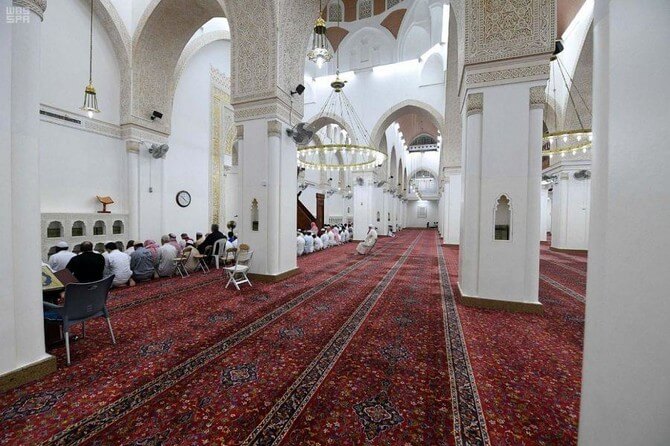
Masjid Qiblatain is a mosque in the northwestern part of Madinah that commemorates a defining event in early Islamic history: the change of the Qibla, the direction Muslims face during prayer. According to Islamic tradition, the Prophet Muhammad ﷺ was leading a congregational prayer at this location when he received divine instruction to turn from facing Jerusalem toward the Kaaba in Makkah. The congregation, praying behind him, turned with him mid-prayer.
The mosque takes its name directly from this event — for a time it contained two mihrabs (prayer niches), one oriented toward Jerusalem and one toward Makkah, reflecting both directions of prayer used during the Prophet’s lifetime. It is counted among the earliest mosques associated with the Prophet ﷺ, alongside Masjid an-Nabawi and Quba Mosque.
The Story of the Qibla Change
In the early period after the Prophet’s migration (Hijrah) to Madinah, Muslims prayed facing Bayt al-Maqdis (Jerusalem), continuing a direction associated with earlier prophetic tradition. This continued for a number of months. According to Islamic historical accounts, the command to change the Qibla toward the Kaaba came during the second year after the Hijrah (2 AH, roughly 624 CE), while a congregation was in prayer at what is now Masjid Qiblatain. On receiving the instruction, the prayer leader turned to face Makkah, and the rest of the congregation followed — an event Muslims regard as a clear expression of guidance and obedience.
It’s worth noting that some details of the narration (such as exactly who called out the change, and whether it was the Prophet ﷺ himself leading that specific prayer) vary slightly between historical sources. This article presents the widely accepted core of the event without asserting disputed specifics as settled fact.
Because of this event, the location has been treated as significant since the earliest years of Islam, and the mosque built there has carried the name “Qiblatain” — the two Qiblas — ever since.
Where Is Masjid Qiblatain and How Far Is It From Masjid an-Nabawi?
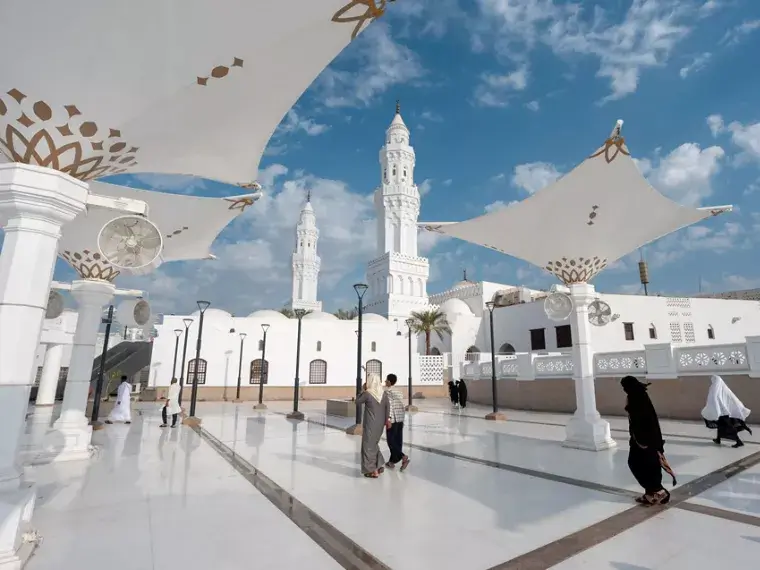
Masjid Qiblatain is located in the northwestern area of Madinah, commonly cited as being roughly 4–5 kilometers from Masjid an-Nabawi (the Prophet’s Mosque). Distances quoted for it vary slightly by source and by the exact route taken, so treat any specific figure as approximate rather than exact.
At the time of the Prophet ﷺ, this area was on the outskirts of Madinah, home to the Banu Salamah community. Over the centuries — and especially with Madinah’s rapid growth in the modern era — the mosque has become fully absorbed into the city’s urban layout, and today it sits inside a developed residential area with clear road access.
The Mosque Today: Renovation and Ongoing Expansion
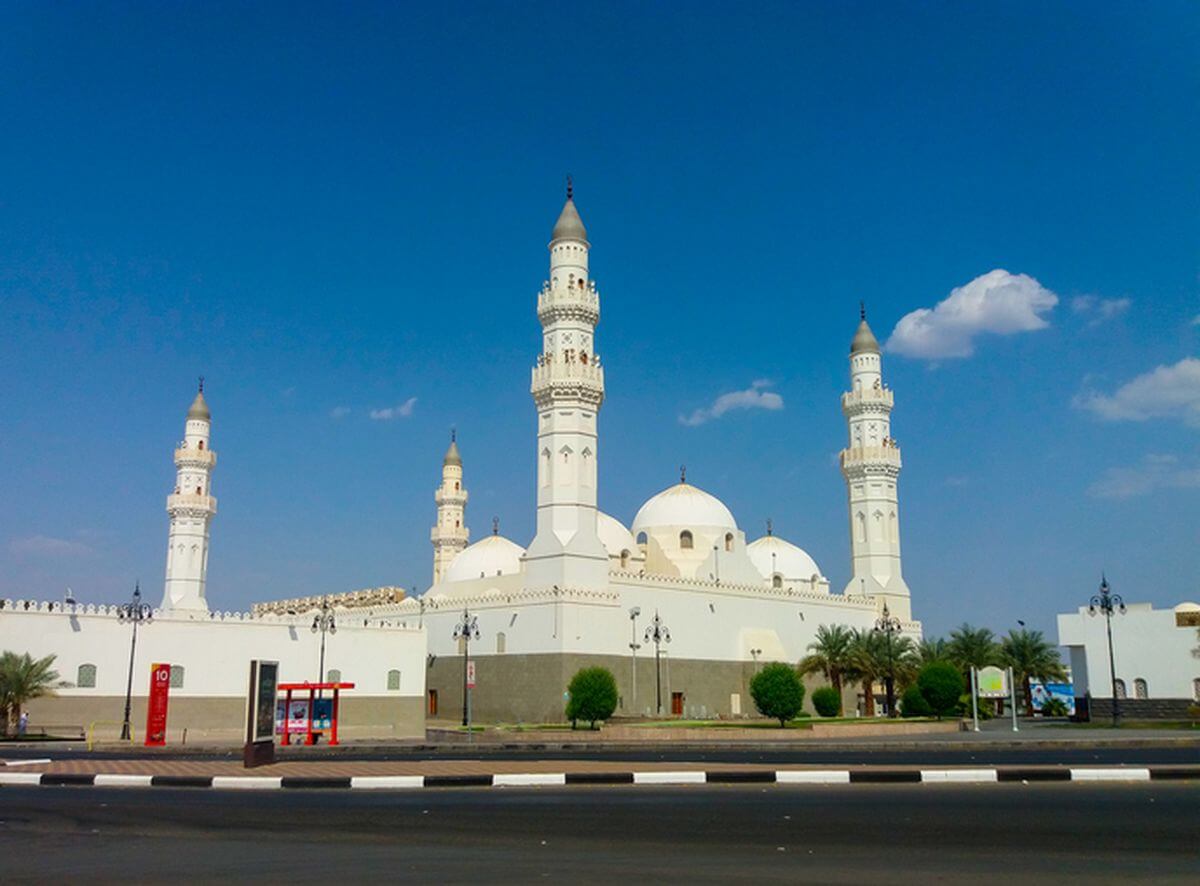
The mosque visitors see today is not the original 7th-century structure. It has been rebuilt and expanded multiple times over the centuries, including renovations attributed to the Ottoman period, and a major modern reconstruction completed under King Fahd bin Abdulaziz in the late 1980s, when the mosque was substantially enlarged with a more modern design featuring twin domes and minarets.
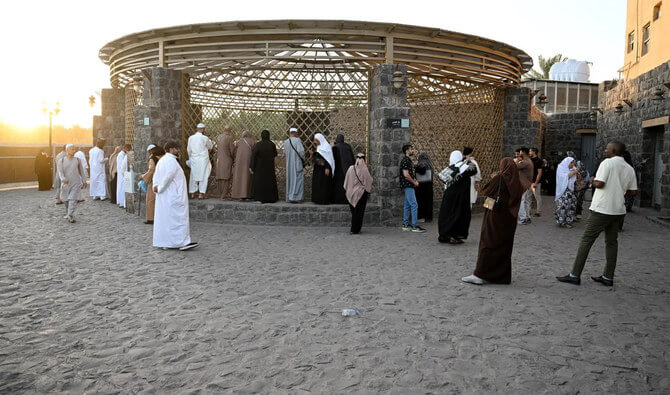
As part of that modern rebuild, the original arrangement of two visible mihrabs was altered: the mihrab facing Makkah remains in use, while the direction that once faced Jerusalem is marked rather than functioning as an active prayer niche. Visitors expecting to see two full, side-by-side prayer niches as in older photographs may find the present-day layout different — this is a result of renovation, not a change in the mosque’s historical significance.
Since then, the site has continued to expand. Saudi authorities have carried out further development phases to increase worshipper capacity, improve accessibility (including elevators and escalators), and add surrounding public spaces. As of the most recent reporting, the broader site — now referred to in official communications as the Qiblatain Mosque and Civilization Center project — spans a large area around the mosque itself, with capacity upgraded to accommodate thousands of worshippers. In October 2025, a royal directive opened Masjid Qiblatain for 24-hour access, allowing visitors to pray there at any time of day. Because expansion work is ongoing, some facilities, access points, or areas of the site may change; visitors should expect a partially active construction environment in parts of the surrounding plaza.
What to Expect When You Visit
Timings and Access
Masjid Qiblatain is open to worshippers throughout the day, and since the 2025 directive, access is available 24 hours. That said, prayer times and any temporary access changes tied to ongoing development work can vary, so it’s sensible to check current conditions locally rather than assume fixed hours.
Dress Code and Etiquette
As with all mosques in Saudi Arabia, modest dress is expected. Men are generally expected to wear long trousers and a shirt with sleeves; women are expected to wear loose clothing that covers the arms and legs, along with a headscarf. Photography is typically fine in outdoor courtyards, but visitors should avoid photographing worshippers inside the prayer hall and should keep phones silent and voices low out of respect for people praying.
Facilities
The site includes separate prayer areas for men and women, ablution (wudu) facilities, and — as part of recent development phases — improved accessibility features such as ramps, elevators, and escalators, along with shaded outdoor courtyards. Visitors with mobility considerations should still confirm current accessibility on-site, since large-scale construction projects can temporarily affect specific access points.
Best Time to Visit Masjid Qiblatain
Early morning and the period after Dhuhr (midday) prayer tend to be quieter, giving visitors more space to pray and reflect without heavy crowds. The mosque naturally sees more visitors during Ramadan and the peak Umrah and Hajj seasons, when Ziyarat sites across Madinah are busier in general. Summer afternoons can be hot, so travelers — especially families with children or elderly visitors — may prefer cooler morning or evening hours for outdoor courtyard time.
Combining Masjid Qiblatain With Other Ziyarat Sites
Masjid Qiblatain is almost always visited as part of a broader Madinah Ziyarat route rather than as a single standalone stop, since it sits within reasonable distance of several other historic sites:
- Masjid an-Nabawi — roughly 4–5 km away, the natural starting or ending point for most Ziyarat trips.
- Quba Mosque — commonly cited as several kilometers from Qiblatain (estimates vary by source, generally in the 4–10 km range depending on the exact route), recognized as the first mosque built in Islam.
- Mount Uhud and the martyrs’ graves — roughly 6–7 km away, the site associated with the Battle of Uhud.
- The Seven Mosques (Sab’ah Masajid) — a cluster of small historic mosques associated with the Battle of the Trench, located close to Qiblatain and sometimes counted alongside it in local tradition.
Because these sites are spread across different parts of the city and are not realistically walkable one after another, most visitors — particularly families, elderly travelers, and groups with limited time — rely on some form of transportation to move between them efficiently.
Getting to Masjid Qiblatain: Transportation Options
Private Ziyarat Taxi
A private taxi or private driver is the most flexible way to combine Masjid Qiblatain with other Ziyarat sites in a single outing. It allows visitors to set their own pace, stop for prayer or photos without a fixed schedule, and travel directly from a hotel rather than arranging separate transfers for each site.
This is particularly useful for:
- Families with children, who benefit from door-to-door pickup instead of walking long distances between stops.
- Elderly travelers, for whom a private vehicle reduces walking and waiting time compared to shared transport.
- Groups, who can plan a custom multi-stop route (for example, Qiblatain, Quba, Uhud, and the Seven Mosques) in one half-day or full-day trip rather than booking multiple separate rides.
Visitors looking for private transportation can contact Madinah Ziyarat Taxi through WhatsApp at +966 57 4915 372 to ask about hotel pickup, vehicle options, and a customized Ziyarat itinerary that includes Masjid Qiblatain alongside other historic sites.
Public Bus and Hop-On Hop-Off Options
Madinah also has scheduled bus and hop-on hop-off tourist bus services that stop at or near major Ziyarat sites, including Masjid Qiblatain. These can work well for solo travelers or those without time constraints, though they run on fixed schedules and routes, which can mean waiting between stops or less flexibility to linger at a particular site.
Planning Your Madinah Ziyarat Trip
A typical approach many visitors take is to treat Masjid Qiblatain as one stop within a half-day or full-day Ziyarat route rather than a separate trip on its own. A half-day route often focuses on the closest and most essential sites, while a full-day route allows time to also reach Quba Mosque, Mount Uhud, and the Seven Mosques at a more relaxed pace, with breaks for prayer and rest. Exact durations and the number of sites that fit comfortably into a trip depend on traffic, prayer timings, group size, and how long each visitor wants to spend at each stop — so it’s worth discussing your priorities with your driver or tour provider in advance rather than assuming a fixed schedule.
For visitors staying near Masjid an-Nabawi, arranging hotel pickup keeps the trip simple: a private vehicle can collect the group directly from the hotel, visit Masjid Qiblatain and nearby sites in a logical order, and return to the same hotel at the end.
FAQs
What is Masjid Qiblatain?
Masjid Qiblatain is a historic mosque in Madinah known as the site where, according to Islamic tradition, the direction of prayer (Qibla) changed from Jerusalem to the Kaaba in Makkah during the Prophet Muhammad’s ﷺ lifetime.
Why is it called the “Mosque of the Two Qiblas”?
Because it once contained two mihrabs (prayer niches) — one facing Jerusalem and one facing Makkah — reflecting the two directions of prayer used before and after the Qibla change.
When did the Qibla change take place?
Islamic historical accounts place the event in the second year after the Hijrah (2 AH), corresponding to around 624 CE.
Where is Masjid Qiblatain located?
It is in the northwestern part of Madinah, commonly cited as roughly 4–5 kilometers from Masjid an-Nabawi, though exact distances vary slightly depending on the source and route.
Is Masjid Qiblatain open 24 hours?
Following a 2025 royal directive, the mosque has 24-hour access for worshippers. Access arrangements can still be affected temporarily by ongoing site development, so it’s worth checking current conditions locally.
Does the mosque still have two mihrabs today?
Not in the original form. Modern renovation kept the mihrab facing Makkah as the active prayer niche, while the direction that once faced Jerusalem is marked rather than used as a functioning mihrab.
How long does a visit to Masjid Qiblatain usually take?
This depends on prayer timings, crowd levels, and how long a visitor chooses to spend in reflection or prayer. Most visitors treat it as one stop within a longer Ziyarat route rather than a lengthy standalone visit.
Can Masjid Qiblatain be visited along with Quba Mosque and Mount Uhud in one trip?
Yes, it’s commonly combined with Quba Mosque, Mount Uhud, and the Seven Mosques in a half-day or full-day Ziyarat itinerary, since the sites are spread across different parts of the city.
Is private transportation necessary to visit Masjid Qiblatain?
It isn’t strictly necessary – public buses and hop-on hop-off services also reach the area — but private transportation offers more flexibility for combining several sites in one trip, which is especially useful for families, elderly travelers, and groups.
Can a private taxi pick up passengers from their hotel for a Ziyarat trip that includes Masjid Qiblatain?
Yes. Private Ziyarat taxi services typically offer hotel pickup and drop-off, and Madinah Ziyarat Taxi can be contacted via WhatsApp at +966 57 4915 372 to arrange this.
Is there a dress code for visiting Masjid Qiblatain?
Yes, modest dress is expected, as at all mosques in Saudi Arabia — long trousers and sleeved shirts for men, and loose clothing covering the arms and legs with a headscarf for women.
Is Masjid Qiblatain the same as Quba Mosque?
No. Quba Mosque is recognized as the first mosque built in Islam, while Masjid Qiblatain is specifically associated with the change of the Qibla. They are separate sites, though often visited on the same trip.
Is photography allowed inside Masjid Qiblatain?
Photography is generally permitted in outdoor courtyard areas, but visitors should avoid photographing people during prayer inside the prayer hall out of respect.
What should I know before visiting if I’m traveling with elderly family members?
Recent development work has added accessibility features like ramps, elevators, and escalators, but since expansion is ongoing, it’s a good idea to confirm current accessibility and to consider private transport to minimize walking between the parking/drop-off area and the mosque entrance.