Jannat al-Baqi: History, Significance, and a Visitor’s Guide
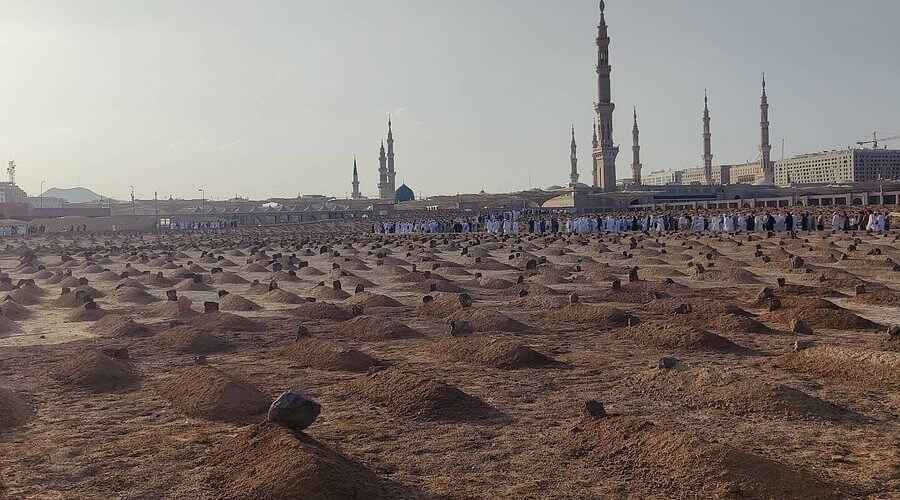
Just beside Al-Masjid an-Nabawi in Madinah lies Jannat al-Baqi, the city’s oldest and most significant Islamic cemetery. For many visitors on Umrah or Hajj, standing near its walls is one of the most quietly moving parts of a trip to Madinah — a simple field of sand mounds that holds an extraordinary depth of history.
This guide explains what Jannat al-Baqi is, why it matters, who is buried there, and what to expect if you plan to visit, along with practical notes on fitting it into a wider Madinah Ziyarat itinerary.
What Is Jannat al-Baqi?
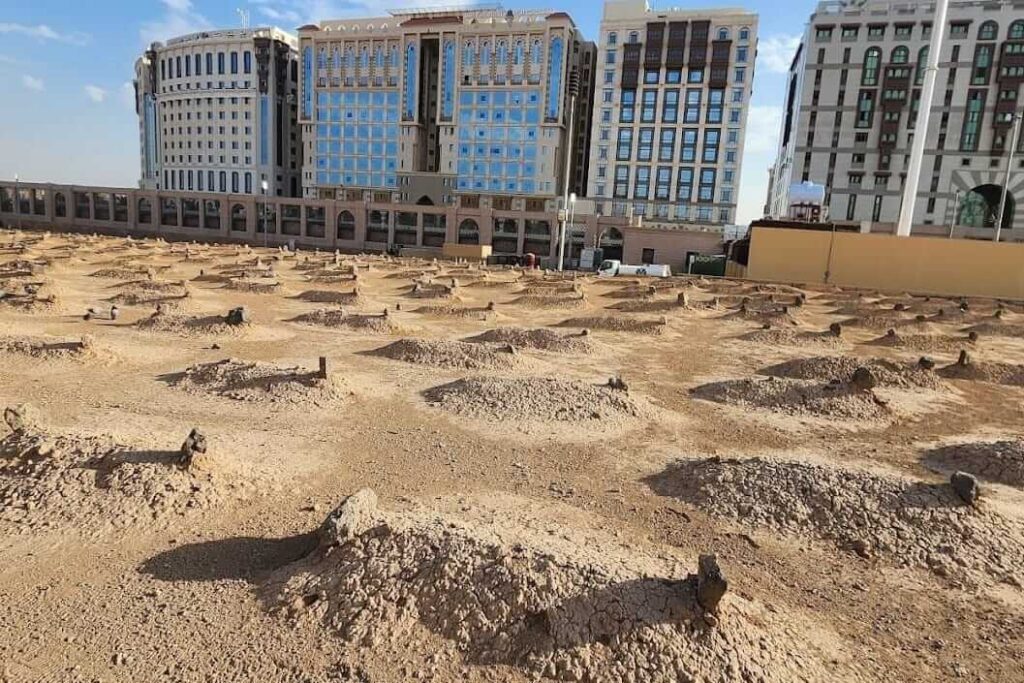
Jannat al-Baqi — also written as Jannatul Baqi, or referred to by its older name Baqi al-Gharqad — is the main historic cemetery of Madinah, located immediately next to Al-Masjid an-Nabawi. The name comes from “baqi,” a term for land where trees or shrubs grow, and “al-Gharqad,” a type of thorny boxthorn tree that once covered the area before it was cleared for burial use.
It is considered the first cemetery designated for the Muslim community in Madinah, and it became the resting place of a remarkable number of people from the earliest generation of Islam: family members of the Prophet Muhammad ﷺ, his companions (the Sahaba), and generations of scholars and righteous believers who came after them.
The History of Jannat al-Baqi
How the Cemetery Began
According to historical accounts, the land that became Jannat al-Baqi was set aside as a burial ground shortly after the Prophet Muhammad’s ﷺ migration (Hijrah) to Madinah in 622 CE. As’ad ibn Zurarah, one of the Ansar (the Muslims of Madinah who supported the Prophet ﷺ after the Hijrah), is commonly identified in historical sources as among the first people buried there. The cemetery’s significance grew further after the burial of Ibrahim, the Prophet’s ﷺ infant son.
Growth of Al-Baqi in Early Islamic History
As Madinah grew, so did Jannat al-Baqi. Over the following decades and centuries, it became the chosen resting place for a large number of the Prophet’s ﷺ closest family members and companions, including his daughter Fatimah al-Zahra, his grandson Hasan ibn Ali, several of his wives, and Uthman ibn Affan, the third Caliph of Islam. Because of this, Jannat al-Baqi holds a level of historical and spiritual weight that few other cemeteries in the Muslim world share.
The Demolition of the Domes and Shrines
For centuries, some graves within Jannat al-Baqi were marked with domes and small structures identifying notable figures buried there. Historical sources describe these structures being removed on more than one occasion, most notably in 1925, in line with a religious interpretation that considers building structures over graves to be inappropriate and a potential path toward excessive veneration of the deceased.
This event remains a subject of deep feeling for many Muslims around the world, and it is discussed differently depending on theological perspective. In its current form, the official stance on the site’s simplicity has not changed. This article presents the historical event as it is documented, without taking a position in the ongoing religious debate around it — visitors researching this topic further are encouraged to consult established Islamic and historical references directly.
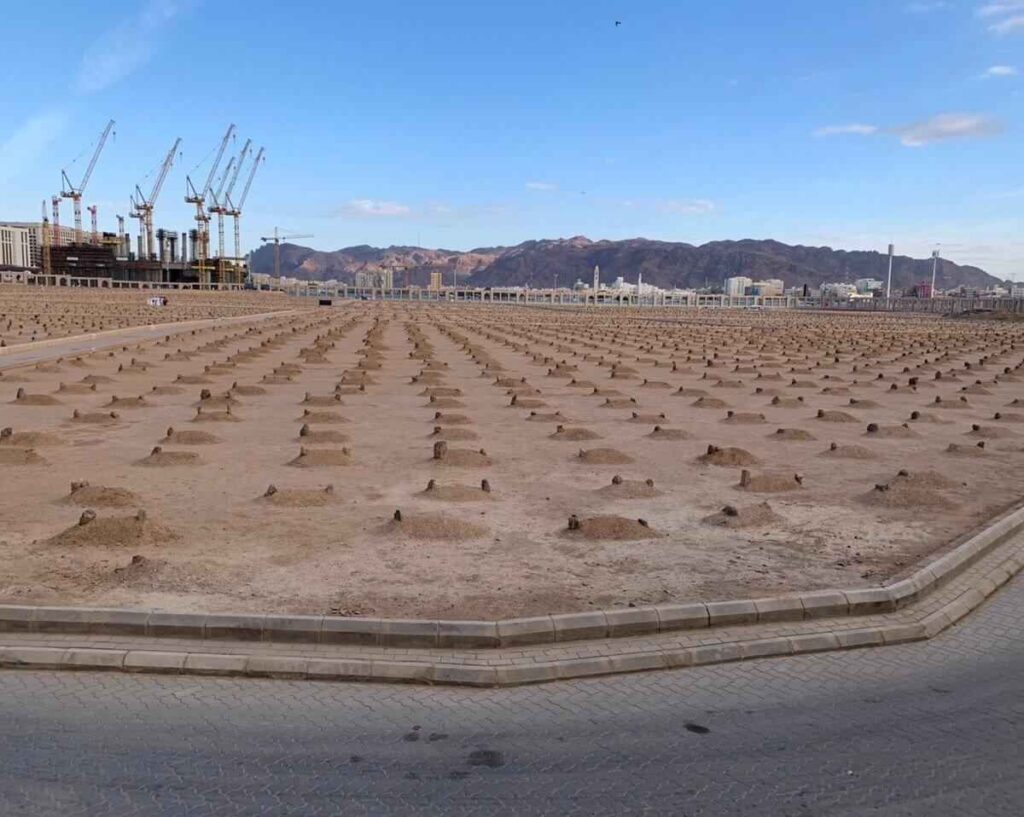
Today, the cemetery consists of open ground with plain, unmarked mounds rather than named tombs or monuments, reflecting the principle — held across much of Islamic tradition — that all people are equal in death regardless of status.
Who Is Buried in Jannat al-Baqi?
Jannat al-Baqi is the resting place of a very large number of people connected to the earliest history of Islam, commonly cited to include:
- Several of the Prophet Muhammad’s ﷺ wives
- His daughters, including Fatimah al-Zahra
- His grandson, Hasan ibn Ali
- Uthman ibn Affan, the third Caliph
- Numerous companions (Sahaba) of the Prophet ﷺ
- Generations of early scholars and righteous Muslims
Because the graves are unmarked, individual burial locations within the cemetery are generally not identifiable to visitors today. What is known comes primarily from historical texts rather than physical markers on site.
Why Jannat al-Baqi Matters to Visitors Today
For Muslim visitors, Jannat al-Baqi is not simply a historical site — it is a place associated with reflection, remembrance, and dua (supplication). Historical narrations describe the Prophet Muhammad ﷺ visiting the cemetery, greeting those buried there, and praying for their forgiveness, a practice that continues to shape how many pilgrims approach the site today: quietly, and with a sense of humility rather than as a typical tourist stop.
Given the number of early companions and family members of the Prophet ﷺ buried here, many visitors describe a visit to Jannat al-Baqi as one of the most reflective moments of their time in Madinah — a reminder of how much of early Islamic history took root in this city.
Location: Where Is Jannat al-Baqi?
Jannat al-Baqi sits directly beside Al-Masjid an-Nabawi, on its eastern side, separated from the mosque complex by an open plaza. Because of this location, it is within easy walking distance for anyone staying at a hotel near the Prophet’s Mosque, and it is typically one of the first Ziyarat sites visitors see, simply because of how close it is to the mosque itself.
Visiting Jannat al-Baqi: What to Know Before You Go
Entry Rules and Access
Jannat al-Baqi is generally understood to be open to the public at limited times, commonly around the periods after Fajr and Asr prayers, though exact timing can vary and should be confirmed on the ground or through official Madinah authorities, since access is managed by local regulations that can change.
Entry inside the cemetery itself has generally been restricted to men, while women are typically able to view the site and offer dua from just outside its boundary. This is a longstanding local practice, and visitors — especially women planning a visit — should confirm current rules on arrival rather than relying solely on information found online, as access policies can be adjusted at any time by local authorities.
Etiquette for Visitors
Whether entering the cemetery or observing from outside, visitors are generally expected to:
- Keep a calm, quiet, and respectful demeanor
- Avoid loud conversation
- Avoid photography inside the cemetery, which is commonly discouraged or restricted
- Offer general dua and salutations rather than directing supplication toward specific graves, in keeping with mainstream Islamic teaching on grave etiquette
- Dress modestly, consistent with general expectations near the Prophet’s Mosque
Best Times to Visit
Because Jannat al-Baqi is only open during specific windows, timing a visit around the Fajr or Asr prayer periods tends to work well for most travelers, and it also avoids the strongest heat of the day during the summer months. During Ramadan and the Hajj season, the area around Masjid an-Nabawi becomes significantly busier, so visitors planning a trip during these periods should allow extra time and expect larger crowds near the cemetery’s entrance.
Planning Jannat al-Baqi Into Your Madinah Ziyarat Trip
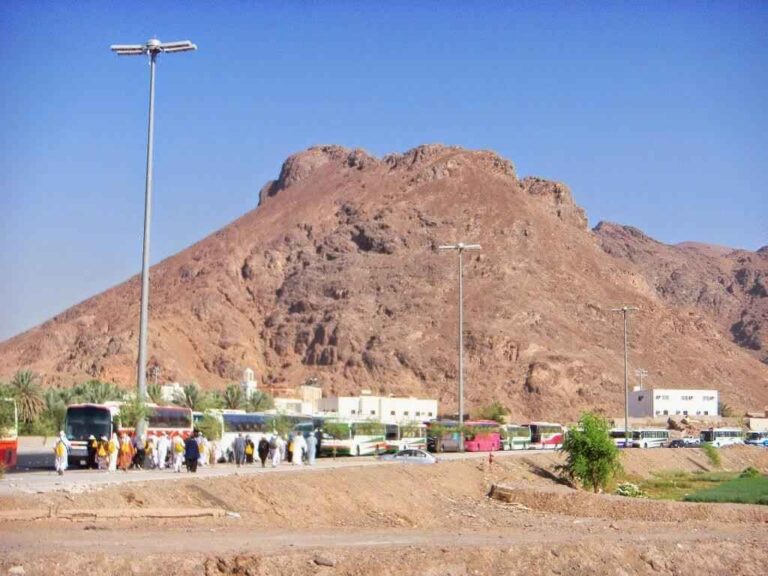
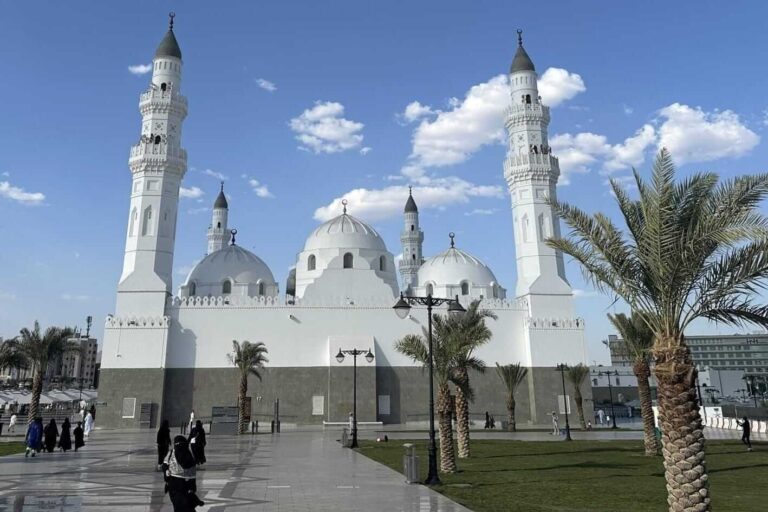
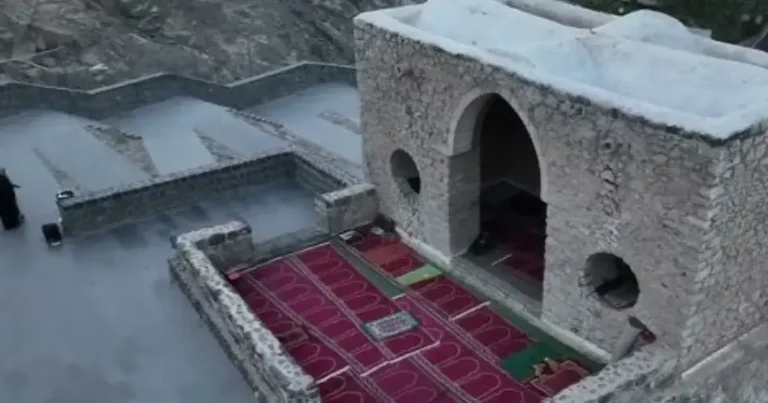
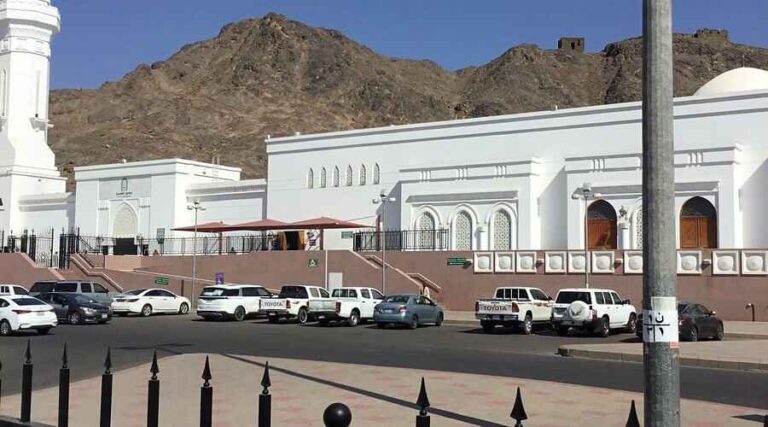
Most visitors combine a stop at Jannat al-Baqi with other historical sites in and around Madinah, such as Quba Mosque, Qiblatain Mosque, and the area around Mount Uhud. Because Jannat al-Baqi itself is immediately next to Masjid an-Nabawi, it’s usually visited on foot rather than by vehicle — but for the wider Ziyarat route that follows, transportation becomes a more practical consideration.
This is where private transportation can genuinely simplify the day. Rather than coordinating separate trips or relying on public transport schedules, a private Ziyarat taxi allows visitors to move between multiple sites at their own pace, with the flexibility to spend more time at locations that matter most to them. This tends to be particularly useful for families with children, elderly travelers who may need a more comfortable pace, and groups who want to stay together throughout the day rather than split across different transport options.
Visitors looking for private transportation for their Madinah Ziyarat can contact Madinah Ziyarat Taxi through WhatsApp at +966 57 4915 372 to ask about hotel pickup, vehicle options, and a customized itinerary that includes Jannat al-Baqi alongside other historical sites.
Getting to Jannat al-Baqi and Other Ziyarat Sites
If you’re staying at a hotel within the central Madinah area near the Prophet’s Mosque, Jannat al-Baqi is typically reachable on foot. For a fuller Ziyarat route that includes sites further from the mosque — such as Quba Mosque or the Uhud area — many visitors prefer arranging private transportation in advance, particularly if traveling as a family or group, so the day can be planned around prayer times and personal pace rather than fixed tour schedules.
FAQs
What is Jannat al-Baqi?
Jannat al-Baqi is the main historic cemetery of Madinah, located directly beside Al-Masjid an-Nabawi. It is the resting place of many of the Prophet Muhammad’s ﷺ family members, companions, and early Muslims.
Where is Jannat al-Baqi located?
It sits on the eastern side of Al-Masjid an-Nabawi in central Madinah, within walking distance for most visitors staying near the Prophet’s Mosque.
Who is buried in Jannat al-Baqi?
Historical sources commonly cite several of the Prophet’s ﷺ wives, his daughter Fatimah al-Zahra, his grandson Hasan ibn Ali, the third Caliph Uthman ibn Affan, and a large number of companions and early scholars.
Can women enter Jannat al-Baqi?
Entry inside the cemetery has generally been limited to men, with women typically able to view the site from outside its boundary. Rules can change, so it’s best to confirm current access on arrival.
What are the visiting hours for Jannat al-Baqi?
The cemetery is generally understood to open for limited periods, often around Fajr and Asr prayer times, though this can vary and should be confirmed locally.
Why are the graves in Jannat al-Baqi unmarked?
The graves are kept simple and largely unmarked in line with the Islamic teaching that all people are equal in death. Structures that once marked some graves were removed, most notably in 1925.
Is photography allowed inside Jannat al-Baqi?
Photography is generally discouraged or restricted at the site out of respect for its solemn nature. Visitors should follow any posted guidance on arrival.
How long does a visit to Jannat al-Baqi take?
Most visitors spend a short period at the site, often as part of a broader walk around the Masjid an-Nabawi area rather than a standalone, lengthy visit.
Is Jannat al-Baqi close to other Ziyarat sites in Madinah?
It is immediately next to the Prophet’s Mosque, but other well-known Ziyarat sites such as Quba Mosque and the Uhud area are further away and typically require transportation.
Can I visit Jannat al-Baqi and other Ziyarat sites in the same trip?
Yes. Many visitors combine a stop at Jannat al-Baqi, which is walkable from the mosque, with a wider Ziyarat route to other historical sites arranged separately, often using private transportation for the longer stops.
Is private transportation useful for visiting Madinah’s Ziyarat sites as a family?
Private transportation can be helpful for families and groups because it allows for a more flexible pace and avoids relying on public transport schedules between sites.
Can a Ziyarat taxi pick up passengers directly from their hotel?
Hotel pickup is a service commonly offered by private Ziyarat transportation providers in Madinah. Visitors should confirm pickup arrangements directly with the provider they choose.
How do I contact Madinah Ziyarat Taxi to ask about a Ziyarat itinerary?
Visitors can reach Madinah Ziyarat Taxi via WhatsApp at +966 57 4915 372 to ask about vehicle options, pickup arrangements, and customized itineraries.