Where to Eat in Madinah After Ziyarat: Best Local & Traditional Restaurants Guide
After a morning of Ziyarat – moving between Masjid an-Nabawi, Quba, Mount Uhud, or the Seven Mosques — most visitors want one simple thing: a good, honest meal. Madinah’s food scene is built around exactly that. Traditional Saudi and Yemeni cooking here is hearty, shared, and unpretentious, and it pairs naturally with a day spent walking between sacred and historical sites.
This guide is written for pilgrims, families, and visitors who want practical, local knowledge — not a generic “best restaurants” list. It covers the dishes worth trying, the areas known for good food near Masjid an-Nabawi, where to experience Madinah’s famous dates, and how to plan a meal stop around your Ziyarat day.
Best Areas to Eat Near Masjid an-Nabawi
For visitors short on time, here’s the short version:
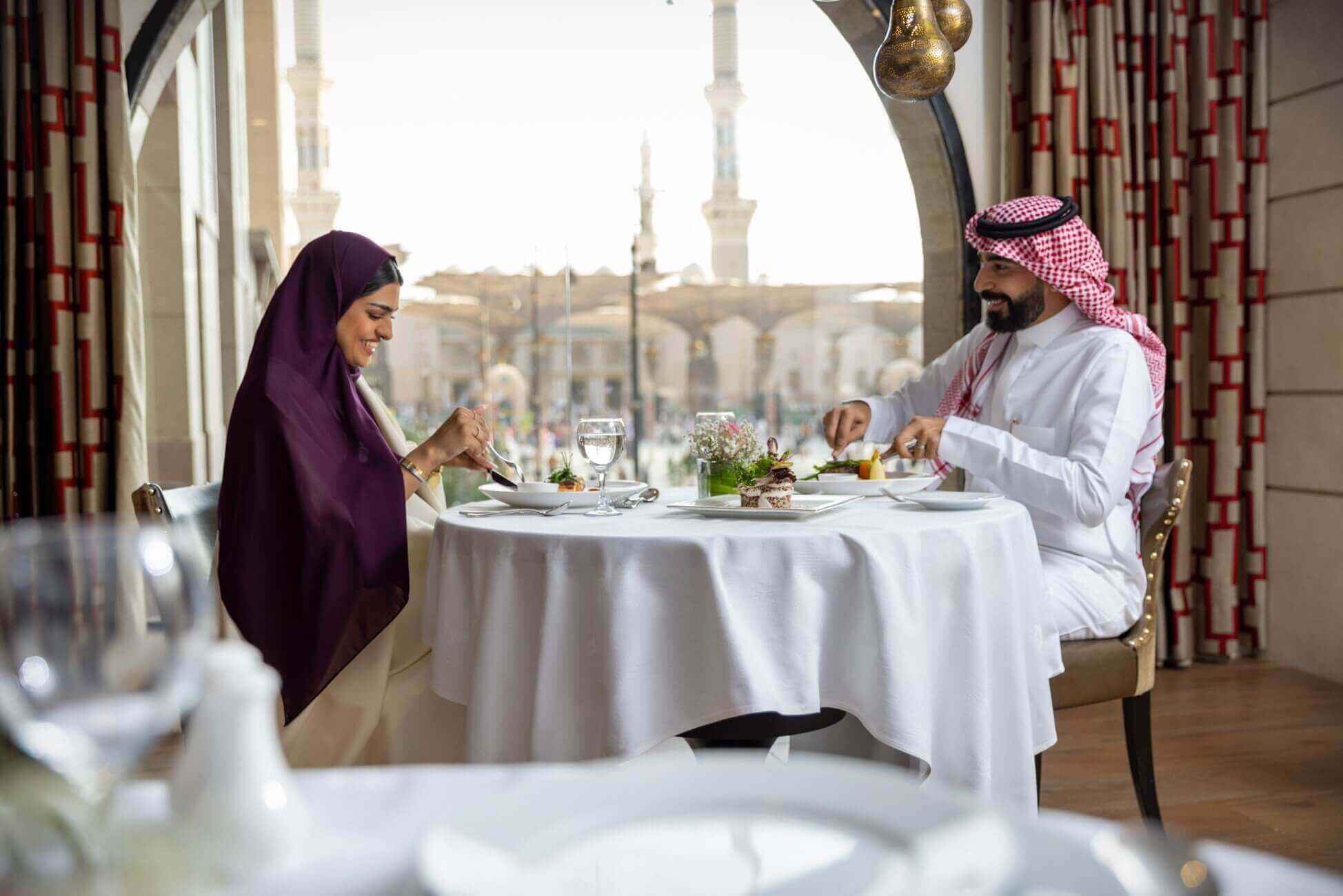
- Inside the hotel district around Masjid an-Nabawi, you’ll find quick shawarma and sandwich counters, a handful of well-known Kabsa and Mandi restaurants, and international fast-food chains — convenient, but often busy right after prayer times.
- A short drive away from the Haram, in the wider central Madinah area, sit some of the most highly regarded Mandi, Bukhari, and Yemeni breakfast spots, generally with more space, calmer seating, and better value.
- Near Quba, Qiblatain, and Khandaq, several local favorites for shawarma, Bukhari rice, and shawaya (grilled chicken) sit conveniently close to those Ziyarat sites, so a meal can be worked naturally into a Ziyarat route.
- The Central Date Market (Souq Al Tumor), close to the Haram, is the place to experience Madinah’s Ajwa, Safawi, and Sukkari dates — worth a stop on its own, or combined with a meal nearby.
Ask your taxi driver to drop you at one of these areas after your tour — a private vehicle makes it far easier to reach the better-value spots slightly outside the immediate hotel zone, rather than settling for the closest option out of convenience.
Why Food Is Part of the Madinah Ziyarat Experience
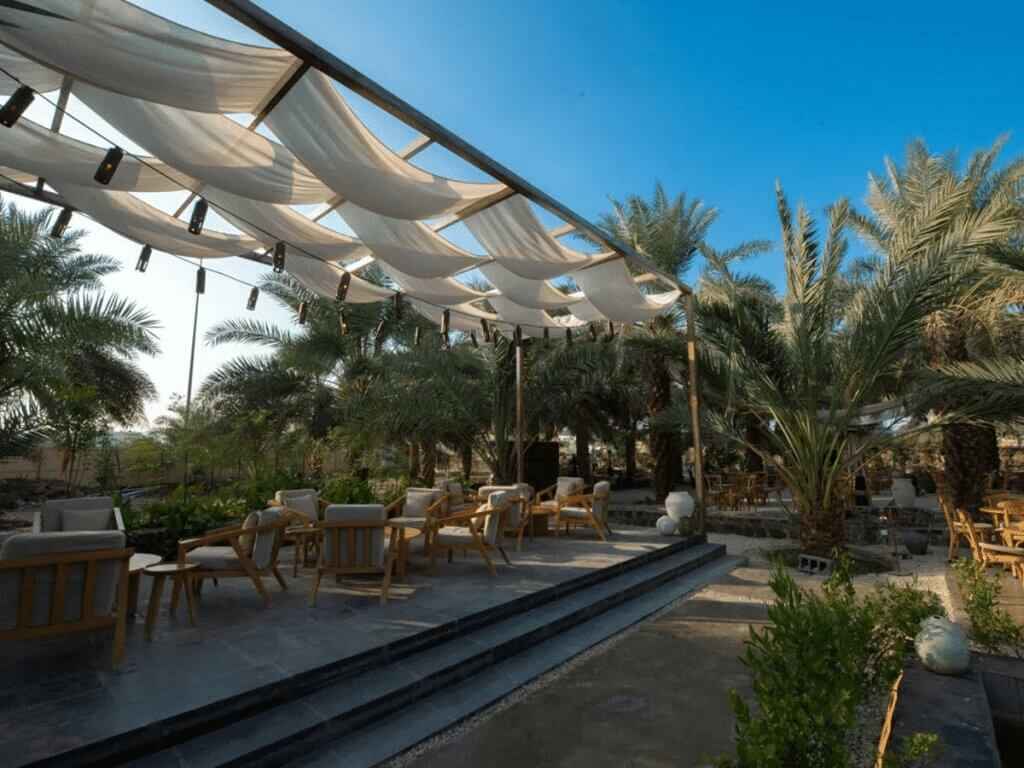
Ziyarat in Madinah often means several hours of walking and standing – inside Masjid an-Nabawi, at Jannat al-Baqi, around Quba, or at the base of Mount Uhud. A proper meal afterward isn’t just refreshment; for many visitors it’s also a chance to experience local culture. Saudi and Yemeni meals are typically shared: a large platter of rice and meat placed in the center of the table, eaten together with family or fellow travelers. For first-time visitors, this communal style of eating is often remembered as fondly as the historical sites themselves.
Because Madinah’s dining scene near the mosque is dense but compact, and many of the best-loved local spots sit a short drive rather than a short walk away, transportation plays a genuine role in how comfortably visitors can eat well after a long day of Ziyarat – especially for elderly travelers or families with children who don’t want to walk further after already covering long distances on foot.
A Simple Guide to Traditional Madini and Saudi Dishes
If you’re new to the cuisine, here’s a short glossary before you order.
Kabsa
Kabsa is Saudi Arabia’s most recognizable everyday dish: spiced rice, usually cooked with chicken or lamb, flavored with a warm blend of spices such as cardamom, cinnamon, and dried lime, and often topped with nuts and raisins. It’s found in nearly every neighborhood and is a safe, familiar choice for first-time visitors.
Mandi and Mandhi
Mandi is a Yemeni-rooted dish that has become deeply popular across Saudi Arabia, including in Madinah. Meat – typically lamb or chicken — is slow-cooked, traditionally in an underground pit, until very tender, then served over fragrant, lightly spiced rice. Mandi restaurants are common near Masjid an-Nabawi and are often recommended as a must-try for visitors.
Madhbi / Madfoon and Shawaya
Madhbi (also spelled Madfoon) is another slow-cooked meat and rice dish, similar in spirit to Mandi but with its own preparation style. Shawaya refers to grilled or roasted chicken, often served whole with rice or bread — a lighter, quicker alternative to the slow-cooked dishes.
Bukhari Rice
Bukhari rice has Central Asian roots but has become a well-loved part of the food scene around Madinah and Makkah. It’s a spiced, slightly sweet-savory rice dish typically cooked with lamb or chicken, distinct in flavor from Kabsa or Mandi and worth trying for comparison.
Yemeni Breakfast Dishes
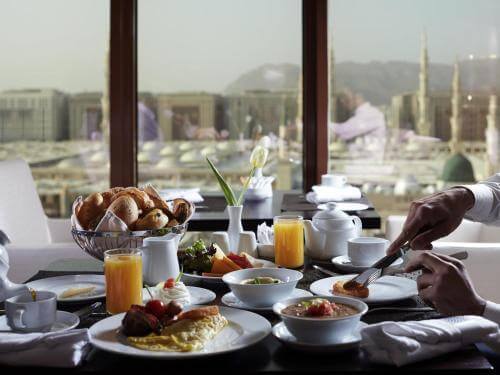
Yemeni breakfast food — including dishes like fahsa (a spiced meat stew) and ma’soob (mashed banana and bread, often eaten with cream and honey) — is extremely popular across Saudi Arabia and widely considered close to a national breakfast. Yemeni breakfast spots tend to be busiest shortly after Fajr prayer, when locals and visitors alike stop in on their way from the mosque.
Best Types of Restaurants Near Masjid an-Nabawi
Rather than naming a single “best” restaurant, it’s more useful — and more accurate — to understand the categories available, since options and popularity can shift over time.
Traditional Kabsa and Mandi Restaurants
Several well-established Kabsa and Mandi restaurants operate within a short drive of Masjid an-Nabawi, generally offering large sharing platters, floor or booth seating in the traditional style, and private sections suited to families. These tend to be the most recommended category for visitors wanting an authentic first Saudi meal.
Yemeni and Bukhari Spots Beyond the Hotel District
A short distance from the immediate mosque area — including pockets near Quba, Qiblatain, and the Khandaq (Trench) area — you’ll find respected Yemeni breakfast joints, Bukhari rice restaurants, and dedicated shawarma spots that are popular with residents rather than aimed specifically at tourists. These often provide better value and a more local atmosphere, and pairing them with a nearby Ziyarat stop can make good use of a taxi route.
Quick and Casual Options
Directly around the mosque and hotel district, you’ll find shawarma counters, sandwich shops, and international fast-food chains. These are convenient for a quick bite between prayers, though during busy periods — right after Maghrib or Isha, for example — queues can build up quickly.
Mid-Range and Family-Friendly Restaurants
Madinah also has a growing number of mid-range restaurants offering Mediterranean, Lebanese, Turkish, and international menus alongside Saudi staples — useful for groups with mixed preferences, or for a more relaxed sit-down meal after a full day of Ziyarat.
Date Cafes and the Central Date Market (Souq Al Tumor)
No food guide to Madinah is complete without dates. The city is famous worldwide for Ajwa dates — dark, soft, and often associated with local tradition — alongside popular varieties like Safawi and Sukkari. Madinah’s Central Dates Market, located near the Prophet’s Mosque and commonly known locally as Souq Al Tumor, is a well-known stop for pilgrims and visitors buying dates, desserts, sweets, and local produce.
Shop owners at the market have said that close to 200 types of dates are sold there, and many stalls can arrange packing and shipping for buyers taking dates home. Sampling before buying is normal and expected — most sellers will offer tasters so you can compare quality and sweetness across varieties before committing to a purchase, since prices can vary noticeably by grade.
Beyond the market itself, a growing number of modern date-focused cafes around Madinah serve dates alongside Arabic coffee, tea, or date-based desserts — a relaxed way to end a Ziyarat day, especially for visitors who want a lighter stop than a full meal.
How to Fit a Meal Into Your Ziyarat Day
A few practical ways travelers commonly structure their day:
- After a morning Ziyarat loop (Masjid an-Nabawi, Jannat al-Baqi, Masjid al-Ghamamah) — a meal in the central hotel area works well before resting through the afternoon heat.
- After visiting Quba, Qiblatain, or the Seven Mosques — several respected local restaurants sit close enough to these sites that a meal stop doesn’t require doubling back toward the Haram.
- After Mount Uhud — since Uhud sits further from the city center, many visitors prefer to eat on the way back rather than searching for options near the site itself.
Because Ziyarat sites are spread across different parts of Madinah rather than clustered in one area, private transportation can make it easier to combine multiple stops — a mosque visit, a market stop, and a meal — without depending on public transport schedules or long walks in the heat. Visitors looking for private transportation can contact Madinah Ziyarat Taxi through WhatsApp at +966 57 4915 372 to ask about availability, vehicle options, and a customized Ziyarat itinerary that includes time for a meal or a stop at the date market.
Tips for Families, Elderly Travelers, and Groups
- Ask for private seating. Many traditional restaurants near the mosque offer separate family sections or private rooms — useful for groups and for women traveling with children.
- Plan around prayer times. Restaurants near the mosque get busy immediately after prayers; eating slightly before or after the rush, or choosing a spot a short drive away, usually means a calmer experience.
- Share dishes. Mandi, Kabsa, and Madhbi are traditionally served as large sharing platters, which works well for families and groups and is often better value than ordering individually.
- Keep mobility in mind. After a long day of walking during Ziyarat, elderly travelers in particular may prefer a restaurant a short taxi ride away rather than a further walk from the mosque, even if it means passing closer options.
- Stay hydrated. Madinah’s climate, especially in summer, means it’s worth drinking water between the mosque and the restaurant rather than waiting until you’re seated.
Practical Etiquette and Timing Around Prayer
Most restaurants near Masjid an-Nabawi pause service briefly during prayer times, in line with local custom, and reopen shortly after. It’s common – and generally expected – to plan meals just before or after prayer rather than during it. Modest dress is appreciated everywhere in Madinah, including in restaurants, and it’s worth carrying a scarf or covering if you’re coming straight from the mosque. As with any details that can vary by season, business hours, and location, it’s worth confirming current timings locally, especially during Ramadan or peak Hajj and Umrah periods, when restaurant hours and crowd levels can shift significantly.
FAQs
1. What is the best food to try in Madinah after Ziyarat?
Kabsa and Mandi are the most recommended starting points for first-time visitors, alongside Bukhari rice and, for an early-morning stop, Yemeni breakfast dishes like ma’soob.
2. Are there good restaurants within walking distance of Masjid an-Nabawi?
Yes – the immediate hotel district has quick shawarma counters, sandwich shops, and a few established Kabsa and Mandi restaurants, though some of the most highly regarded local spots sit a short drive rather than a walk away.
3. What is the difference between Mandi and Kabsa?
Kabsa is spiced rice typically cooked together with the meat and topped with nuts or raisins, while Mandi involves meat slow-cooked separately (traditionally in a pit) and served over rice flavored more subtly than Kabsa.
4. Where can I buy dates in Madinah?
The Central Date Market (Souq Al Tumor), close to the Haram, is the main destination, offering a wide variety of Ajwa, Safawi, and Sukkari dates with tasting before you buy.
5. Is it easy to find halal food near Masjid an-Nabawi?
Yes – virtually all restaurants in Madinah serve halal food, from traditional Saudi and Yemeni restaurants to international chains.
6. Can I visit multiple Ziyarat sites and still fit in a meal?
Yes, many visitors combine a Ziyarat route (such as Quba, Qiblatain, or the Seven Mosques) with a nearby meal stop; private transportation makes this easier to plan without long walks between stops.
7. What should families look for in a restaurant near the mosque?
Family or private seating sections, sharing-style platters, and a location that doesn’t require a long walk after a full day of Ziyarat are the main things to look for.
8. Are there quick and affordable food options near the mosque?
Yes – shawarma counters, sandwich shops, and fast-food chains are widely available in the hotel district, though quality and value can vary, and it’s often worth going a short distance further for a sit-down local meal.
9. What is Bukhari rice, and where can I try it?
Bukhari rice is a spiced, Central Asian-rooted rice dish popular across Madinah, typically cooked with lamb or chicken; dedicated Bukhari restaurants can be found both near the mosque and slightly further out, including areas near Khandaq.
10. When is the best time to eat near Masjid an-Nabawi?
Just before or shortly after prayer times tends to be calmer than the immediate rush right after a prayer ends, when restaurants near the mosque can get very busy.
11. Is it common to eat dates as part of a meal in Madinah?
Yes – dates are a staple across Saudi meals and are often served alongside Arabic coffee or tea, in addition to being sold separately in the date market.
12. Can Madinah Ziyarat Taxi arrange a stop at a restaurant or the date market?
Private Ziyarat taxi bookings can be arranged to include stops at restaurants or the Central Date Market alongside your Ziyarat itinerary; contact Madinah Ziyarat Taxi via WhatsApp at +966 57 4915 372 to discuss your preferred route.
13. Do restaurant prices vary a lot near the mosque?
Yes – prices vary by category, from affordable shawarma and fast food to mid-range sit-down restaurants, and can also shift with location and season, so it’s worth checking current menus locally.
14. Is it necessary to book restaurants in advance in Madinah?
For quick and casual spots, no; for larger groups or during peak Umrah and Hajj seasons, calling ahead or arriving slightly earlier than peak hours can help avoid long waits.
15. What is a good way to end a Ziyarat day food-wise?
Many visitors like to finish with a date-tasting stop at the Central Date Market or a modern date cafe, alongside their main meal, as a way to experience one of Madinah’s most iconic local products.