Masjid an-Nabawi: A Complete Guide to the Prophet’s Mosque in Madinah
Masjid an-Nabawi, widely known as the Prophet’s Mosque, is the spiritual center of Madinah and the second holiest site in Islam after Masjid al-Haram in Makkah. For millions of Umrah and Hajj pilgrims, Muslim travelers, and visitors each year, a journey to Madinah is not complete without standing within its marble courtyards, beneath its Green Dome, and — where possible — inside the Rawdah al-Sharifah.
This guide explains what Masjid an-Nabawi is, why it holds such deep significance, its history, and the practical details visitors need for planning a respectful and well-organized visit.
What Is Masjid an-Nabawi?
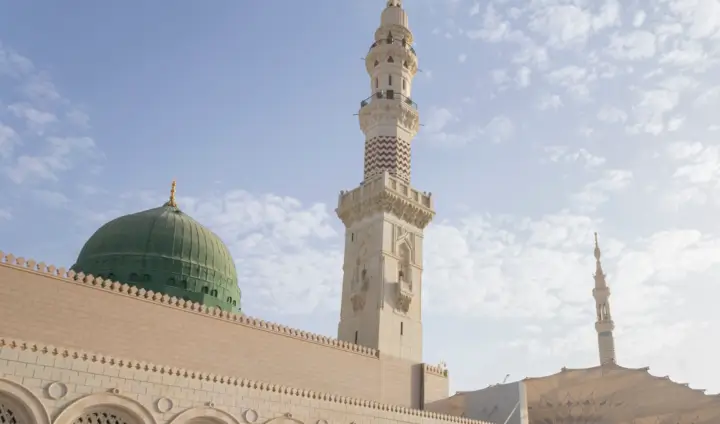
Al-Masjid an-Nabawi (المسجد النبوي), meaning “the Prophet’s Mosque,” was founded by Prophet Muhammad ﷺ shortly after his migration (Hijrah) from Makkah to Madinah in 622 CE. It is considered the second holiest site in Islam and is also the location of the Prophet’s ﷺ tomb, which draws pilgrims from around the world.
Beyond its role as a place of prayer, the mosque historically functioned as a center for political affairs, teaching, community life, and civic activity in early Madinah — a reminder that its significance extends beyond ritual worship into the foundations of the early Muslim community.
Today, Masjid an-Nabawi is one of the largest mosques in the world. Its scale has grown enormously through repeated historical expansions, and during peak seasons such as Ramadan and Hajj, it accommodates enormous numbers of worshippers — though exact capacity figures vary between sources and change as expansion projects continue, so treat any specific number as approximate rather than official.
The History of Masjid an-Nabawi
From a Simple Mosque to an Islamic Landmark
The mosque began as a modest structure. According to historical accounts, the land it was built on belonged to two orphan brothers, and the Prophet ﷺ insisted on paying for it rather than accepting it as a gift. The earliest mosque was built from simple materials — palm trunks and mud-brick walls — a striking contrast to the marble and marble-columned halls visitors see today.
Over the following centuries, successive Islamic dynasties expanded and embellished the mosque. The Umayyad Caliph al-Walid I significantly enlarged the mosque in the early 8th century, including the addition of minarets, and further expansions followed during the Abbasid, Mamluk, and Ottoman periods, each adding domes, minarets, and courtyards reflecting the architectural style of its era.
Ottoman and Saudi-Era Expansions
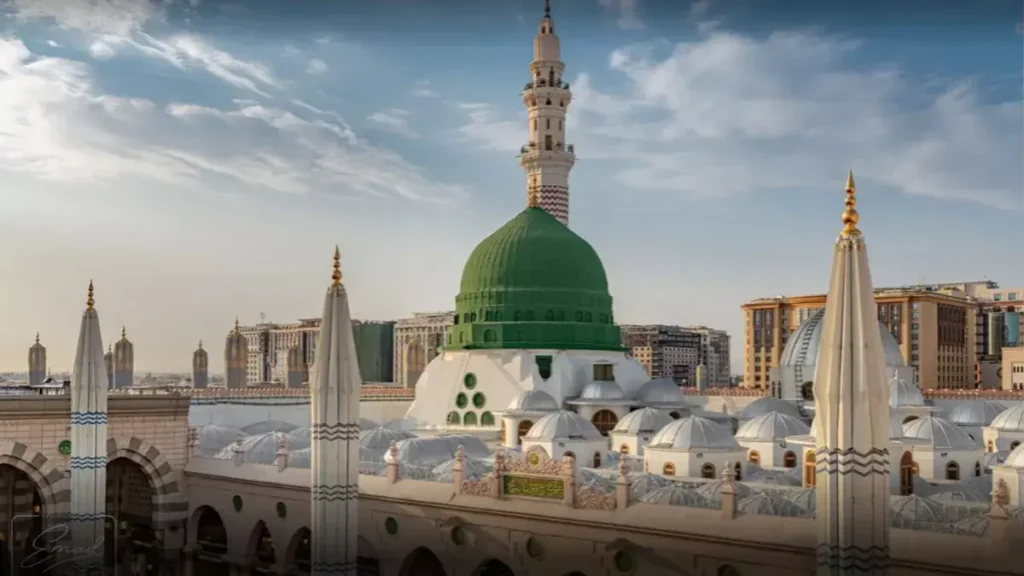
During the Ottoman period, Sultan Suleiman the Magnificent rebuilt the western walls of the mosque and added a minaret, along with a lead-covered dome above the Prophet’s ﷺ tomb. A later Ottoman ruler, Sultan Mahmud II, oversaw construction of the dome largely as it appears today in the early 19th century, though the distinctive green color was applied only under his successor.
The most dramatic transformation came under Saudi rule. King Faisal added over 40,000 square meters to the mosque in 1974, and King Fahd’s expansion in 1985 removed surrounding buildings and, by 1992, brought the mosque’s total area to roughly 160,000 square meters, with escalators and dozens of courtyards added. A further large-scale expansion project was announced in 2012, aimed at significantly increasing the mosque’s capacity. Because expansion and renovation work has continued in phases since then, visitors should expect the mosque’s exact layout and facilities to keep evolving.
The Rawdah al-Sharifah (Riyad ul-Jannah)
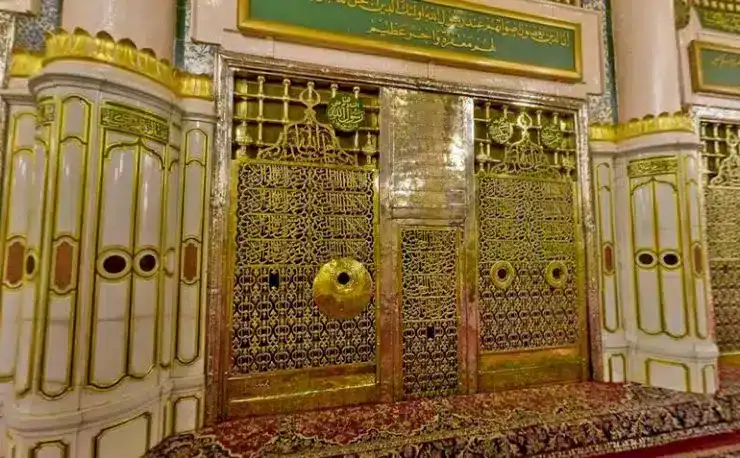
One of the most spiritually significant areas inside Masjid an-Nabawi is the Rawdah, also called Riyad ul-Jannah (“Garden of Paradise”). It is the oldest and most important section of the mosque, stretching from the area of the Prophet’s ﷺ tomb to his pulpit (minbar).
Many visitors are drawn to this specific space because of its description in hadith. As commonly cited by Islamic sources, the Prophet ﷺ is reported to have said, “Between my house and my pulpit is a garden from the gardens of Paradise” (Sahih al-Bukhari 1196). Because of this, many Muslims hope to pray two voluntary rak’ahs within the Rawdah during their visit, though the small size of the area means access is carefully managed, especially during busy periods.
Adjacent to the Rawdah is the chamber containing the tombs of the Prophet Muhammad ﷺ and his two companions and successors, Abu Bakr and Umar (may Allah be pleased with them). The grave itself is not visible from any point inside or outside the enclosed structure, which is surrounded by multiple protective walls.
The Green Dome and the Prophet’s Tomb
The Green Dome is perhaps the most recognizable image associated with Madinah. It was originally constructed in 778 CE under Caliph al-Mansur and has been renovated and rebuilt multiple times since, with the current structure dating to the early 19th century under Sultan Mahmud II. It has since become one of the most widely recognized landmarks in the Islamic world, instantly identifying Masjid an-Nabawi in photographs and skylines alike.
How to Visit Masjid an-Nabawi
Booking Rawdah Access via the Nusuk App
Access to the Rawdah is no longer walk-in. Since 2025, all visitors are required to book a permit through the official Nusuk app before entering the Rawdah, and the Saudi Ministry of Hajj and Umrah has designated Nusuk as the official channel for booking these appointments. Because permit rules, time slots, and processes can be updated by Saudi authorities, always check the current requirements on the official Nusuk app or Saudi tourism channels before your visit rather than relying solely on third-party guides.
Visitors commonly note that Rawdah visit windows are brief and closely supervised, so it helps to know your intended prayers or supplications in advance and to move calmly through the queue when it is your turn.
Gates, Women’s Sections, and Layout
Masjid an-Nabawi has dozens of gates around its perimeter, each providing access to different sections of the mosque. The mosque has designated women’s sections on both the eastern and western sides, with women generally entering through specific gate ranges on each side, each equipped with ablution facilities and rest areas. Because gate numbers and designated entrances can be adjusted by mosque authorities depending on the season and any ongoing construction, it’s best to confirm current gate assignments with on-site signage or mosque staff on the day of your visit.
Prayer Times and Best Times to Visit
The mosque holds five daily congregational prayers, and many visitors plan their Ziyarat around these times to experience the mosque at its most active — though this also means larger crowds. Early morning (after Fajr) and late evening hours are often quieter for general visiting, while Friday prayers, Ramadan nights, and the Hajj season bring the largest crowds of the year. If your schedule allows flexibility, visiting outside these peak windows can make for a calmer, more reflective experience.
Visitor Etiquette and Practical Tips
- Dress modestly. Both men and women are expected to dress conservatively; women typically wear an abaya and headscarf within the mosque grounds.
- Stay hydrated. Zamzam water is generally available within the mosque, but Madinah’s climate — especially in summer — makes carrying your own water sensible for the walk to and from the mosque.
- Mind the queues. Rawdah access and some gates can involve waiting, particularly during Ramadan and Hajj season; patience and calm movement are appreciated by staff and fellow worshippers.
- Photography. Be respectful with photography inside the mosque, particularly near the Rawdah and prayer areas, and be mindful of others’ privacy and focus in prayer.
- Mobility considerations. The mosque complex is large, with significant walking distances between gates, courtyards, and the Rawdah. Elderly travelers or those with mobility concerns should plan extra time and consider which gate is closest to their hotel or drop-off point.
- Children and families. The courtyards and surrounding areas are generally family-friendly, but the Rawdah’s brief, tightly managed access windows can be more difficult to manage with young children in tow — plan accordingly.
Masjid an-Nabawi and the Wider Madinah Ziyarat Trail
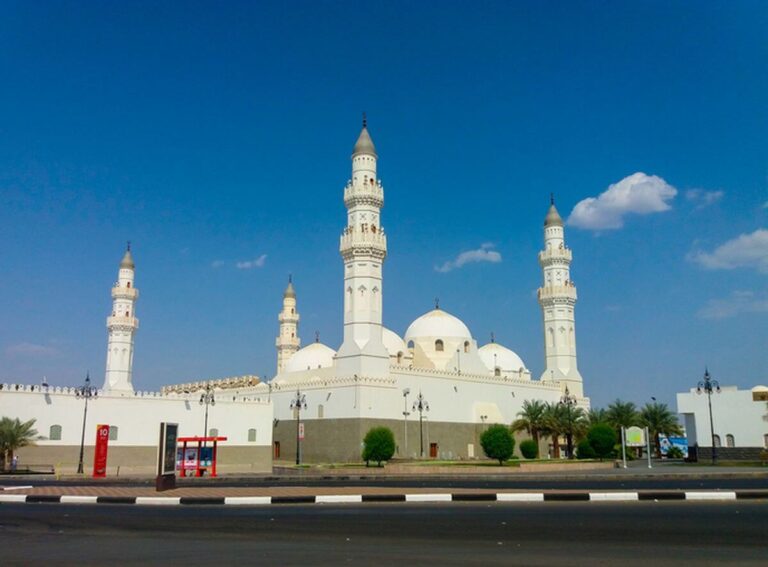
For most visitors, Masjid an-Nabawi is the starting point — not the only stop — of their time in Madinah. Many pilgrims also plan visits to other historically significant sites in and around the city as part of their Ziyarat, extending their trip beyond the mosque itself.
Because these sites are spread across different parts of Madinah, some visitors choose to walk to nearby locations from the mosque, while others prefer private transportation to comfortably reach several sites in one outing — particularly useful for families, elderly travelers, and groups who want to avoid long walks in the heat or depending on public transport schedules. Private transportation also makes it easier to build a flexible, multi-stop itinerary suited to your own pace, rather than a fixed group schedule.
Getting to Masjid an-Nabawi – Transportation Options
Most hotels in central Madinah are within walking distance of Masjid an-Nabawi, and many visitors choose to walk when staying nearby. For those staying farther out, arriving from Madinah’s airport, or planning to combine the mosque visit with other Ziyarat locations in the same trip, private transportation offers a convenient alternative to public transport or shared shuttles.
Visitors looking for private transportation can contact Madinah Ziyarat Taxi through WhatsApp at +966 57 4915 372 to ask about hotel pickup, vehicle options, and a customized Ziyarat itinerary that includes Masjid an-Nabawi alongside other historical sites in Madinah — whether for a half-day trip, a full-day tour, or a flexible family or group schedule.
FAQ
1. What is Masjid an-Nabawi?
Masjid an-Nabawi, or the Prophet’s Mosque, is a mosque in Madinah, Saudi Arabia, founded by Prophet Muhammad ﷺ after his migration from Makkah in 622 CE. It is the second holiest site in Islam and also contains his tomb.
2. What is the Rawdah?
The Rawdah al-Sharifah, also called Riyad ul-Jannah, is the area of the mosque between the Prophet’s ﷺ tomb and his original pulpit. It is described in hadith as a garden from Paradise and is one of the most sought-after places for prayer within the mosque.
3. Do I need a permit to visit the Rawdah?
Yes. Since 2025, visitors must book Rawdah entry through the official Nusuk app before arriving. Requirements can change, so confirm current rules on the app or with official Saudi tourism channels before your visit.
4. How old is Masjid an-Nabawi?
The mosque was originally built in 622 CE, making it one of the earliest mosques in Islamic history. It has been expanded and rebuilt many times since, most extensively during the Ottoman and Saudi periods.
5. What is the Green Dome?
The Green Dome sits above the Prophet’s ﷺ tomb and is one of the most recognizable landmarks in Madinah. Its current form dates to the early 19th century, though domes have covered this area since the 8th century.
6. Is Masjid an-Nabawi within walking distance of Madinah hotels?
Many hotels in central Madinah are within walking distance of the mosque. Visitors staying farther away, or those combining the mosque with other Ziyarat sites, often prefer private transportation instead.
7. Can I visit other Ziyarat sites the same day as Masjid an-Nabawi?
Many visitors combine a visit to the mosque with other historical sites elsewhere in Madinah as part of a broader Ziyarat trip. A private taxi or driver can make it easier to move between multiple locations in one outing.
8. Is private transportation suitable for families visiting Madinah?
Private transportation can be a practical option for families, since it allows hotel pickup, a flexible pace, and avoids reliance on public transport schedules — helpful with children, elderly relatives, or larger groups.
9. Can Madinah Ziyarat Taxi arrange a custom Ziyarat itinerary?
Visitors can contact Madinah Ziyarat Taxi via WhatsApp at +966 57 4915 372 to discuss vehicle options, hotel pickup, and a custom itinerary covering Masjid an-Nabawi and other Ziyarat sites.
10. What should I wear when visiting Masjid an-Nabawi?
Modest dress is expected for all visitors. Women typically wear an abaya and headscarf within the mosque grounds, and both men and women should dress conservatively.
11. Are there separate sections for women at the mosque?
Yes, the mosque has designated women’s sections with their own entrances, ablution facilities, and rest areas. Exact gate assignments can vary, so it’s best to confirm current arrangements on-site.
12. When is the best time to visit Masjid an-Nabawi?
Times outside the five daily prayers are generally less crowded for general visiting, while Fridays, Ramadan, and the Hajj season bring the largest crowds. Early morning or late evening visits can offer a calmer experience.
13. Is the mosque suitable for elderly travelers?
The mosque complex is large, with considerable walking distances between gates and the Rawdah. Elderly travelers should plan extra time, comfortable footwear, and consider which gate is closest to their transportation drop-off point.
14. How many minarets does Masjid an-Nabawi have?
The number of minarets has changed across historical expansions. Because sources report different counts from different eras, visitors should treat this figure as something that has evolved over time rather than a single fixed number.
15. How can I contact Madinah Ziyarat Taxi?
Visitors can reach Madinah Ziyarat Taxi via WhatsApp at +966 57 4915 372 or through the website at madinahziyarattaxi.com to ask about availability, vehicle options, and Ziyarat itineraries.