Jannat Al-Baqi Visiting Hours & Etiquette Guide for Pilgrims
Quick answer: Jannat al-Baqi is generally open to visitors for two short windows each day – shortly after Fajr prayer and shortly after Asr prayer. Entry inside the cemetery is limited to men; women are not permitted past the boundary and can view the site from outside. Timings can shift depending on crowd levels, season, and site management, so it’s worth checking locally on the day of your visit.
What Is Jannat Al-Baqi?
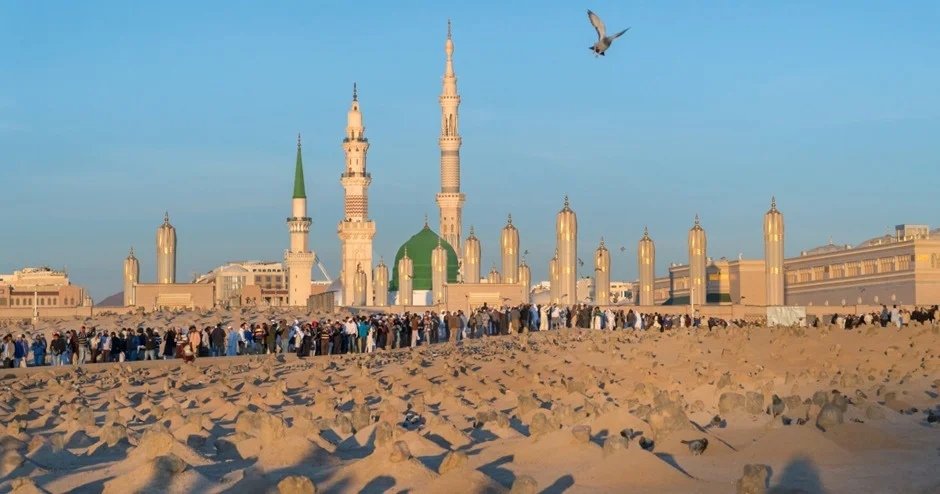
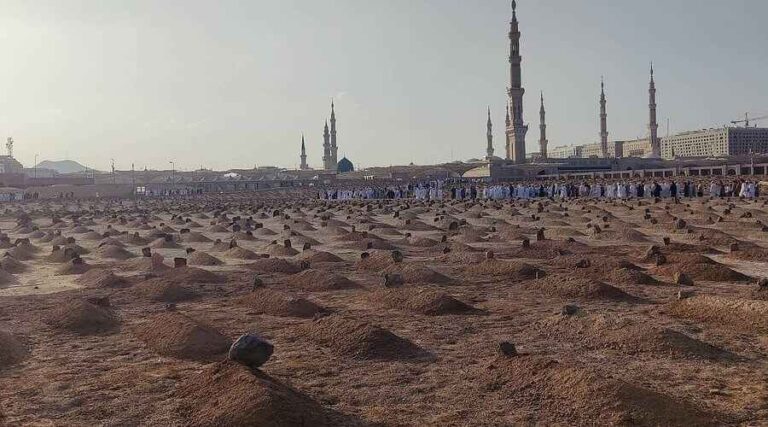
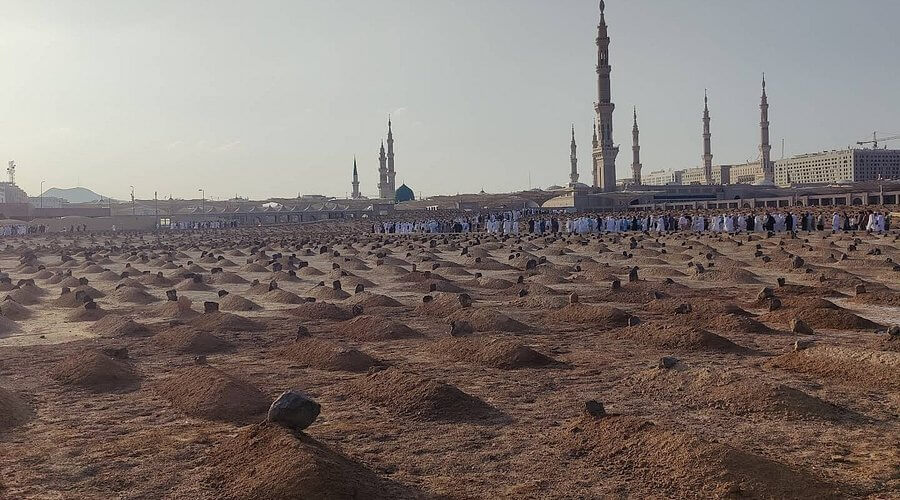
Jannat al-Baqi, also written as Jannatul Baqi or Baqi al-Gharqad, is the oldest and most important Islamic cemetery in Madinah. It sits immediately next to the eastern side of Al-Masjid an-Nabawi, separated from the mosque by a wide plaza. The cemetery became the primary burial ground for the Muslim community after the Prophet Muhammad ﷺ migrated to Madinah, and it holds the graves of a large number of his companions (Sahabah), several members of his family, and early scholars of Islam.
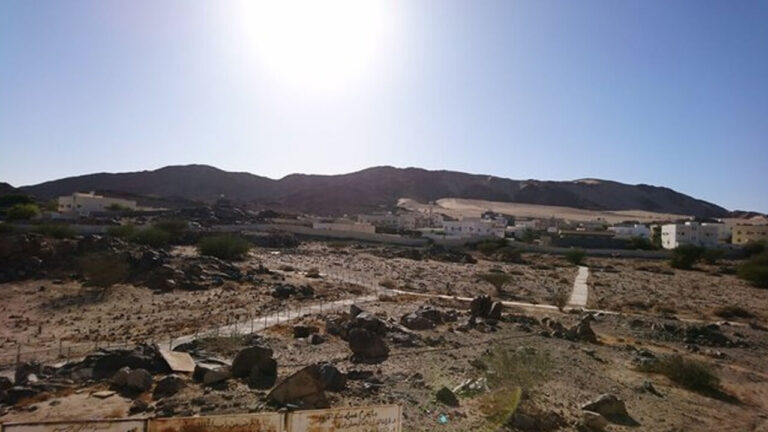
Unlike many historic cemeteries, Al-Baqi has no elaborate tombs or headstones. The graves are simple, unmarked mounds of earth, which reflects the Islamic principle of humility and equality in death. For this reason, visitors should not expect to locate a specific named grave inside — the layout is intentionally plain.
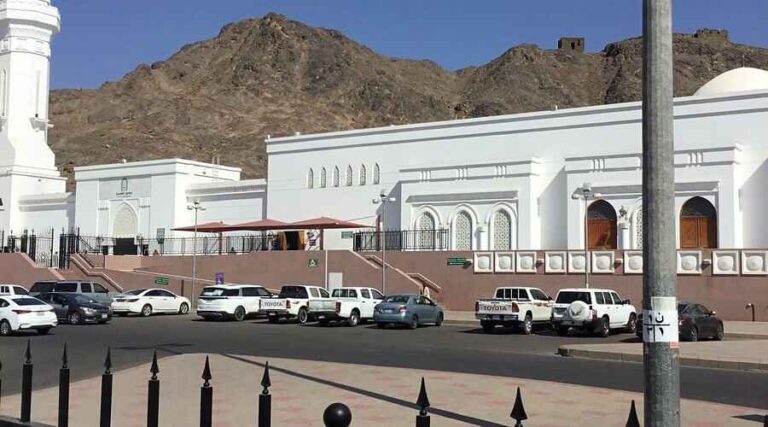
For many pilgrims completing Umrah or Hajj, a visit to Al-Baqi is part of a wider Ziyarat itinerary in Madinah alongside Quba Mosque, Qiblatain Mosque, and Uhud. It is not a religious obligation tied to Umrah or Hajj itself, but it holds deep historical and spiritual significance for visitors who wish to reflect on early Islamic history.
Jannat Al-Baqi Visiting Hours

Al-Baqi is not open all day. Based on the current general pattern reported by visitors and Madinah-based sources, the cemetery is typically opened for two short periods:
- After Fajr prayer (early morning, before sunrise)
- After Asr prayer (mid-to-late afternoon)
Each window tends to last a limited amount of time rather than staying open for hours, and the gates are closed again once the period ends. These hours are set locally to manage crowd flow and preserve the peaceful atmosphere of the site, and they can be adjusted during busier periods such as peak Umrah season, Ramadan, or Hajj season. If your visit falls during one of these periods, it’s sensible to ask hotel staff or a local guide on the day, since exact timing can vary and is not published as a fixed, year-round schedule.
Because the window is short, arriving close to the start of it — right as worshippers are leaving the mosque after Fajr or Asr — usually gives the smoothest experience before the entrance area becomes crowded.
Who Can Enter Jannat Al-Baqi?
This is one of the most searched questions about the site, and it’s worth stating plainly: entry inside Jannat al-Baqi is limited to men. Women are not permitted to enter the cemetery grounds. Women who wish to visit can stand near the boundary or outside the main gate and view the cemetery from there; this is the standard arrangement reported consistently by visitors and local sources.
Families traveling together should plan for this in advance. A common approach is for male family members to walk in during the visiting window while women, children, or elderly relatives who prefer not to stand and wait remain nearby — for example, in the mosque plaza or a shaded seating area close to the gate. This is also where private transportation can help: a driver can wait with the rest of the group at a comfortable spot rather than everyone needing to stay together in a crowded entrance area.
Etiquette and Rules Inside Al-Baqi
Al-Baqi is a working cemetery and a place of reflection, not a tourist attraction, and the rules reflect that:
- Dress modestly. Loose, modest clothing is expected, in line with general dress standards around Masjid an-Nabawi.
- No photography or filming. Taking photos or videos inside the cemetery is not permitted.
- Walk carefully. Avoid stepping on or over graves; stay on the marked paths.
- Keep your voice low. Loud talking, wailing, or crying out is discouraged. The visit is meant to be quiet and reflective.
- Do not touch or kiss graves or markers. Physical contact with graves is not part of the accepted etiquette here.
- Keep the visit purposeful. Many visitors use the short time inside for quiet dua and reflection rather than lingering to explore.
These rules are enforced by site staff, and visitors who don’t follow them may be asked to leave, so it helps to know them before you go rather than learning on the spot.
Where Is Jannat Al-Baqi Located, and How Do You Get There?
Al-Baqi sits directly beside the southeastern side of Al-Masjid an-Nabawi. For anyone already staying near the mosque, it’s a short walk of only a few minutes. The gate historically closest to the cemetery and to the Prophet’s burial chamber is Bab al-Baqi, one of the main gates on the mosque’s eastern side.
Because of ongoing development work in the southern area around Masjid an-Nabawi, some transport options — including hop-on-hop-off style buses — currently cannot stop directly at Al-Baqi. In practice, this means many visitors are dropped near Al-Salam Gate or another nearby gate and walk the short remaining distance to the cemetery entrance, following the signage in the plaza. This is worth knowing in advance so you’re not expecting a direct drop-off at the cemetery gate itself.
Taxi Drop-Off and Pickup Near Al-Baqi
The area around Masjid an-Nabawi gets busy fast, especially right around Fajr and Asr — exactly when Al-Baqi is open. A few practical points for anyone arranging their own transport or using a private taxi:
- Expect a short walk, not a doorstep drop-off. Given the crowd density and access restrictions near the mosque’s eastern side, most vehicles will drop passengers at a nearby gate or plaza rather than directly at the cemetery entrance.
- Time your pickup around the visit window, not a fixed clock time. Since the visiting period is short and the exact minute it opens can shift slightly day to day, agreeing on a flexible pickup point (rather than an exact time) tends to work better.
- Groups benefit from a driver who can wait nearby. If part of your group is visiting inside while others wait outside, having a private vehicle nearby — rather than relying on public transport at a set schedule — makes it easier to regroup once everyone is ready.
This is where private transportation is genuinely useful rather than just convenient: it removes the pressure of matching a public transport schedule to a visiting window that only lasts a limited time.
Best Time to Plan Your Visit
Because Al-Baqi’s hours are tied to the Fajr and Asr prayer times, the best approach is to build your Ziyarat schedule around the mosque’s prayer timetable for the day, not a clock time you fix in advance. A few additional considerations:
- Ramadan and peak Umrah season: Crowds around Masjid an-Nabawi increase significantly, and the visiting window at Al-Baqi may feel more compressed. Arriving as early as possible within the window helps.
- Hajj season: Similar to Ramadan, expect larger crowds and potentially tighter management of the visiting period.
- Hot weather: Madinah’s daytime heat, especially outside winter months, makes the post-Asr window more demanding if you’re waiting outside. Carrying water and wearing comfortable, breathable clothing is worth planning for.
Planning Your Ziyarat with Private Transportation
A visit to Jannat al-Baqi is often just one stop in a broader Madinah Ziyarat itinerary that may include Quba Mosque, Qiblatain Mosque, and other historical sites. Because Al-Baqi’s opening hours are short and tied to prayer times, fitting it into a multi-stop day is easier with transportation that can adjust to your schedule rather than a fixed public route.
Visitors looking for private transportation can contact Madinah Ziyarat Taxi through WhatsApp at +966 57 4915 372 to ask about hotel pickup, waiting arrangements near Al-Baqi, and a customized half-day or full-day Ziyarat itinerary that fits around prayer times.
FAQs
1. What time does Jannat al-Baqi open?
It is typically open for a short period after Fajr prayer and again after Asr prayer. Exact timing can vary, so it’s best to confirm locally on the day.
2. Can women enter Jannat al-Baqi?
No. Women are not permitted inside the cemetery grounds. Women can view the site from outside the boundary or near the main gate.
3. Is photography allowed inside Al-Baqi?
No, photography and videography are not permitted inside the cemetery.
4. How long does a visit to Al-Baqi usually take?
Most visits are brief — enough time for a short walk through, quiet reflection, and dua — rather than an extended visit, since the site closes again after each window.
5. Where is the nearest gate to Jannat al-Baqi?
Bab al-Baqi, on the eastern side of Al-Masjid an-Nabawi, is traditionally the closest gate. Some visitors are currently routed via Al-Salam Gate due to nearby development work.
6. Can a taxi drop passengers directly at the Al-Baqi entrance?
Usually not right at the gate, due to crowd density and access restrictions near the mosque’s eastern side. A drop-off near a nearby gate followed by a short walk is more typical.
7. Is visiting Jannat al-Baqi obligatory for Umrah or Hajj?
No. It is not a religious requirement of Umrah or Hajj. Many pilgrims choose to visit for its historical and spiritual significance as part of their wider Ziyarat.
8. What should I wear to visit Al-Baqi?
Modest, loose-fitting clothing, consistent with general dress expectations around Masjid an-Nabawi.
9. Are there graves with names inside Al-Baqi?
The graves are simple, unmarked mounds in keeping with Islamic teachings on humility in death, so individual graves are generally not distinguishable by name.
10. Can I book a private Ziyarat taxi that includes a stop at Al-Baqi?
Yes. A private Ziyarat taxi can include Al-Baqi as part of a wider Madinah itinerary. Contact Madinah Ziyarat Taxi via WhatsApp to discuss options.
11. Is Al-Baqi open during Ramadan?
Yes, but crowd levels are higher, and the visiting window may feel busier and more time-limited.
12. Why can’t women enter the cemetery?
This is a long-standing site policy at Al-Baqi rather than a general Islamic ruling that applies everywhere, and it is enforced by site management. Women are welcome to view the site from outside.
13. Is there shade or seating near Al-Baqi for those waiting outside?
The plaza area near Masjid an-Nabawi has shaded and seating areas, though availability can depend on how busy the mosque grounds are at the time.
14. Can elderly family members wait comfortably while others visit inside?
Yes – many visitors arrange for elderly or non-visiting family members to wait in the mosque plaza or with a private driver nearby rather than standing directly at the cemetery entrance.