
Visiting Masjid Qiblatain and The Seven Mosques: History, Directions & Best Times Guide
Among the historical Ziyarat sites in Madinah, few carry as much layered significance as Masjid al-Qiblatain and the Seven Mosques. One marks a defining moment in how Muslims pray. The other marks a defining moment in how the early Muslim community defended itself. Because the two sites sit close to each other, many visitors choose to see both in a single outing.
This guide explains the history behind each site, what to expect when you arrive, how much walking is involved, and practical tips for planning your visit — including why mid-morning tends to work better than midday for this particular pairing of locations.
A Quick Overview of These Two Madinah Ziyarat Sites
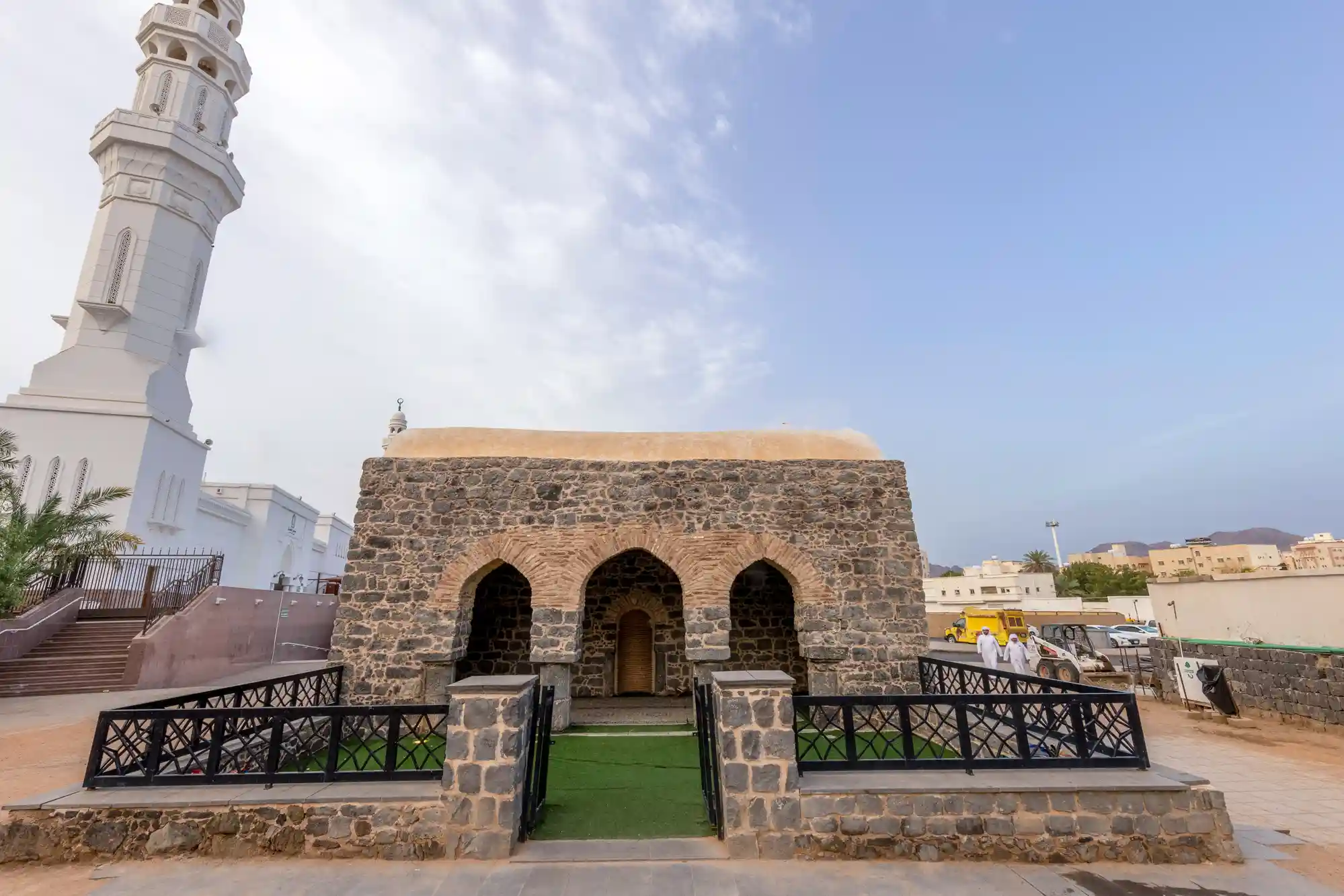
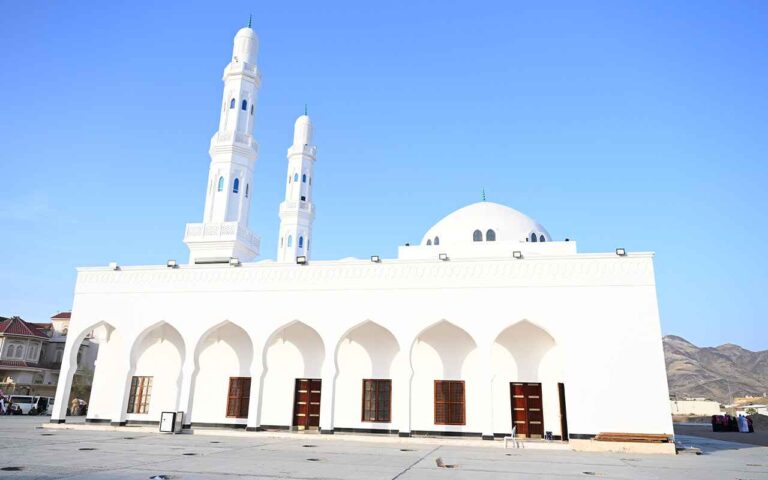
Masjid al-Qiblatain (the “Mosque of the Two Qiblas”) is where, according to Islamic tradition, the command to change the direction of prayer from Jerusalem to the Kaaba in Makkah was revealed. It is one of the earliest mosques associated with the Prophet Muhammad ﷺ, alongside Masjid Quba and Masjid an-Nabawi.
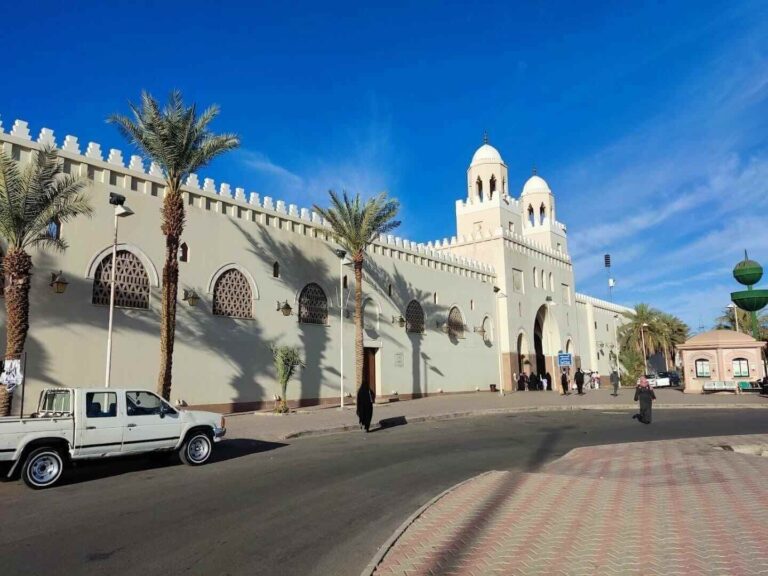
The Seven Mosques (Al-Masajid as-Sab’a) are a cluster of small historic mosques near Mount Sal’ in Madinah, built on the site associated with the Battle of Khandaq — the Battle of the Trench — fought in the fifth year of Hijra (627 CE). Each mosque in the group is connected to a companion or a position said to have been held during the battle.
Both sites are located to the west/northwest of Masjid an-Nabawi, in the same general direction, which is why they’re frequently visited together as part of a broader Madinah Ziyarat route.
Masjid Qiblatain: Where the Direction of Prayer Changed
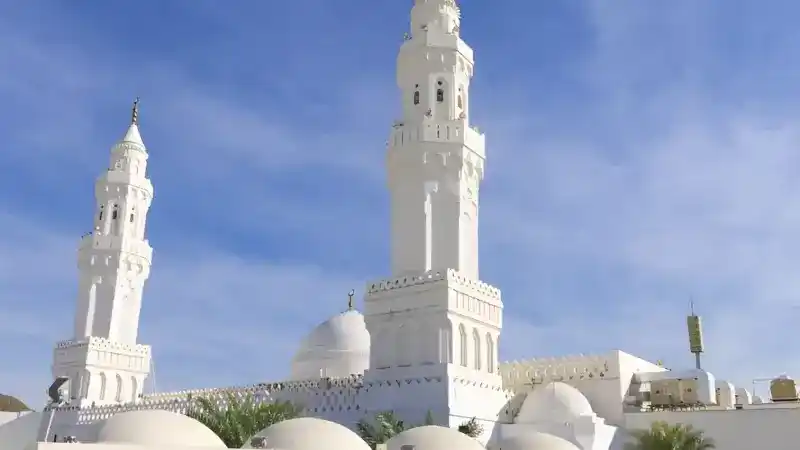
The History of the Qibla Change
In the early period after the Prophet Muhammad’s ﷺ migration to Madinah, Muslims prayed facing Bayt al-Maqdis (Jerusalem), continuing a direction associated with earlier Abrahamic tradition. According to the accounts recorded by early Islamic historians, this continued for a period before a Qur’anic revelation instructed that the direction of prayer be changed to the Kaaba in Makkah instead.
Tradition holds that this revelation came while the Prophet ﷺ was leading a congregational prayer in what was then known as the Mosque of Banu Salamah — named after the local tribe on whose land it stood. Mid-prayer, the direction was changed, and the worshippers turned from facing Jerusalem to facing Makkah. Because part of the prayer was offered toward one qibla and part toward the other, the mosque came to be known as Masjid al-Qiblatain — the “Mosque of the Two Qiblas.” The event is referenced in the Qur’an, Surah Al-Baqarah (2:144), regarding the turning of the Prophet’s face toward al-Masjid al-Haram.
Some sources place this event during Dhuhr (midday) prayer specifically; others describe the broader period of facing Jerusalem as lasting around sixteen months. As with much early Islamic history, minor details vary slightly between narrations — visitors don’t need to treat any single version as the sole authoritative account, but the core event (the change of Qibla) is well established and central to the mosque’s name and significance.
What Visitors See Today
The mosque has been rebuilt and renovated multiple times over the centuries, most recently in the late 1980s. Its modern structure bears little resemblance to the simple prayer space of the 7th century, but it remains an active mosque where visitors can pray and reflect on the history connected to the site. It sits a short distance southwest of Masjid an-Nabawi, making it one of the more accessible historical Ziyarat stops in the city.
The Seven Mosques and the Battle of Khandaq
What Was the Battle of the Trench?
In 5 AH (627 CE), a confederation of tribes marched on Madinah intending to lay siege to the city. On the advice given to the Muslim community, a wide trench (khandaq) was dug around the exposed side of the city as a defensive measure — a tactic not previously used in the region and one that effectively neutralized the advantage of cavalry. The siege continued for a number of weeks before the confederate forces withdrew.
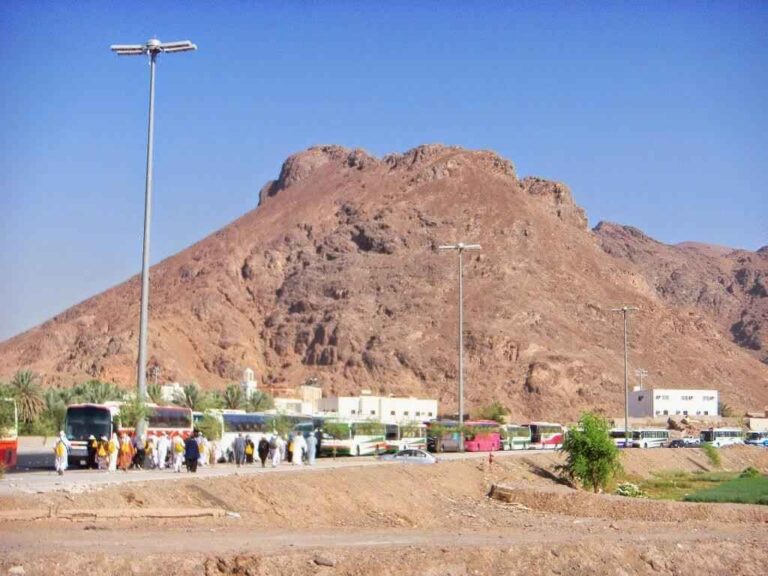
The area near Mount Sal’ (Jabal Sala’), on the western edge of the old city, is associated with the positions held during that defense. In the centuries that followed, small mosques were built at several of these positions to commemorate the event and the companions linked to each location.
The Mosques That Make Up the Seven Mosques
Historically there were said to be seven mosques in this cluster, which is why the site is known as Al-Masajid as-Sab’a — though the number of structures still standing and maintained today is fewer than seven. The best-known and most consistently referenced mosques associated with the group include:
- Masjid al-Fath — generally regarded as the largest and most significant of the group, built on raised ground said to correspond to the location of the Prophet’s ﷺ command post during the battle. Its elevated position gives a wide view over the surrounding area.
- Masjid Salman al-Farsi — associated with the companion Salman al-Farsi, who is credited with proposing the trench-digging strategy.
- Masjid Abu Bakr and Masjid Umar — named after the companions associated with those positions.
Some historical lists also include mosques attributed to Ali ibn Abi Talib and Fatimah az-Zahra, though not all of these structures have survived in a form that’s open to visitors today. Because renovation and preservation have varied across the group, it’s worth noting that the number and condition of mosques you’re able to see in person may not match every historical account exactly.
How Far Are These Sites From Masjid an-Nabawi?
Both Masjid Qiblatain and the Seven Mosques are located to the west of the central Haram area, roughly in the same general direction, generally described as a few kilometers from Masjid an-Nabawi. Exact distances and travel times vary depending on your hotel’s location, traffic conditions, and the specific route taken, so it’s best to treat any quoted distance as approximate rather than fixed.
Because both sites are outside comfortable walking range from most central hotels — particularly in Madinah’s summer heat — the majority of visitors reach them by taxi or private vehicle rather than on foot.
Visiting Both Sites in One Trip: Suggested Order
Since the two locations sit relatively close to one another and in a similar direction from the Haram, many visitors combine them into a single short Ziyarat trip rather than making two separate journeys. A common approach is:
- Start at Masjid Qiblatain first, since it’s generally closer to central Madinah.
- Continue on to the Seven Mosques near Mount Sal’, which involves a short additional drive.
- Return to your hotel or continue on to other nearby Ziyarat points if your itinerary includes them.
This order isn’t a fixed rule — some drivers and guides prefer the reverse sequence depending on traffic or the specific hotel location — but grouping the two sites together is the more time-efficient way to see both without doubling back across the city.
Terrain, Walking, and What to Expect Physically
This is one of the more practical details visitors often aren’t told in advance. The Seven Mosques sit on a low, uneven hillside near Mount Sal’, and reaching some of the individual mosque buildings involves walking on a gentle incline and slightly uneven ground rather than a flat, paved courtyard. It isn’t a strenuous hike, but it is more walking-intensive than a flat-ground site like Masjid Qiblatain.
For most visitors this is a manageable short walk. For elderly travelers, those with mobility limitations, or anyone visiting during warmer months, it’s worth planning for:
- Comfortable, flat walking shoes rather than sandals
- A short rest between mosque stops if needed
- Sun protection, since parts of the site have limited shade
- Water, particularly outside the cooler months
Masjid Qiblatain itself, by contrast, involves minimal walking once you arrive, since it functions as a standard, accessible mosque building.
Why Mid-Morning Is a Good Time to Visit
Timing matters more at these two sites than at some of Madinah’s other Ziyarat stops, for a few practical reasons:
- Heat: Because the Seven Mosques involve some outdoor walking on open, sun-exposed ground, visiting during the cooler part of the morning is noticeably more comfortable than midday, especially outside the winter months.
- Crowding: Mid-morning, after the early rush following Fajr and before the midday period, tends to be quieter at both sites compared to peak visiting hours.
- Light for photography: Soft mid-morning light works well for photographing the hillside setting around the Seven Mosques, before the sun is directly overhead.
- Prayer timing: Visiting in the window between Fajr and Dhuhr avoids the need to plan your Ziyarat trip around an upcoming prayer time at the mosques themselves.
That said, exact conditions vary by season — Ramadan, Hajj season, and peak Umrah periods can all affect how busy these sites are at any given hour, so treat “mid-morning” as a general guideline rather than a guarantee of a quiet visit.
Tips for Families, Elderly Visitors, and Groups
- Families with children: Both sites are manageable for children, though the uneven ground near the Seven Mosques is worth supervising closely.
- Elderly travelers: Because of the incline and outdoor walking at the Seven Mosques, it can help to plan a slower pace and allow extra time rather than rushing between the individual mosque buildings.
- Groups: Since neither site has a single large gathering space (unlike Masjid an-Nabawi), larger groups may naturally split up while walking between the smaller mosques — agreeing on a meeting point in advance is a practical habit.
- Wheelchair or mobility considerations: Masjid Qiblatain, as a standard mosque building, is generally easier to navigate. The Seven Mosques site, given its hillside layout, may be more difficult to fully access for visitors using a wheelchair; checking current on-site conditions in advance is worthwhile if mobility is a concern.
For visitors combining these two sites with several other Ziyarat stops in the same trip, private transportation with hotel pickup removes the need to plan around public transport schedules, which can matter more here than at more centrally located sites.
Getting There: Transportation Options
Public buses and shared transport options exist in Madinah, but their routes and schedules aren’t always convenient for visitors wanting to stop at both Masjid Qiblatain and the Seven Mosques back-to-back, then continue on to other Ziyarat points. Because of this, many visitors — particularly families, elderly travelers, and groups — opt for a private taxi or private Ziyarat tour that includes hotel pickup and drop-off.
Visitors looking for private transportation can contact Madinah Ziyarat Taxi through WhatsApp at +966 57 4915 372 to ask about availability, vehicle options, and a customized Ziyarat itinerary that groups Masjid Qiblatain and the Seven Mosques with other nearby historical sites, depending on the time available. A private vehicle also makes it easier to wait between stops rather than needing to coordinate a return pickup, which is particularly useful given the walking involved at the Seven Mosques.
Visitor Etiquette at These Sites
- Dress modestly, as you would at any mosque in Madinah.
- Keep noise levels respectful, particularly if prayer is taking place.
- Photography is generally acceptable in the outdoor areas around the Seven Mosques, but be mindful of other worshippers and avoid photographing people without their permission.
- Both sites are active or semi-active places of historical and spiritual significance, not purely tourist attractions — visiting with that mindset is appreciated locally.
FAQs
What is Masjid Qiblatain known for?
Masjid Qiblatain is known as the site where, according to Islamic tradition, the command to change the direction of prayer from Jerusalem to the Kaaba in Makkah was revealed.
What are the Seven Mosques in Madinah?
The Seven Mosques (Al-Masajid as-Sab’a) are a group of small historic mosques near Mount Sal’, associated with the Battle of Khandaq (Battle of the Trench) fought in 5 AH.
Can I visit Masjid Qiblatain and the Seven Mosques in one trip?
Yes. Because both sites are located in a similar direction from central Madinah, most visitors combine them into a single short Ziyarat trip rather than visiting on separate days.
Is there a lot of walking involved at these sites?
Masjid Qiblatain requires minimal walking. The Seven Mosques involve more walking on a gentle incline and uneven ground, since the mosques are spread across a small hillside near Mount Sal’.
Is the Seven Mosques site suitable for elderly visitors?
It can be manageable at a slower pace, but the uneven, sloped terrain is worth planning for in advance. Comfortable footwear and extra time between stops make a noticeable difference.
What is the best time of day to visit Masjid Qiblatain and the Seven Mosques?
Mid-morning generally works well, since it’s cooler than midday, less crowded than peak visiting hours, and avoids needing to plan the visit around an upcoming prayer time.
How far is Masjid Qiblatain from Masjid an-Nabawi?
It’s located a few kilometers to the southwest of Masjid an-Nabawi. Exact travel time depends on your hotel’s location and traffic conditions.
How do I get to Masjid Qiblatain and the Seven Mosques from my hotel?
Most visitors travel by taxi or private vehicle, since public transport routes aren’t always convenient for combining multiple Ziyarat stops in one trip.
Can a private taxi pick me up from my hotel for this Ziyarat trip?
Yes, private Ziyarat taxi services typically offer hotel pickup and drop-off, which can be arranged in advance.
Is private transportation useful for families visiting these sites?
It can be, since it allows the group to move at their own pace between Masjid Qiblatain and the Seven Mosques without depending on public transport schedules, particularly given the walking involved at the hillside site.
What vehicle is suitable for a family or small group visiting these sites?
The right vehicle depends on group size and preferences — smaller family groups are typically comfortable in a sedan, while larger families or groups may prefer a van-style vehicle with more space. A private Ziyarat taxi provider can advise on options based on your group.
Does visiting these sites count as an obligatory part of Umrah or Hajj?
No. Visiting Masjid Qiblatain and the Seven Mosques is a historical Ziyarat activity, not an obligatory ritual of Umrah or Hajj.
Are these sites crowded during Ramadan or Hajj season?
Visitor numbers at historical Ziyarat sites across Madinah tend to increase during Ramadan, Hajj season, and peak Umrah periods, so it’s worth allowing extra time and expecting a busier atmosphere during those periods.
Is photography allowed at the Seven Mosques?
Generally yes in the outdoor areas, though visitors should remain respectful of others praying or visiting and avoid photographing people without permission.
How can I contact Madinah Ziyarat Taxi to arrange a visit?
Visitors can reach Madinah Ziyarat Taxi via WhatsApp at +966 57 4915 372 to discuss vehicle options, hotel pickup, and a customized Ziyarat itinerary.