The Seven Mosques in Madinah: History, Location, and Ziyarat Guide
The Seven Mosques, known in Arabic as Sab’ah Masajid or Al-Masajid al-Sab’a, are among the most visited historical sites in Madinah after Masjid an-Nabawi and Quba. They mark the ground where the Prophet Muhammad ﷺ and his companions defended the city during the Battle of the Trench, and today they form a regular stop on most Madinah Ziyarat routes.
What Are the Seven Mosques?
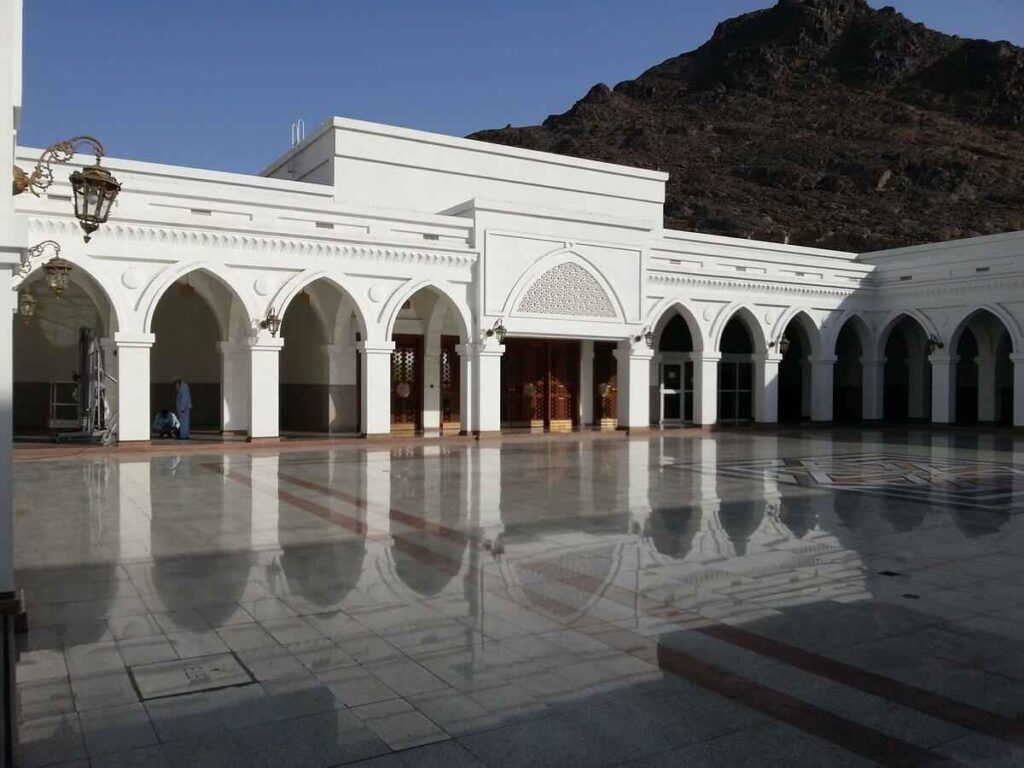
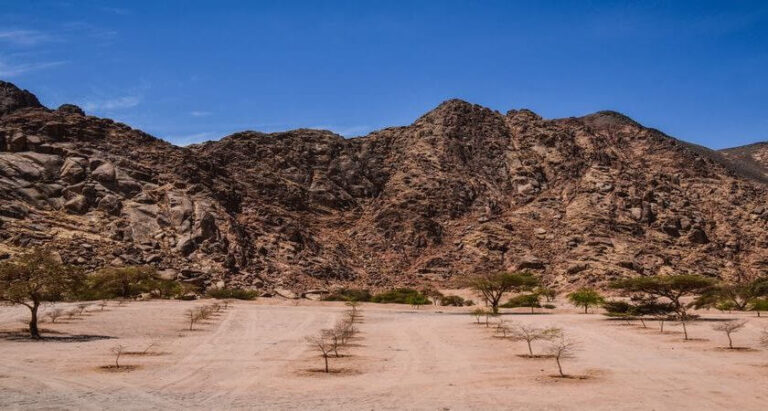
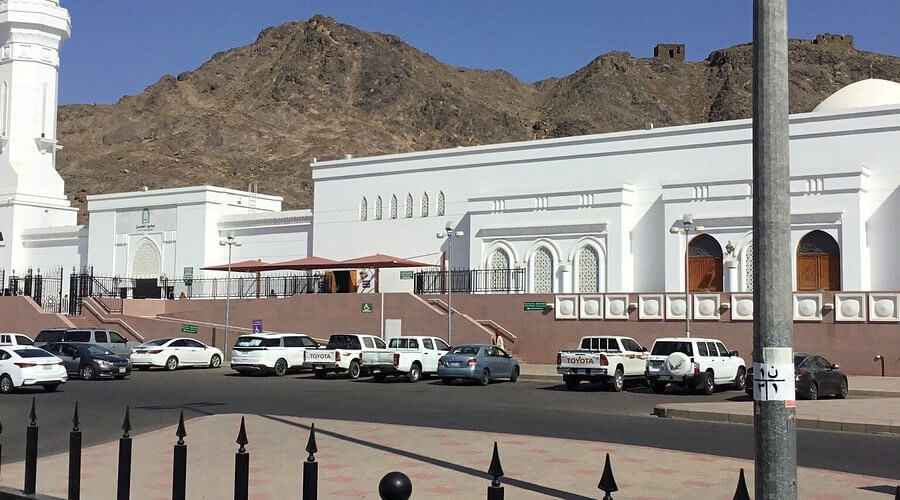
The Seven Mosques are a cluster of small historical mosques located at the foot of Mount Sela’ (Jabal Sila’), on the northwestern side of Madinah, near the site where the trench (khandaq) was dug to defend the city in the 5th year after the Hijrah. Historical accounts report that the Prophet ﷺ and his companions prayed at these locations, and the mosques were originally built in stone during the governorship of Umar ibn Abdulaziz in the Umayyad era, between 706 and 712 CE. They have been renovated more than once since then, including in the 12th century and again in the 19th century.
The area is sometimes called the Al-Fath neighborhood, and locally it is also known by names such as Al-Seeh, the Trench, or Sela’ Mount.
Why Are They Called “Seven” When There Are Six Mosques?
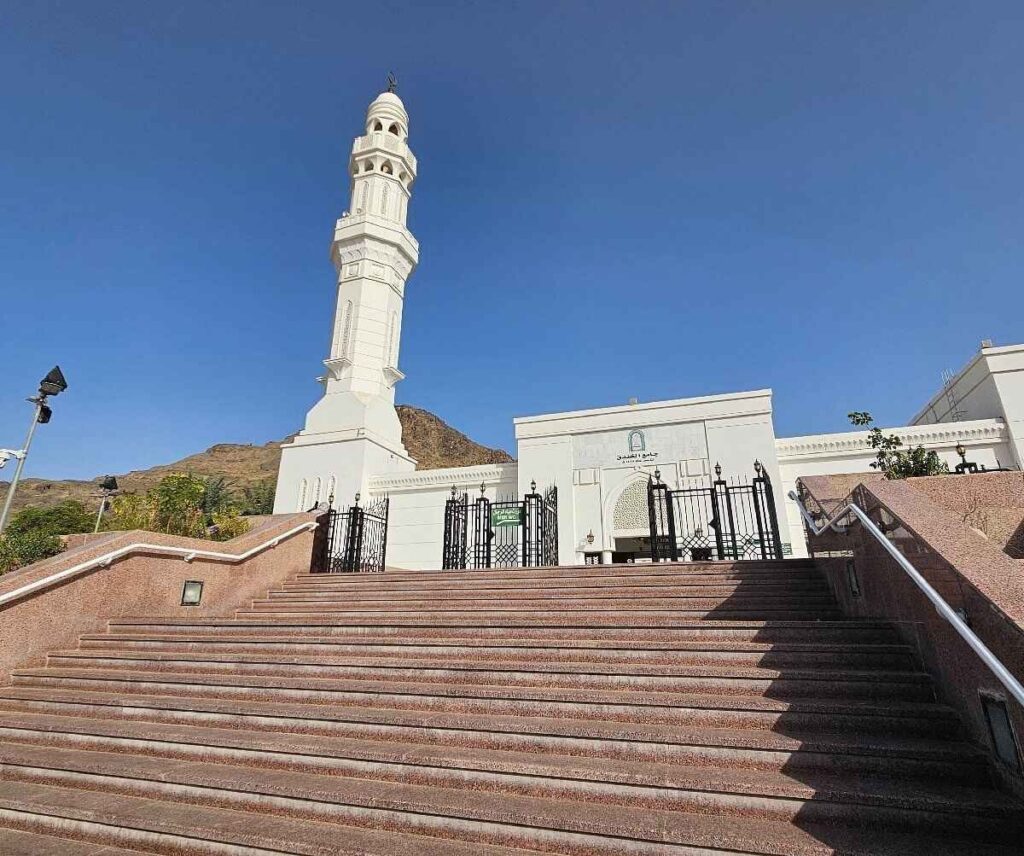
This is one of the most common questions visitors ask, and it has a straightforward answer: the core group actually consists of six mosques, not seven. Their actual number is six, and from north to south they are Al-Fath Mosque (also called Al-Ahzab Mosque), Abu Bakr Al-Siddiq Mosque, Umar bin Al-Khattab Mosque, Ali bin Abi Talib Mosque, Fatimah Al-Zahra Mosque, and Salman Al-Farisi Mosque.
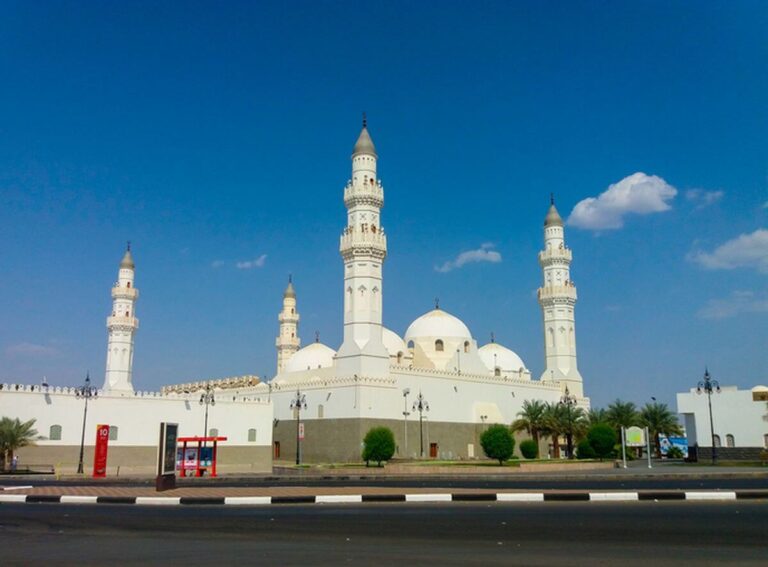
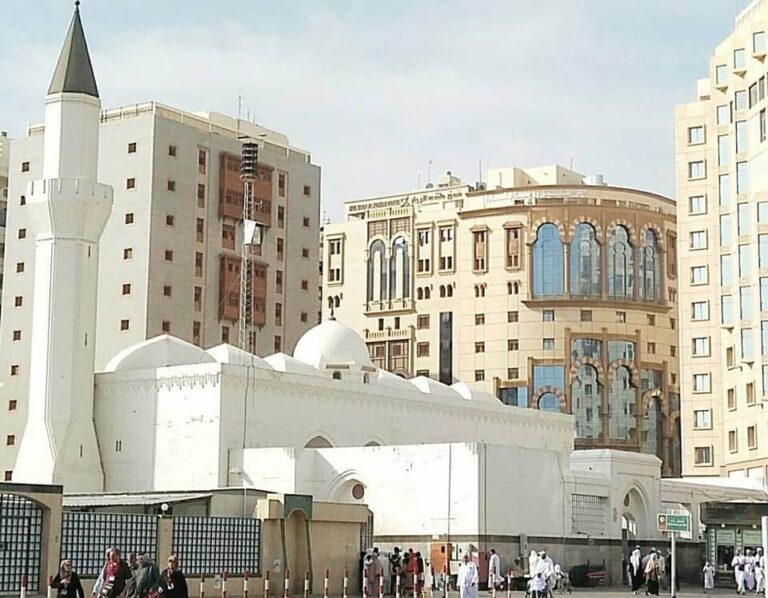
Masjid Al-Qiblatain, located roughly a kilometer away, is commonly counted as the seventh because most visitors combine both sites in the same trip. Because it’s typically visited during the same outing, it has become collectively grouped with the other six to form the “Seven Mosques.” Some historical accounts instead identify a different structure — such as Masjid al-Rayah, where the Prophet’s banner was first planted, or Masjid Sa’d ibn Mu’adh — as the “true” seventh site, so you may see slightly different lists depending on the source. In practice, most modern Ziyarat itineraries treat the six-mosque cluster plus Al-Qiblatain as “the Seven Mosques,” and that is the version most visitors encounter today.
The History Behind the Seven Mosques
The Battle of the Trench (Ghazwat al-Khandaq)
In the 5th year of Hijrah, a large confederate army marched on Madinah intending to overwhelm the small Muslim community. Facing a force that vastly outnumbered them, the Muslims adopted a defensive strategy that had not been used in Arabian warfare before: digging a wide trench along the city’s exposed northern approach to block the advance of enemy cavalry. The strategy is traditionally attributed to the companion Salman al-Farsi, and the defenders — vastly outnumbered by the coalition force — held the line for an extended siege before the coalition eventually withdrew. The victory is widely regarded as a turning point that weakened the opposing coalition’s influence going forward.
Because exact figures vary between historical accounts, this article avoids stating precise troop numbers or an exact siege duration as fixed fact — readers researching the battle in depth should consult established Islamic historical sources.
Why the Mosques Were Built
The mosques were not built during the battle itself. They were constructed afterward, in commemoration of the event and of the companions who played a prominent role in it, at the same sites along the trench line where the Prophet ﷺ and his senior companions are reported to have stood, prayed, and directed the defense. This is an important distinction: the Seven Mosques are commemorative and historical sites rather than mosques with a continuous, unbroken history of congregational worship from the time of the Prophet ﷺ.
The Mosques and What Each One Represents
Masjid Al-Fath
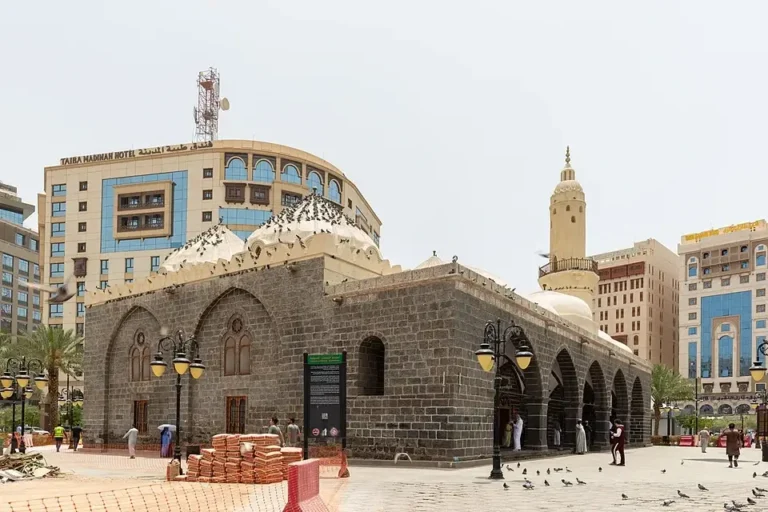
Masjid Al-Fath (“Mosque of Victory”) is the largest and most prominent of the group, built on elevated ground with a wide view over the old battlefield. Tradition holds that the Prophet ﷺ used this position as a command point during the siege and spent an extended period in supplication here. Its name reflects the idea of a victory granted through resilience and faith rather than a conventional military engagement.
Masjid Salman al-Farsi
Located close to Masjid Al-Fath, this mosque commemorates Salman al-Farsi, the companion credited with proposing the trench strategy that gave the battle its name. It stands as a marker of the practical, strategic thinking that shaped the city’s defense.
Masjid Abu Bakr, Masjid Umar, and Masjid Ali
These three smaller mosques commemorate three of the Prophet’s closest companions — Abu Bakr, Umar ibn al-Khattab, and Ali ibn Abi Talib — who are associated with holding positions along the defensive line during the siege. They sit close together within the same complex.
Masjid Fatimah az-Zahra
This mosque, sometimes also linked historically to the companion Sa’d ibn Mu’adh, commemorates the Prophet’s daughter Fatimah az-Zahra. It completes the six-mosque cluster at the base of Mount Sela’.
Masjid Al-Qiblatain — The “Seventh” Mosque
Located about a kilometer from the main cluster, Masjid Al-Qiblatain (“Mosque of the Two Qiblahs”) is historically significant in its own right: it is associated with the change of the direction of prayer from Jerusalem to Makkah. Although it is a separate and older site historically, it is commonly grouped with the Seven Mosques in modern Ziyarat itineraries because pilgrims typically visit it in the same trip.
Where Are the Seven Mosques Located?
The mosques sit northwest of Masjid an-Nabawi, at the foothills of Mount Sela’, in an area that once formed the northern defensive line of the city. The exact course of the original trench has faded over the centuries, though the general area and some commemorative markers remain. The site is close enough to central Madinah that it’s typically visited alongside other historical Ziyarat stops rather than as a standalone trip.
What to Expect When You Visit Today
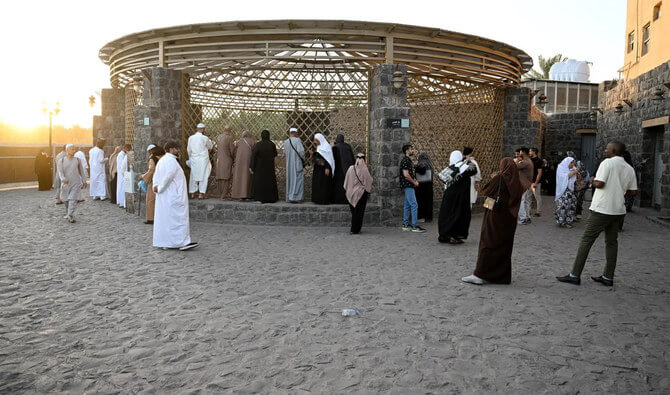
It’s worth setting accurate expectations before you go: the original small, individual stone mosques are not preserved as separate freestanding buildings in the way some older descriptions suggest. Development over the years has changed the site considerably, and in places the individual mosques have been incorporated into a larger modern mosque complex rather than remaining as six distinct small structures. If your main interest is the historical layout of the original small mosques, understand that what you’ll see today reflects a modern, renovated site built around the historical locations rather than untouched centuries-old structures.
This doesn’t reduce the significance of the visit — it simply means visitors should come with the expectation of a maintained, accessible commemorative site rather than an archaeological ruin.
How Long Does a Visit Take?
There’s no single fixed duration — it depends on how long you spend at each stop, whether you go during a quiet or busy period, and whether you combine the visit with Masjid Al-Qiblatain or other nearby sites. Many visitors budget a portion of a morning or afternoon for the Seven Mosques alone, and extend that if Qiblatain and Quba are included in the same outing. If your time in Madinah is limited, it’s worth planning this as part of a broader half-day Ziyarat rather than a single-site trip.
Planning Your Ziyarat: Combining the Seven Mosques With Other Sites
Because the Seven Mosques sit relatively close to several other well-known Ziyarat locations, many pilgrims combine the visit with:
- Masjid Al-Qiblatain — often visited immediately before or after the main cluster
- Masjid Quba — the first mosque built in Islam, located in a different direction from central Madinah
- Jannat al-Baqi and other historical sites near Masjid an-Nabawi
Grouping these stops into one outing is more practical with private transportation, since public transport schedules and fixed tour timings don’t always match how much time a family or group wants to spend at each location. A private Ziyarat taxi allows the order and pace of the visit to be adjusted on the day, rather than following a rigid group schedule.
Visitor Etiquette at the Seven Mosques
- Dress modestly, as you would for any mosque visit
- Keep voices low and behave respectfully, since this remains a site of religious and historical significance for many visitors
- Photography is generally common at the site, but be mindful of other visitors, especially those who are praying or reflecting quietly
- Avoid disputing or debating historical details with other visitors or guides at the site itself — if you’re unsure about a historical point, it’s better to research it from a reliable source afterward
- Be considerate of elderly visitors and families, as pathways and entry points can get busy during peak pilgrimage periods
Best Time to Visit
Early morning and late afternoon are generally more comfortable, particularly during the hotter months, since the site involves some walking in open, exposed areas. During Ramadan and peak Hajj or Umrah seasons, footfall at popular Ziyarat sites across Madinah tends to increase, so allowing extra time is sensible. Conditions and crowd levels can vary by season and day, so it’s worth checking current conditions locally rather than assuming a fixed pattern.
Getting to the Seven Mosques: Transportation Options
Private Ziyarat Taxi
The Seven Mosques are typically visited as part of a wider Ziyarat route rather than in isolation, which makes transportation planning a genuine practical consideration — especially for visitors unfamiliar with Madinah. A private Ziyarat taxi allows visitors to travel directly from their hotel to the Seven Mosques and on to other sites such as Qiblatain or Quba, without depending on fixed public transport routes or group tour schedules.
Visitors looking for private transportation can contact Madinah Ziyarat Taxi through WhatsApp at +966 57 4915 372 to ask about availability, vehicle options, hotel pickup arrangements, or a customized multi-stop Ziyarat itinerary that includes the Seven Mosques.
Family and Group Considerations
For families traveling with children or elderly relatives, or for larger groups, a private vehicle can make it easier to manage pace and rest stops between locations. A sedan may suit a couple or small family, while a larger vehicle such as a van or SUV can be more practical for a group traveling together and wanting to stay in one vehicle for the full route. The right vehicle choice generally depends on group size and how many stops are planned for the day — this is worth discussing directly when arranging transportation, since availability and options can vary.
FAQs
What are the Seven Mosques in Madinah?
They are a cluster of historical mosques near Mount Sela’ in Madinah, built to commemorate the sites where the Prophet ﷺ and his companions defended the city during the Battle of the Trench.
Why are they called the Seven Mosques if there are only six?
The core cluster consists of six mosques. Masjid Al-Qiblatain, located about a kilometer away, is commonly counted as the seventh because pilgrims typically visit it during the same trip.
What is the Battle of the Trench?
It was a major defensive battle in the 5th year of Hijrah, in which the Muslims of Madinah dug a trench along the city’s exposed northern side to block a large opposing coalition force.
Are the original small mosques still standing today?
The site has undergone significant development over the centuries and more recently, so what visitors see today largely reflects a maintained, renovated complex built around the historical locations rather than untouched original structures.
How long does it take to visit the Seven Mosques?
There’s no fixed duration – it depends on your pace and whether you combine the visit with Masjid Al-Qiblatain or other nearby sites. Many visitors plan it as part of a half-day Ziyarat.
Can I visit the Seven Mosques and Masjid Al-Qiblatain in the same trip?
Yes, this is the most common way visitors experience the site, since the two locations are close together and typically included in the same Ziyarat route.
Is Masjid Quba also close to the Seven Mosques?
Quba is a separate site in a different direction from central Madinah. It can be included in the same day’s Ziyarat but generally isn’t reached from the Seven Mosques on foot.
Where exactly are the Seven Mosques located?
They are northwest of Masjid an-Nabawi, at the foot of Mount Sela’, in the area known locally as the Al-Fath neighborhood.
Is private transportation useful for visiting the Seven Mosques?
Yes – because most visitors combine this site with others in the same outing, private transportation makes it easier to move between stops at your own pace, especially for families, elderly travelers, and groups.
Can a taxi pick me up from my hotel for a Seven Mosques Ziyarat trip?
Private Ziyarat taxi services generally offer hotel pickup and drop-off. Contact your provider directly to confirm arrangements for your specific hotel and itinerary.
Is the Seven Mosques visit suitable for elderly travelers?
The site involves some walking, but a private vehicle can reduce the physical demands of getting between stops. It’s worth discussing pace and rest needs when planning the day.
What should I wear when visiting the Seven Mosques?
Modest clothing, similar to what you’d wear when visiting any mosque in Madinah, is appropriate.
How do I book a private Ziyarat taxi that includes the Seven Mosques?
You can contact Madinah Ziyarat Taxi via WhatsApp at +966 57 4915 372 to discuss a custom itinerary that includes the Seven Mosques and other nearby historical sites.
Plan Your Visit With Madinah Ziyarat Taxi
Whether you’re visiting the Seven Mosques as a single stop or combining it with Masjid Al-Qiblatain, Quba, and other Madinah historical sites, planning the route in advance makes the day easier — particularly for families and groups traveling together. Madinah Ziyarat Taxi offers private transportation with hotel pickup for visitors who want a flexible, unhurried Ziyarat experience. To ask about vehicle options or arrange a custom itinerary, reach out via WhatsApp at +966 57 4915 372 or visit madinahziyarattaxi.com.