Uhud Martyrs Cemetery: A Complete Ziyarat Guide for Visitors to Madinah
Uhud Martyrs Cemetery (Shuhada Uhud) is the burial site of the companions who were killed in the Battle of Uhud in 3 AH (625 CE), including Hamza ibn Abdul Muttalib, the Prophet Muhammad’s ﷺ uncle. It sits at the foot of Mount Uhud, a short drive north of Masjid an-Nabawi, and is one of the most visited Ziyarat sites in Madinah after the Prophet’s Mosque itself.
What Is Uhud Martyrs Cemetery?
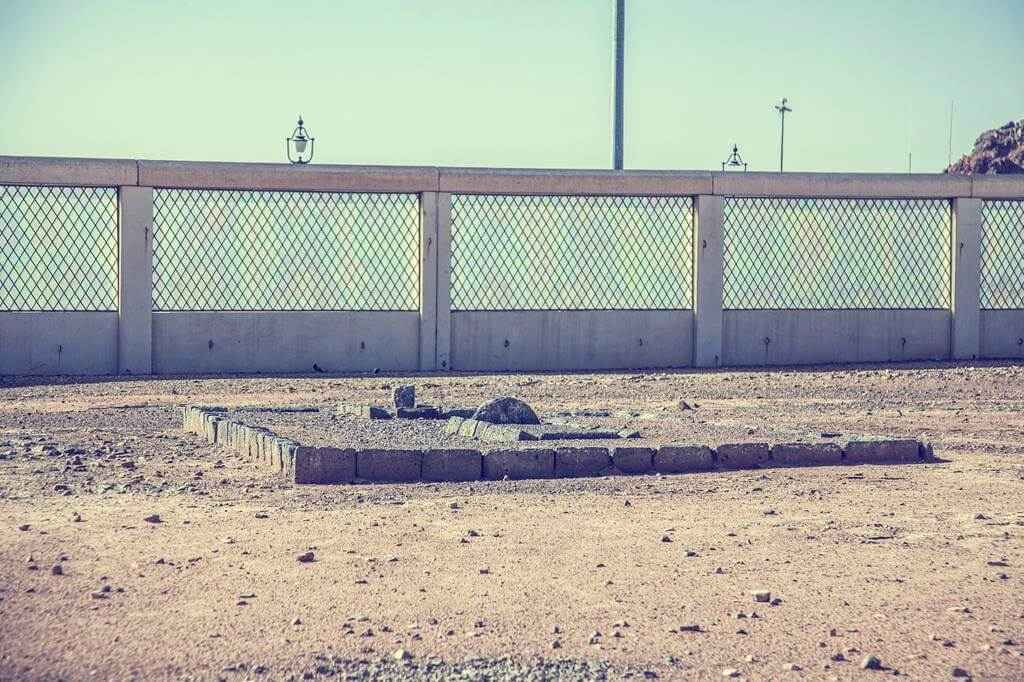
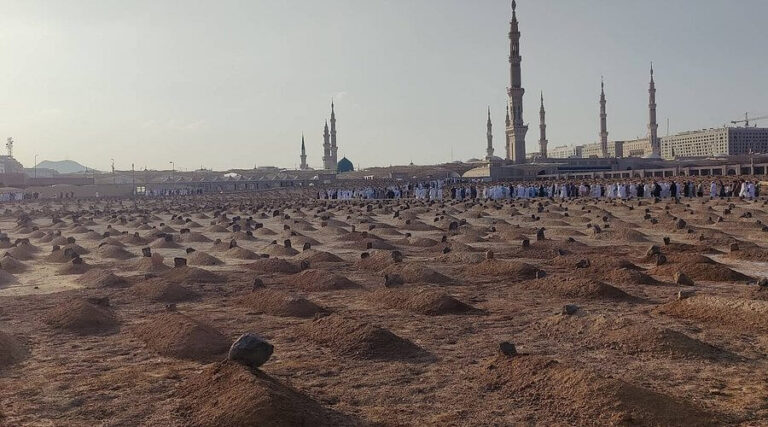
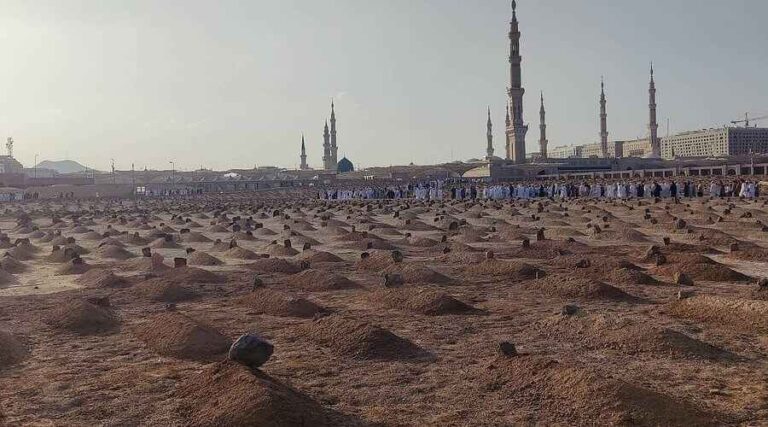
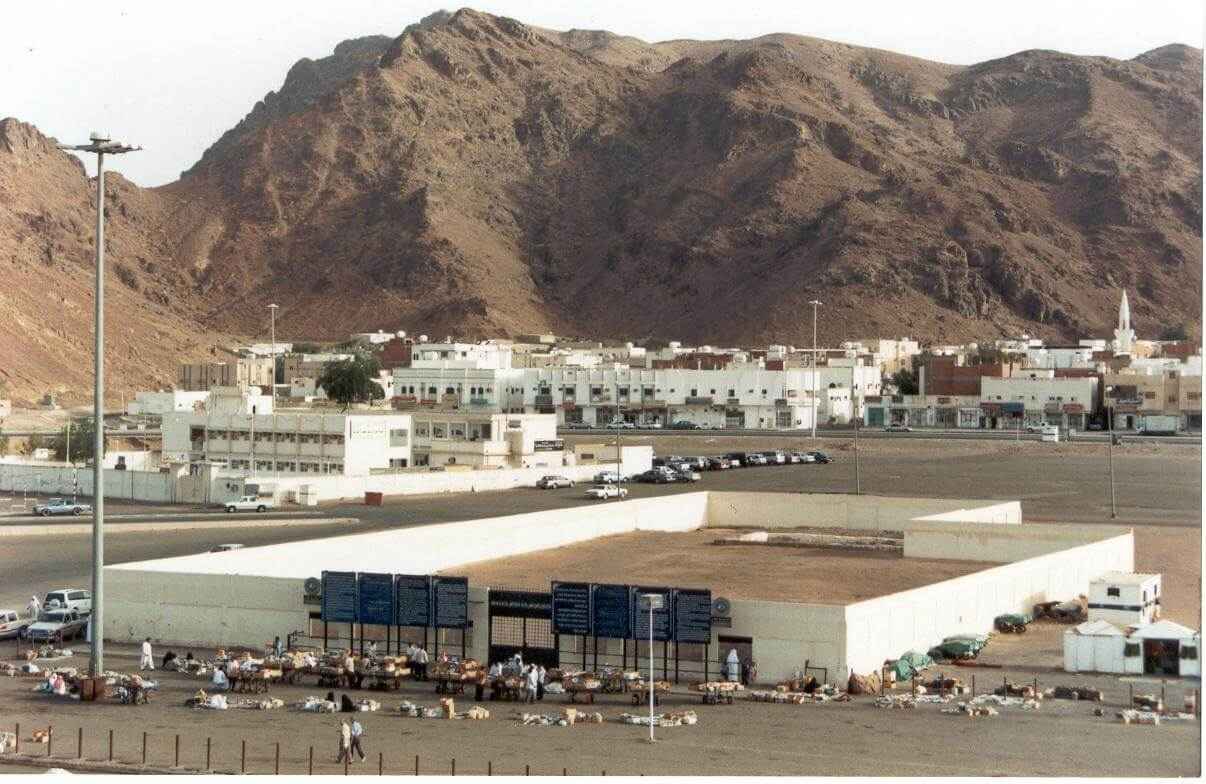
Uhud Martyrs Cemetery, also known as Shuhada Uhud, is a walled burial ground located at the base of Mount Uhud in northern Madinah. It holds the graves of the companions of the Prophet Muhammad ﷺ who were martyred during the Battle of Uhud. The most prominent name among them is Hamza ibn Abdul Muttalib, remembered in Islamic tradition as “Sayyid al-Shuhada,” meaning Chief of the Martyrs.
The site is not a general public cemetery. It is treated as a place of remembrance connected directly to one of the defining events of early Islamic history, and it draws a steady stream of Umrah and Hajj pilgrims, along with other visitors to Madinah, throughout the year.
The Battle of Uhud – Historical Background
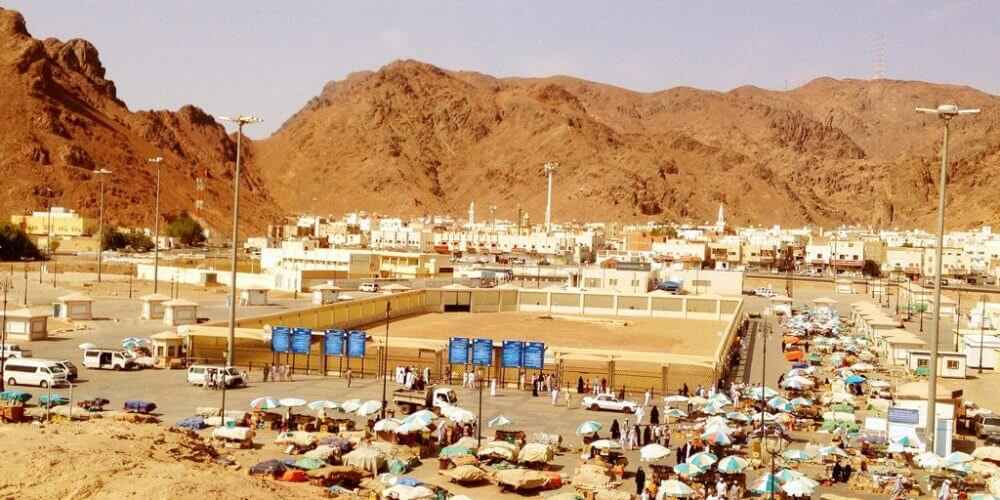
The Battle of Uhud took place in the third year after the Hijrah, roughly a year after the Muslims’ victory at the Battle of Badr. A Qurayshi force from Makkah, seeking to avenge their earlier defeat, marched toward Madinah. The two armies met near Mount Uhud, just outside the city.
Early in the battle, the Muslim forces held the advantage. However, a change in position by a group of archers stationed on a nearby hill allowed the Qurayshi cavalry to regroup and counterattack, turning the course of the battle. Around seventy companions were killed in the fighting that followed. The battle is remembered in Islamic teaching as a lesson about discipline and obedience as much as a historical military event, and it remains one of the most studied episodes of the Prophet’s ﷺ lifetime.
This history is why the cemetery at the foot of Mount Uhud carries such weight for visitors — it is not simply a burial ground, but a physical link to that day.
Who Is Buried at Uhud Martyrs Cemetery?
Uhud Martyrs Cemetery is the resting place of the roughly seventy companions killed in the battle. The best-known of them is Hamza ibn Abdul Muttalib, the Prophet’s ﷺ paternal uncle and one of the earliest, most committed supporters of the Muslim community in Makkah before the migration to Madinah. He is buried alongside his nephew, Abdullah ibn Jahsh, who was also martyred in the same battle.
Historical sources note that a domed structure once stood over Hamza’s grave, but it was removed during renovation works in the early twentieth century, and the site today is kept deliberately simple — in keeping with general Islamic guidance discouraging elaborate structures over graves.
Religious and Historical Significance of Visiting
Visiting the graves of the martyrs of Uhud has a long-established place in Madinah Ziyarat practice. Various hadith narrations describe the Prophet Muhammad ﷺ visiting the graves of the martyrs of Uhud himself and offering supplication for them, which is part of why this remains a recommended (not obligatory) practice for visitors to Madinah today.
It’s worth being clear about what this means in practice: Ziyarat to Uhud is not a pillar or requirement of Umrah or Hajj. It is a historical and spiritual visit that many pilgrims choose to make while they are already in Madinah, separate from the rites of the pilgrimage itself. Visitors are generally encouraged to offer salutations and supplicate for the martyrs from outside the enclosure, while avoiding practices some scholars caution against, such as touching the graves, tying threads, or leaving money or written notes at the site.
Sayed al-Shuhada Mosque and the Surrounding Site
Next to the cemetery stands the Sayed al-Shuhada Mosque (“Mosque of the Master of Martyrs”), a modern mosque built near the historical burial ground, with clean, well-maintained prayer spaces for both men and women. Nearby, Jabal Rumah, often called Archers’ Hill, marks the position where the Muslim archers were stationed during the battle — a spot many visitors point out as they take in the wider battlefield.
Together, the mosque, the cemetery enclosure, and the surrounding slopes of Mount Uhud form a single historical area that visitors typically take in during one stop, rather than as separate destinations.
Where Is It Located and How Far From Masjid an-Nabawi?
Uhud Martyrs Cemetery sits roughly 4–6 kilometers north of Masjid an-Nabawi, depending on the exact route taken. By car, the journey generally takes somewhere in the range of 10–15 minutes, though this can vary with traffic, time of day, and road conditions — particularly during busy Umrah periods or around prayer times. There is no fixed, official published travel time, so it’s sensible to build in some flexibility rather than plan around an exact number of minutes.
How to Visit – Transportation Options
Visitors typically reach Uhud Martyrs Cemetery in one of a few ways:
- Public or shared transport, where available, though schedules and routes can be limited and less convenient for elderly travelers or families with children.
- Group tour transport, often bundled with other Ziyarat stops as part of a package.
- Private taxi or private driver service, booked directly for the trip, which allows visitors to go at their own pace rather than following someone else’s schedule.
For visitors who want to go straight from their hotel to Uhud without coordinating around a group or public transport timetable, private transportation is often the more practical option. This is particularly true for families traveling with children or elderly relatives, or for visitors who also want to combine the trip with other historical sites, such as Quba Mosque or the Qiblatain Mosque, in the same outing.
Visitors looking for private transportation can contact Madinah Ziyarat Taxi through WhatsApp at +966 57 4915 372 to ask about hotel pickup, vehicle options, and putting together a Ziyarat route that includes Uhud alongside other sites, based on how much time is available.
What to Expect During Your Visit (Etiquette)
A few practical points worth knowing before arriving:
- Visitors generally stand outside the boundary wall of the cemetery enclosure rather than walking among the individual graves.
- It is customary to offer salutations (salām) and make du’ā for the martyrs from outside the enclosure.
- Loud conversation, photography of the graves themselves, and physical contact with the graves are generally discouraged out of respect for the site and Islamic etiquette around graves.
- Modest dress is expected, as with any religious or historical site in Madinah.
- Access arrangements at the site can occasionally change, including around very busy periods, so it’s worth checking current conditions closer to your visit rather than assuming access will be identical to a previous trip.
Best Time to Visit
Mornings, before the midday heat sets in, tend to be a more comfortable time to visit, particularly in summer when temperatures in Madinah can be extreme. During Ramadan and peak Umrah or Hajj season, the site and surrounding roads can be considerably busier, so allowing extra time is sensible. Visitors performing a broader Ziyarat circuit sometimes prefer to schedule Uhud for a quieter part of the week, though this is a matter of personal planning rather than any fixed rule.
Planning It Into a Wider Madinah Ziyarat Route
Because Uhud Martyrs Cemetery sits on the northern side of the city, it’s commonly combined with other nearby historical sites in a single half-day or full-day Ziyarat trip – for example, alongside Quba Mosque, the Qiblatain Mosque, or other sites sometimes grouped together as the “Seven Mosques.” Grouping stops this way, using a single private vehicle for the whole route, generally saves time compared to arranging transport separately for each location.
A custom itinerary – built around how many sites a visitor wants to cover and how much time they have — is often more efficient than fixed group tour timings, which is one reason some visitors prefer arranging a private Ziyarat taxi directly.
Tips for Families, Elderly Visitors, and Groups
- Families with children: A private vehicle avoids the waiting and walking distances that can come with shared or public transport, which matters most with young children in the summer heat.
- Elderly travelers: Door-to-door pickup from the hotel reduces the amount of walking required before and after the visit itself.
- Groups: A larger private vehicle can keep everyone together for the whole route rather than splitting across multiple taxis, which is often simpler when coordinating a group itinerary that includes several stops.
- All visitors: Carrying water, wearing comfortable shoes, and dressing modestly are sensible basics for any Ziyarat trip in Madinah’s climate.
FAQs
1. What is Uhud Martyrs Cemetery?
It is the burial site at the foot of Mount Uhud in Madinah for the companions killed in the Battle of Uhud, most notably Hamza ibn Abdul Muttalib, the Prophet’s ﷺ uncle.
2. Who is buried at Uhud Martyrs Cemetery?
Around seventy companions martyred in the Battle of Uhud are buried there, with Hamza ibn Abdul Muttalib being the most well-known.
3. How far is Uhud Martyrs Cemetery from Masjid an-Nabawi?
It is roughly 4–6 kilometers north of the Prophet’s Mosque, generally around a 10–15 minute drive, though this can vary with traffic and route.
4. Can visitors enter the cemetery itself?
Visitors generally remain outside the boundary enclosure and offer salutations and supplication from there, rather than walking among the individual graves.
5. Are women allowed to visit Uhud Martyrs Cemetery?
Yes, women are generally able to visit the area and the nearby Sayed al-Shuhada Mosque, which has facilities for both men and women, though it’s worth being mindful of site-specific etiquette on arrival.
6. Is visiting Uhud part of Umrah or Hajj?
No. Visiting the martyrs of Uhud is a historical and spiritual Ziyarat practice, not a pillar or requirement of Umrah or Hajj.
7. Is it recommended in Islam to visit the martyrs of Uhud?
Several hadith narrations describe the Prophet ﷺ visiting the graves of the Uhud martyrs, which is part of why this Ziyarat is widely considered a recommended, though not obligatory, practice.
8. How long does a visit to Uhud Martyrs Cemetery take?
This depends on the visitor and whether other nearby sites are included, but a stop at the cemetery and mosque area is typically a relatively short part of a longer Ziyarat outing.
9. What is Sayed al-Shuhada Mosque?
It is a mosque built near the martyrs’ cemetery, named “Master of the Martyrs” in reference to Hamza ibn Abdul Muttalib, with prayer facilities for men and women.
10. Can I combine a visit to Uhud with other Ziyarat sites?
Yes. Many visitors combine it with Quba Mosque, the Qiblatain Mosque, and other nearby historical sites in a single half-day or full-day trip.
11. Can I book a private taxi to Uhud Martyrs Cemetery?
Yes, private Ziyarat taxis are available for visitors who prefer hotel pickup and a flexible route. Madinah Ziyarat Taxi can be contacted via WhatsApp at +966 57 4915 372 to discuss options.
12. Is private transportation better for families visiting Uhud?
Private transportation can be more convenient for families, since it allows door-to-door pickup and avoids depending on public transport schedules, though the right option depends on each family’s needs and budget.
13. What should I wear or bring when visiting?
Modest clothing, comfortable shoes, and water are sensible for any Ziyarat visit in Madinah, especially in the summer months.
14. What is the best time of day to visit Uhud?
Morning visits, before peak heat, tend to be more comfortable, particularly outside of the cooler winter months.
15. Is Uhud Martyrs Cemetery crowded during Ramadan or Hajj season?
The site and surrounding roads are generally busier during Ramadan and peak Hajj/Umrah periods, so allowing extra travel time is a good idea.