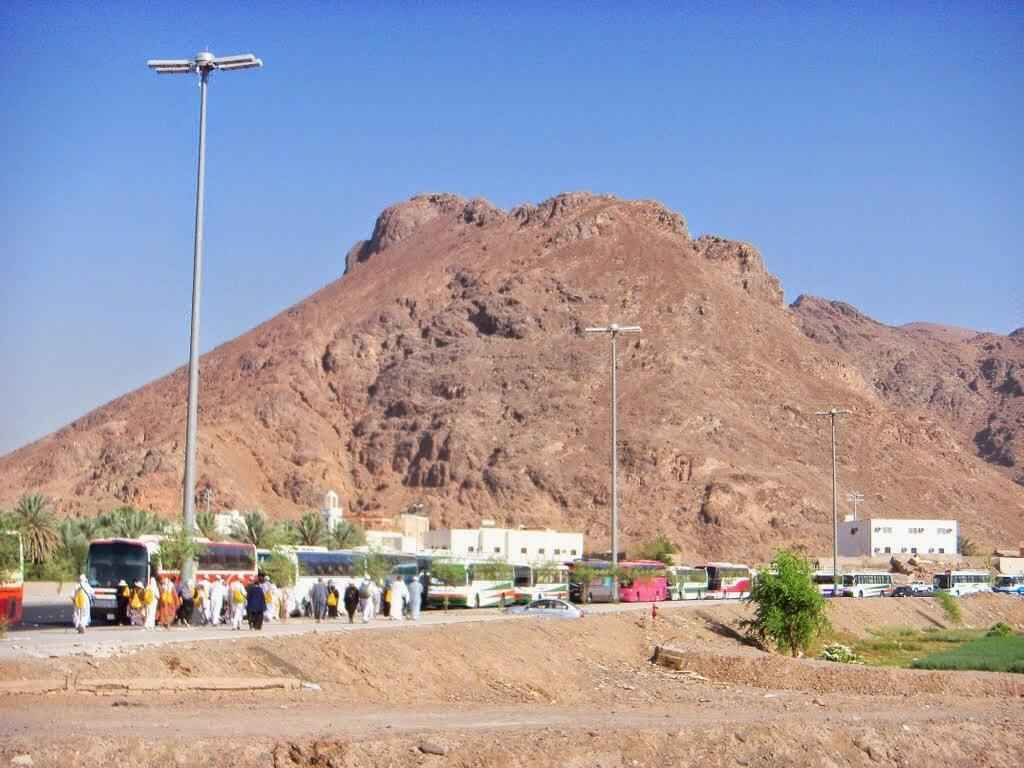
Jabal Uhud, Madinah: History, Significance, and a Complete Visitor Guide
Jabal Uhud (also written as Mount Uhud) is a mountain on the northern edge of Madinah, Saudi Arabia, best known as the site of the Battle of Uhud in the third year after Hijrah. For visitors performing Umrah or Hajj, or simply exploring Madinah’s Islamic heritage, Uhud is one of the most commonly visited Ziyarat sites outside Al-Masjid an-Nabawi — combining a significant piece of early Islamic history with a peaceful cemetery, a large mosque, and a hill that visitors can still climb today.
This guide covers what happened at Uhud, what you’ll actually see when you visit, how far it is from the Prophet’s Mosque, and how to plan a comfortable trip — whether you’re traveling alone, with family, or in a group.
What Is Jabal Uhud?
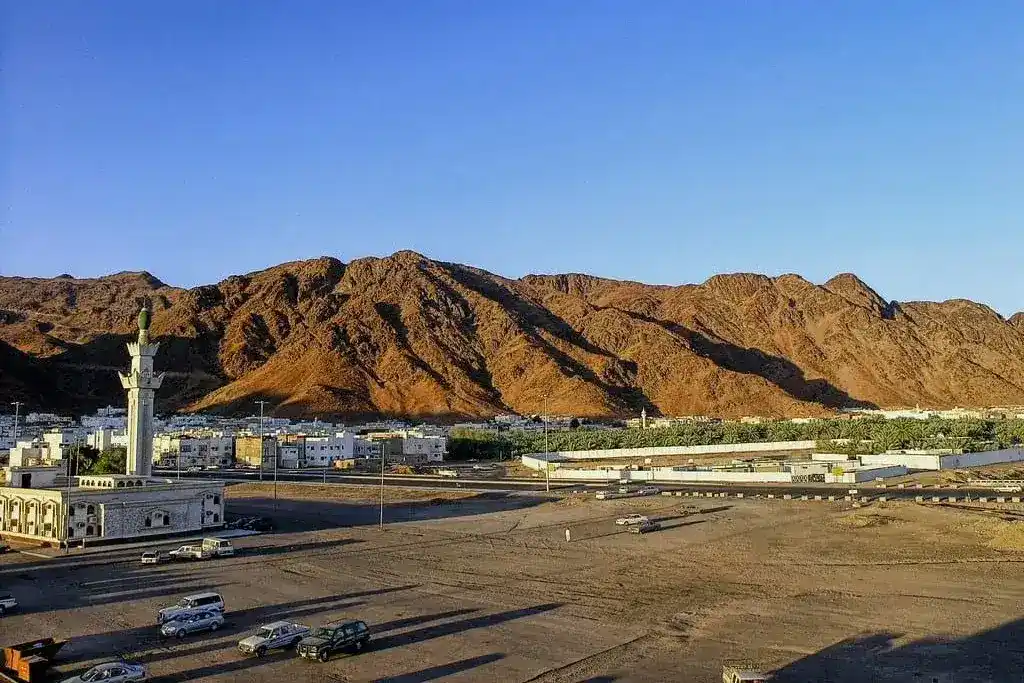
Jabal Uhud is a long, standalone mountain ridge on the northern side of Madinah. It is not part of a larger mountain range, which is part of why it has long stood out as a distinct landmark for the city. Historically, it marked the site of the second major battle fought by the early Muslim community, and today the surrounding area — sometimes referred to as the Sayyid al-Shuhada zone — has been developed into a heritage and Ziyarat site with a mosque, a martyrs’ cemetery, and public access to parts of the mountain itself.
For Muslim visitors, Uhud is not an obligatory stop on Umrah or Hajj. It is a Ziyarat — a recommended visit — valued for its direct connection to a defining moment in the Prophet’s ﷺ life and the sacrifice of his companions.
The Battle of Uhud — A Brief, Accurate History
The Battle of Uhud took place at the foot of the mountain in 3 AH (625 CE), roughly a year after the Battle of Badr. It was fought between the Muslims of Madinah, led by Prophet Muhammad ﷺ, and a Quraysh force from Makkah seeking to avenge their earlier defeat.
Jabal al-Rumah (Archers’ Hill)
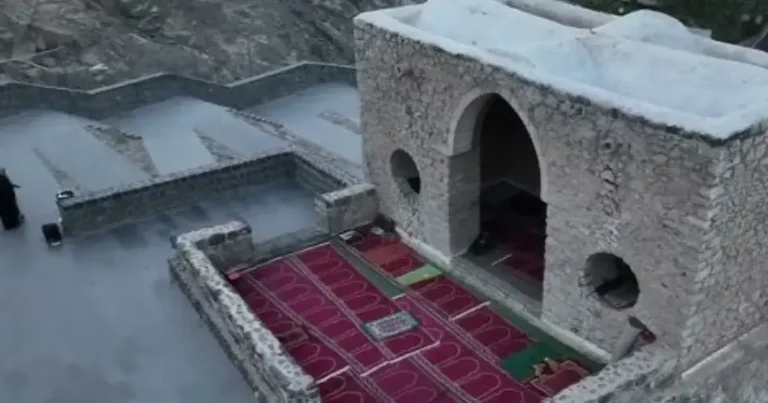
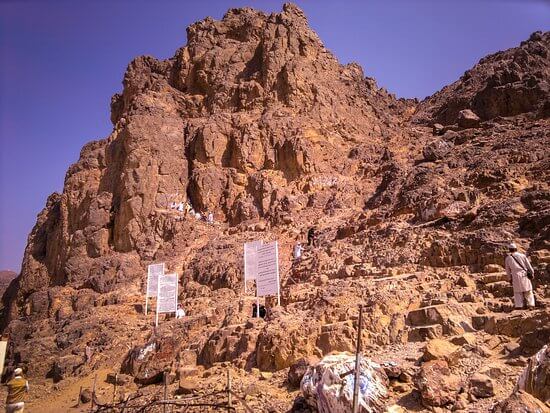
A key part of the battle’s history centers on a small hill known as Jabal al-Rumah, or the Archers’ Hill. The Prophet ﷺ positioned a group of archers there with clear instructions to hold their position regardless of how the battle appeared to be going. When many of the archers left the hill — believing the battle was already won — opposing cavalry moved through the gap, and the tide of the battle turned sharply against the Muslim side. This hill remains one of the most visited points at Uhud today, and visitors are able to climb it to see the battlefield from the same vantage point the archers once held.
The Martyrdom of Hamza ibn Abdul-Muttalib
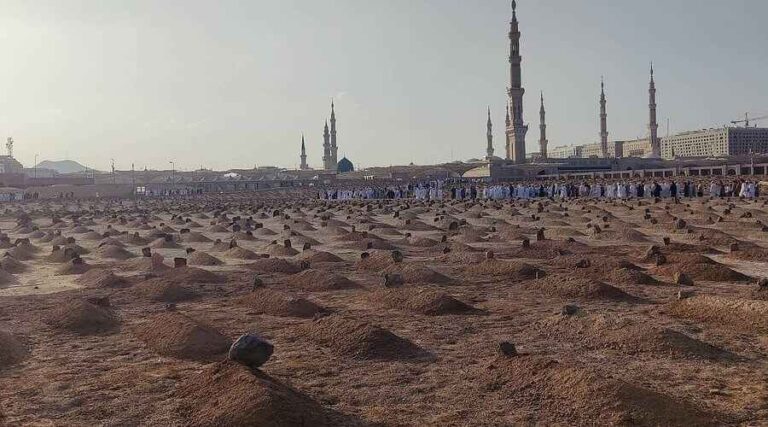
Approximately seventy companions were martyred at Uhud, among them Hamza ibn Abdul-Muttalib, the Prophet’s ﷺ uncle. Their burial took place on the battlefield itself, and their graves remain at what is now known as the Uhud Martyrs’ Cemetery — the same ground where the events of the battle unfolded.
Uhud also carries a well-known saying attributed to the Prophet ﷺ describing his affection for the mountain, which is one reason the site continues to hold deep emotional significance for visitors today, beyond its historical facts alone.
What You Will See at Jabal Uhud Today
A visit to Uhud typically covers three connected but distinct areas.
Sayyid al-Shuhada Mosque
The mosque near the base of the mountain — known as Masjid Sayyid al-Shuhada — was rebuilt and expanded as part of a modern development project, with a single dome and two minarets, and capacity for a large number of worshippers. Many visitors pray here before or after visiting the cemetery.
Uhud Martyrs’ Cemetery
The cemetery holding the graves of the martyrs of Uhud is enclosed rather than freely walkable. Visitors typically stand at the railings surrounding the site, offer salām, and make du’ā for the martyrs rather than entering or touching the graves. The graves themselves are simple and largely unmarked, in keeping with a modest, respectful presentation rather than an elaborate memorial.
Ghar Uhud (Cave of Uhud)
Some visitors also seek out the cave associated with the Prophet’s ﷺ retreat after the difficult turn the battle took, along with a small mosque nearby. Availability and accessibility of this specific spot can vary, so it’s worth confirming locally or with your driver on the day of your visit.
How Far Is Jabal Uhud from Masjid an-Nabawi?
Distance figures for Uhud vary between sources – generally somewhere in the range of about 5 to 7 kilometers north of Al-Masjid an-Nabawi, depending on exactly which point of the mosque and which point of the Uhud site (the mosque area, the cemetery, or the mountain’s edge) is being measured. In practice, it’s a short, straightforward drive from central Madinah, typically taking well under half an hour outside of heavy traffic — though actual travel time can vary with time of day, season, and road conditions, so treat any specific minute count as an estimate rather than a guarantee.
Visitor Etiquette at Uhud Martyrs’ Cemetery
Because this is an active burial site of deep religious significance, visitors are expected to observe clear etiquette:
- Dress modestly, covering shoulders and knees
- Keep a quiet, respectful tone — avoid loud conversation
- View the graves from outside the railings; do not attempt to enter or touch them
- Direct any supplication to Allah on behalf of the martyrs, rather than to the deceased themselves
- Photography may be restricted in certain areas — follow any posted signage or on-site guidance
Best Time to Visit Jabal Uhud
Madinah’s climate is hot for much of the year, and the Uhud site has limited shade in open areas, particularly around the cemetery and the hill. Many visitors prefer early morning or the period just before Maghrib, when temperatures are lower and the atmosphere is generally calmer. During Ramadan and peak Umrah or Hajj periods, expect larger numbers of visitors and potentially heavier traffic on the approach roads — timing a visit outside the busiest hours can make for a more comfortable experience.
How to Get to Jabal Uhud
Uhud is connected by regular roads, and while some visitors use public transport, most pilgrims and tourists — especially families, elderly travelers, and groups — prefer private transportation for the flexibility it offers.
Private Ziyarat Taxi
A private Ziyarat taxi allows you to travel directly from your hotel to Uhud without depending on a fixed schedule, and to spend as much or as little time at the mosque, cemetery, and Archers’ Hill as you’d like. This is particularly useful given the site’s limited shade — a waiting, air-conditioned vehicle makes the visit noticeably more comfortable, especially in warmer months.
Madinah Ziyarat Taxi offers hotel pickup and door-to-door service for Uhud and other Madinah historical sites, with private vehicles suited to individuals, couples, families, and larger groups. Visitors can contact Madinah Ziyarat Taxi through WhatsApp at +966 57 4915 372 to ask about availability, vehicle options, and pickup arrangements.
Combining Uhud with Other Ziyarat Sites
Uhud is often visited alongside other Madinah Ziyarat locations — such as Quba Mosque or Masjid al-Qiblatain — as part of a half-day or full-day itinerary. Since these sites are spread across different parts of the city, a private multi-stop trip removes the need to arrange separate transportation between each location, and allows the order and pace of the visit to be adjusted on the day, based on prayer times, weather, or how long you’d like to spend at each stop.
Practical Tips for Families, Elderly Visitors, and Groups
- Families with children: The open ground around the cemetery and hill has limited shade — bring water and consider timing the visit for cooler hours.
- Elderly travelers or those with mobility considerations: Door-to-door pickup and drop-off close to the site entrance reduces walking compared to relying on public transport or a shared group schedule.
- Groups: A larger private vehicle keeps everyone together for the trip and allows the group to move between the mosque, cemetery, and hill at a shared pace, rather than splitting up to find separate transport.
- General: Carry water, wear comfortable and modest clothing, and check the weather forecast for the day, since summer heat in Madinah can be intense even in the morning.
FAQs
What is Jabal Uhud?
Jabal Uhud is a mountain on the northern edge of Madinah, Saudi Arabia, known as the site of the Battle of Uhud fought in 3 AH (625 CE). Today it includes a mosque, a martyrs’ cemetery, and an area of the mountain open to visitors.
Is visiting Jabal Uhud obligatory for Umrah or Hajj?
No. Visiting Uhud is a Ziyarat — a recommended historical and spiritual visit — not a required ritual of Umrah or Hajj.
Who is buried at the Uhud Martyrs’ Cemetery?
The cemetery holds the graves of the approximately seventy companions martyred in the Battle of Uhud, including Hamza ibn Abdul-Muttalib, the Prophet’s ﷺ uncle.
How far is Jabal Uhud from Masjid an-Nabawi?
Roughly 5 to 7 kilometers, depending on the exact points measured. It’s generally a short drive from central Madinah, though actual travel time can vary with traffic and time of day.
Can I go inside the Uhud Martyrs’ Cemetery?
No. The cemetery is enclosed, and visitors view the graves from outside the railings, offering salām and du’ā rather than entering.
Can I climb Jabal Uhud?
Visitors are commonly able to climb Jabal al-Rumah (the Archers’ Hill), a smaller hill associated with the battle, for a view over the site. Access to other parts of the mountain can vary.
What should I wear when visiting Uhud?
Modest clothing covering the shoulders and knees is expected, in keeping with the site’s religious and cultural significance.
Is Jabal Uhud open every day?
The mosque and cemetery area are generally accessible daily, though prayer-time schedules and occasional local arrangements can affect access — it’s worth checking locally or with your driver if visiting at an unusual hour.
What is the best time of day to visit Jabal Uhud?
Early morning or the period before Maghrib tends to be cooler and quieter, which many visitors find more comfortable, especially during summer.
Can I combine a visit to Jabal Uhud with other Madinah Ziyarat sites?
Yes. Uhud is commonly visited together with sites such as Quba Mosque or Masjid al-Qiblatain as part of a half-day or full-day private Ziyarat trip.
Can a private taxi pick me up from my hotel for Jabal Uhud?
Yes. Madinah Ziyarat Taxi offers hotel pickup and drop-off for Uhud and other Ziyarat locations around Madinah.
Is private transportation useful for families visiting Uhud?
Yes — it allows a family to travel directly between sites, control their own pace at each stop, and avoid depending on public transport schedules, which can be especially helpful with children or elderly relatives.
Can I take photos at Jabal Uhud?
Photography may be restricted in certain areas, particularly close to the graves — follow any posted signage or guidance from staff.
What vehicle is suitable for a group visiting Uhud?
This depends on group size and specific needs; a larger family van or group vehicle is generally more practical for bigger groups, while a sedan may suit smaller parties. Visitors can ask Madinah Ziyarat Taxi about vehicle options for their specific group size.
How do I contact Madinah Ziyarat Taxi to arrange a trip to Uhud?
You can reach Madinah Ziyarat Taxi via WhatsApp at +966 57 4915 372, or through the website, to ask about availability, pricing, and pickup arrangements.