Masjid Umar bin Al-Khattab, Madinah: History, Location, and Visitor Guide
Masjid Umar bin Al-Khattab is a small historical mosque in central Madinah, named after Omar ibn Al-Khattab, the second Rashidun caliph. It stands roughly 133 meters from the courtyard of Masjid an-Nabawi (the Prophet’s Mosque) and sits close to Masjid al-Ghamamah, making it an easy addition to a Ziyarat route through central Madinah. Visitors can currently view the mosque from the outside; it is not generally open for entry.
For pilgrims and travelers exploring Madinah’s Islamic heritage sites, this mosque offers a quiet, low-key stop with a genuine connection to early Islamic history – without requiring a long detour from the Prophet’s Mosque area.
Where Is Masjid Umar bin Al-Khattab Located?

The mosque is located in the area historically known as Al-Manakhah, close to the western side of Masjid an-Nabawi. It sits about 133 meters from the Prophet’s Mosque courtyard and roughly the same distance from Masjid al-Ghamamah, another historic mosque associated with early Eid prayers. Because of this, the two mosques are usually mentioned together and are easy to visit back-to-back on foot if a traveler is already staying near the central Haram area.
It’s worth noting that there is a second, separate mosque in Madinah that also carries Omar’s name, located to the southwest of Masjid an-Nabawi near Quba Road. Search results sometimes mix the two together, so if a specific location matters for your trip, it’s worth confirming which “Masjid Umar” a source is describing.
The History Behind the Mosque
According to Madinah’s official tourism sources, the site has a history that predates the current building by centuries. Al-Manakhah was originally an open space where the Prophet Muhammad ﷺ would perform Eid prayers and rain-invoking (istisqa) prayers at various spots. When Omar ibn Al-Khattab became caliph, he designated one of these spots as a regular Eid prayer ground, following the Prophet’s example. That specific location later became associated with his name.
A mosque was eventually constructed on the site — historical sources place construction after 850 AH, during the Umayyad era and the centuries that followed, when many of these historically significant open-air prayer spots in Madinah were formalized into standing mosques. The structure seen today largely dates to the 13th century AH (roughly the 1800s CE), following a major restoration in 1266 AH.
The mosque has been maintained and restored several times through Saudi Arabia’s modern era:
- 1411 AH — restoration during the reign of King Fahd bin Abdulaziz
- 1434 AH — further restoration and maintenance under King Abdullah bin Abdulaziz
- Ongoing — maintenance under King Salman bin Abdulaziz as part of Madinah’s Historical Islamic Sites Development and Rehabilitation Project
Because some of these historical details rely on older sources rather than continuous documentation, exact dates for the earliest construction phase are treated by historians as approximate rather than precisely fixed.
Why the Mosque Is Named After Omar ibn Al-Khattab
The mosque’s name reflects a direct connection to Omar ibn Al-Khattab (may Allah be pleased with him), the second of the four Rightly Guided Caliphs and one of the most prominent companions of the Prophet Muhammad ﷺ. As caliph, he chose this particular spot within Al-Manakhah for Eid prayers, continuing a practice the Prophet ﷺ himself had used in the same general area. Over time, the location — and eventually the mosque built there — came to carry his name.
This naming pattern is common across Madinah’s historic mosques: many of the “Seven Mosques” and similar sites are named after the companions or caliphs associated with events that took place there, rather than after later builders.
Architecture and Design
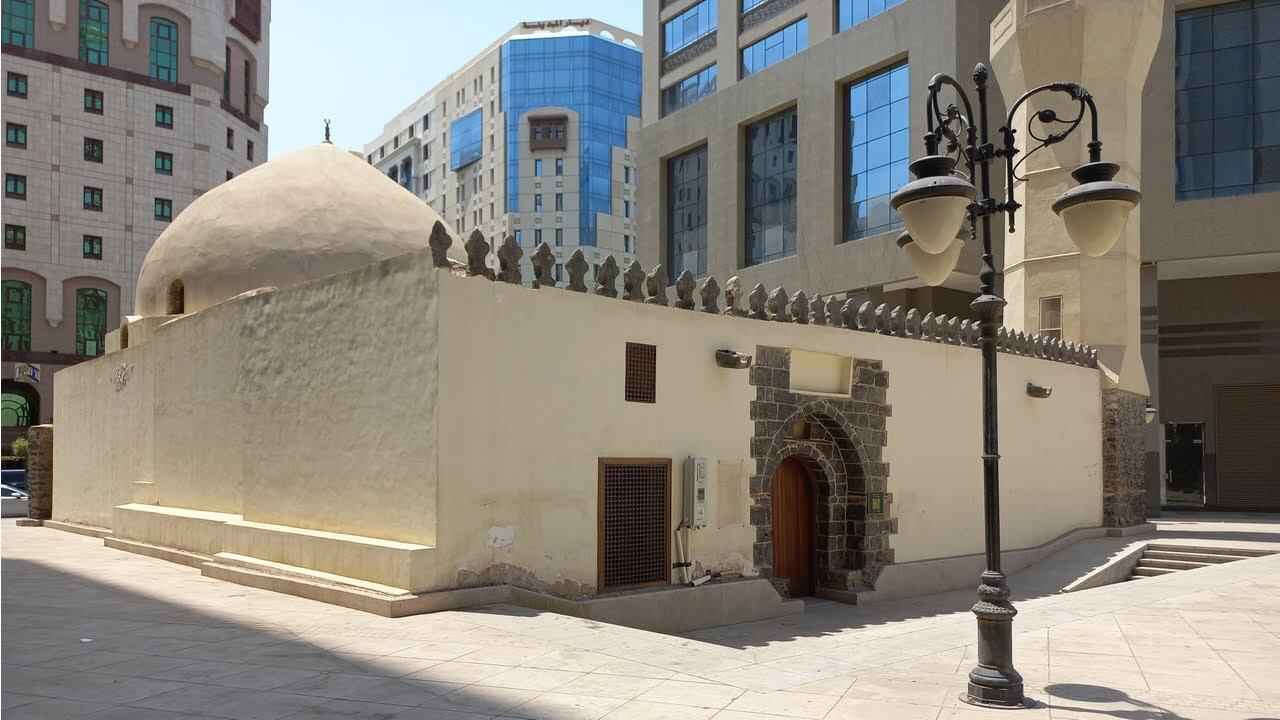
The mosque is modest in scale compared to Madinah’s larger landmarks, consisting of an open entrance and a single prayer hall:
- Entrance: An unroofed forecourt about 10 meters long and as wide as the mosque itself
- Prayer hall: Square in shape, built from basalt stone with a white lime-coated interior
- Dome: A single large dome, about 12 meters high, covering the prayer hall, with decorative work and a band of Quranic verses around the interior of the dome’s base
- Mihrab: Positioned at the center of the southern wall; the mosque has no minbar (pulpit)
- Minaret: About 15 meters tall, topped with a balcony
Architecturally, the exterior design of the dome is similar to that of the nearby Abu Bakr Mosque, another historic Madinah mosque associated with the first caliph — a detail that reflects the shared architectural language used across several of the small companion-named mosques restored during the same historical periods.
Can You Enter the Mosque? Visiting Information
According to Madinah’s official tourism information, Masjid Umar bin Al-Khattab can currently be viewed from the outside. This is a useful detail to know before planning a stop: visitors should treat it as a heritage landmark to photograph and appreciate from the exterior rather than a mosque where they can pray inside, unlike the larger, actively used mosques in the city. Because access arrangements at heritage sites can change, it’s sensible to confirm current visiting conditions locally before finalizing an itinerary.
Planning a Ziyarat Visit: What’s Nearby
Because of its central location, Masjid Umar bin Al-Khattab works well as one stop within a wider Ziyarat route rather than a standalone destination. Nearby points of interest include:
- Masjid al-Ghamamah — roughly the same short distance away, and often visited together with Masjid Umar
- Masjid an-Nabawi — about 133 meters away, making this an easy add-on for anyone already walking the central Haram area
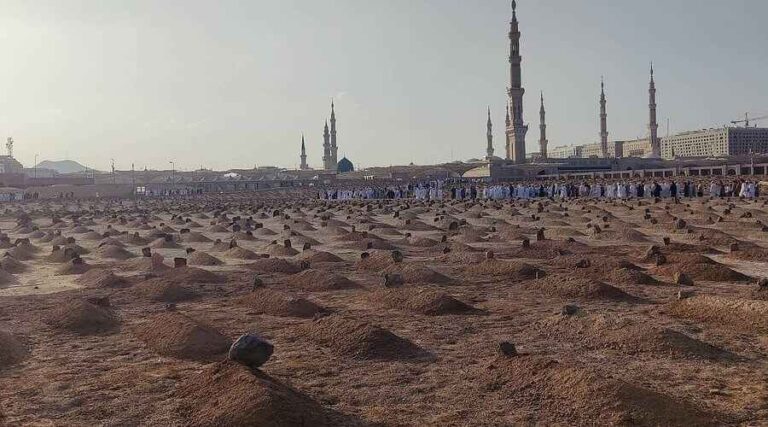
- Jannat al-Baqi — the historic cemetery located roughly a kilometer to the east
- Other central Madinah historical mosques, depending on the specific route a traveler or group is following
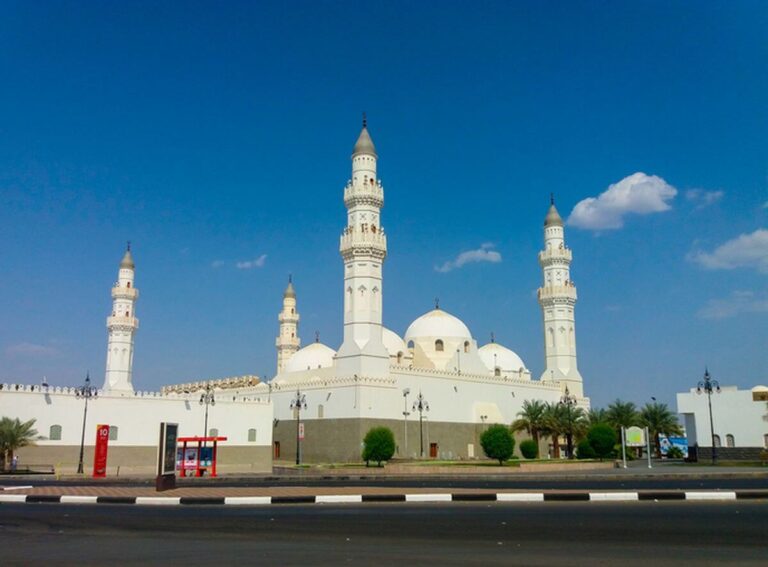
For visitors combining several of these central sites with sites further out — such as Quba Mosque, Mount Uhud, or the Qiblatain Mosque — it usually makes sense to treat the central-area mosques (Umar, Ghamamah, and similar sites) as a short walking segment, and to use transportation for the longer legs between areas of the city.
Getting There: Transportation Options
Because Masjid Umar bin Al-Khattab is close to Masjid an-Nabawi, many visitors simply walk over from their hotel or from the mosque area, especially if they’re already visiting Masjid al-Ghamamah nearby. Walking is often the most practical option for this specific stop.
Where private transportation becomes genuinely useful is in connecting this central-area visit with the wider Madinah Ziyarat route — sites like Quba Mosque, Mount Uhud, the Seven Mosques, or Qiblatain Mosque, which are spread further across the city and aren’t realistically covered on foot, particularly for families, elderly travelers, or groups working within a limited time window. A private Ziyarat taxi with hotel pickup can allow a group to combine a short walk to the central mosques with a longer multi-stop route to the outer historical sites, without depending on public transport schedules.
Visitors looking for private transportation can contact Madinah Ziyarat Taxi through WhatsApp at +966 57 4915 372 to ask about vehicle options, hotel pickup, and a customized Ziyarat itinerary that includes the central historical mosques alongside sites further from the Haram area.
Practical Tips for Visitors
- Time of day: Early morning or after Asr tends to be cooler and less crowded for walking around the central mosque area, especially in summer.
- Weather: Madinah’s summer heat can be intense; carrying water and wearing comfortable, breathable clothing is worthwhile for a walking stop like this one.
- Ramadan and Hajj season: Central Madinah gets significantly busier during Ramadan and the Hajj season, which can affect walking routes and timing around the Haram area — plan a little extra time.
- Photography and etiquette: As with any historic religious site, keep photography respectful and be mindful of other visitors, especially if worshippers are nearby.
- Mobility considerations: The site involves walking on uneven historic-area pavement in places, which is worth factoring in for elderly travelers or anyone with mobility needs — a private vehicle can reduce the amount of walking required between stops.
- Combine, don’t isolate: Given how close it is to Masjid al-Ghamamah and the Prophet’s Mosque, it rarely makes sense to visit Masjid Umar bin Al-Khattab as a single, separate trip — pairing it with nearby stops makes better use of the visit.
FAQs
1. What is Masjid Umar bin Al-Khattab?
It’s a historic mosque in central Madinah named after Omar ibn Al-Khattab, the second Rashidun caliph, built on a site historically used for Eid and rain-invoking prayers.
2. Where is Masjid Umar bin Al-Khattab located?
It’s in the Al-Manakhah area of central Madinah, about 133 meters from the Masjid an-Nabawi courtyard and close to Masjid al-Ghamamah.
3. Is there more than one mosque named after Omar in Madinah?
Yes. There is a separate Masjid Umar located southwest of Masjid an-Nabawi near Quba Road, so it’s worth confirming which mosque a particular source or map is referring to.
4. Can visitors go inside Masjid Umar bin Al-Khattab?
Based on official Madinah tourism information, the mosque can currently be viewed from the outside; it isn’t generally open for visitors to pray inside.
5. When was the mosque built?
Historical sources place its construction after 850 AH, though the current structure largely dates to the 13th century AH following restoration in 1266 AH. Exact early dates are treated as approximate.
6. Why is the mosque named after Omar ibn Al-Khattab?
Because he designated this specific spot within Al-Manakhah as an Eid prayer ground during his time as caliph, following a practice the Prophet ﷺ had used in the same general area.
7. What does the mosque look like?
It has an open unroofed entrance, a square basalt-stone prayer hall with a white lime interior, a 12-meter dome decorated with Quranic verse bands, and a 15-meter minaret. It has no minbar (pulpit).
8. How long does it take to visit Masjid Umar bin Al-Khattab?
Because it’s viewed from the outside, most visitors spend a short amount of time here — it’s usually combined with a stop at nearby Masjid al-Ghamamah rather than visited alone.
9. Is Masjid Umar bin Al-Khattab within walking distance of Masjid an-Nabawi?
Yes, it’s about 133 meters away, making it walkable for most visitors staying near the central Haram area.
10. What other sites are nearby?
Masjid al-Ghamamah is a short distance away, and Jannat al-Baqi is roughly a kilometer to the east. It can also be combined with a wider Ziyarat route to other historical mosques.
11. Can I book a private taxi to visit Madinah’s historical mosques, including this one?
Yes. Private Ziyarat taxi services, such as Madinah Ziyarat Taxi, can arrange multi-stop routes covering central mosques and sites further across the city.
12. Is private transportation useful for families or elderly travelers visiting Ziyarat sites?
It can be, particularly for reaching sites that are too far apart to walk, or for reducing the amount of walking required between stops for those with mobility considerations.
13. Can a Ziyarat taxi pick me up from my hotel?
Hotel pickup is a standard feature of private Ziyarat taxi services in Madinah; specific arrangements can be confirmed directly with the provider.
14. How do I arrange a Ziyarat route that includes Masjid Umar bin Al-Khattab?
You can contact a private Ziyarat taxi provider such as Madinah Ziyarat Taxi via WhatsApp to discuss a custom itinerary that includes central mosques and other historical sites.
15. Is Masjid Umar bin Al-Khattab associated with religious obligations during Umrah or Hajj?
No. Visiting it is a matter of historical and cultural interest, not a religious requirement of Umrah or Hajj.