Taxi from Northern Markaziyah Hotels to Madinah Ziyarat: Quba, Uhud and More
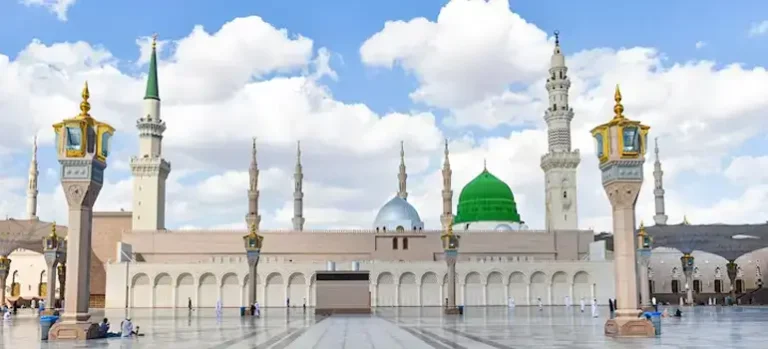
If your hotel is in the northern part of Markaziyah, the central hotel area around Masjid an-Nabawi, a private taxi is usually the simplest way to visit Masjid Quba, Mount Uhud and the other Ziyarat sites in one trip. Most of these sites are outside the walkable central area. One Madinah guide puts them at roughly 3 to 5 km from the central mosque area, and the free Haramain bus service does not connect them.
Before you go, agree four things with the driver: the pickup point, the list of stops, how long the driver will wait at each place, and the total price. Many visitors complete the main circuit in about half a day, but the real time depends on traffic, prayer times and how long you wish to stay at each site.
What Northern Markaziyah means for your Ziyarat trip
Markaziyah is the central hotel district around Masjid an-Nabawi. Hotels in the northern part are usually described as being on the Mount Uhud side of the Prophet’s Mosque. We could not find an official boundary for the northern part, so hotel descriptions differ. When you book, give the hotel name, the street, and the Haram gate you use most often, so the driver knows exactly where to find you.
The direction matters because the Ziyarat sites are spread around the city:
- Mount Uhud and the Martyrs of Uhud Cemetery are to the north.
- Masjid Quba is to the south.
- Masjid al-Qiblatayn and the Seven Mosques area are on the western side of the city.
A hotel on the north side is on the same side as Uhud, but Quba is on the opposite side of the city. That is why planning the order of your stops makes a real difference to how comfortable the day feels.
The main Ziyarat stops and where they are
Distances below are approximate and come from different published sources. They change depending on where you measure from, so treat them as a guide only.
| Site | Direction from the Prophet’s Mosque | Why visitors go |
|---|---|---|
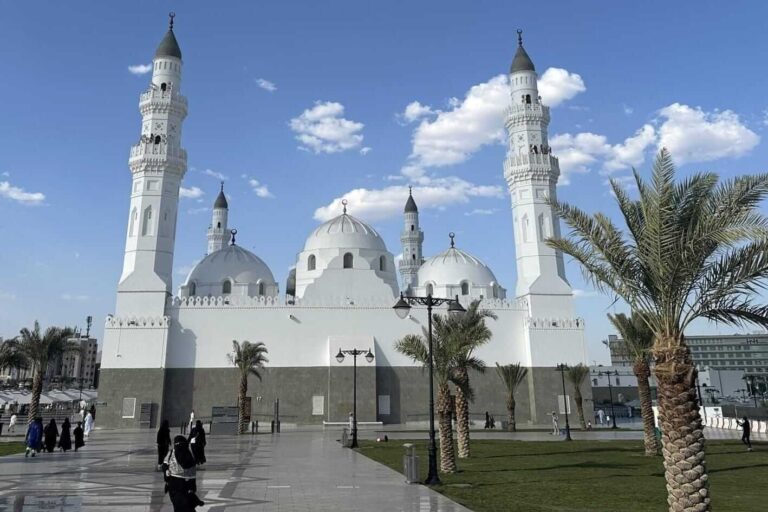
| Masjid Quba | South (commonly given as about 3.5 km) | Known as the first mosque built in Islam, after the Hijrah |
| Mount Uhud and the Martyrs’ Cemetery | North (commonly given as about 4 km to the foot of the mountain; the mountain itself stretches for several kilometres) | Site of the Battle of Uhud in 3 AH and the graves of martyrs |
| Masjid al-Qiblatayn | West or north-west, in the Khalidiyyah area (published distances range from about 2 km to 5 km) | Where the change of the qibla from Jerusalem to Makkah is remembered |
| Seven Mosques area | Western side of the city | Linked with the Battle of the Trench |
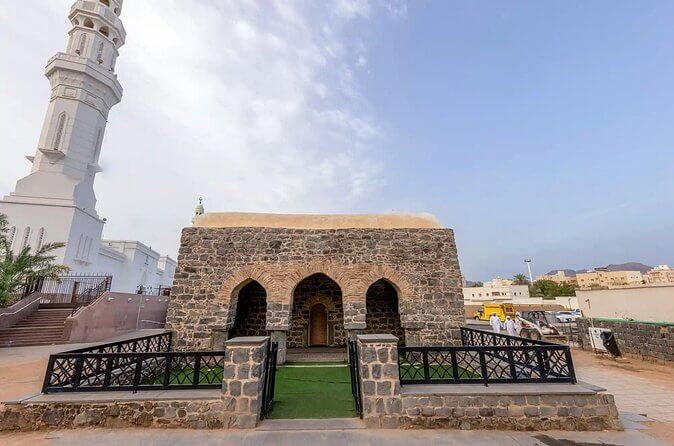
Masjid Quba
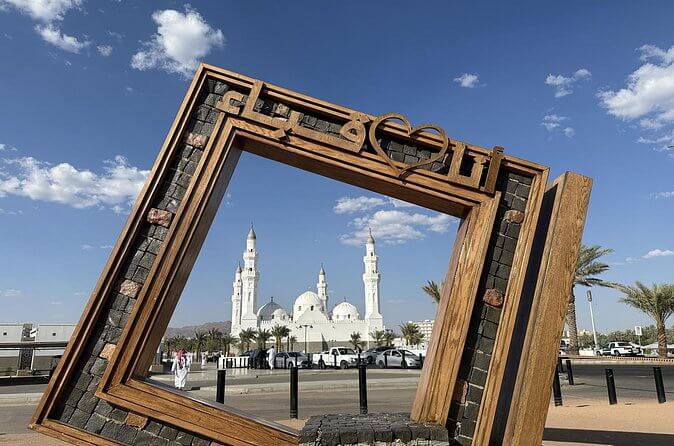
Masjid Quba was founded in 622 CE (1 AH), soon after the Prophet Muhammad ﷺ migrated from Makkah to Madinah. It is widely described as the first mosque built in Islam, and Surah At-Tawbah (9:108) is commonly connected with it. A narration in Sunan Ibn Majah, also quoted in the Saudi Ministry of Hajj and Umrah’s Madinah guide, speaks of a reward like Umrah for someone who purifies himself at home, comes to Quba and prays two rak’ahs. A visit to Quba is a recommended and much-loved act for visitors to Madinah. It is not part of the rites of Umrah or Hajj.
Mount Uhud and the Martyrs’ Cemetery
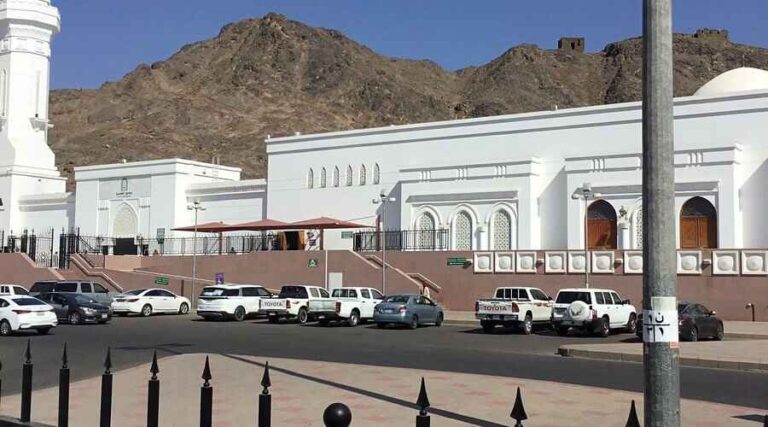
The Battle of Uhud took place in the third year after the Hijrah (around 625 CE). The foot of the mountain holds the cemetery of the martyrs of Uhud, including a number of the Prophet’s companions. The Saudi Press Agency describes Uhud as Madinah’s largest mountain, and visiting it remains a common part of a Ziyarat itinerary. Uhud is an open outdoor area, so sun, uneven ground and walking distance are the main practical points.
Masjid al-Qiblatayn
The name means Mosque of the Two Qiblas. It is remembered as the place connected with the change of prayer direction from Jerusalem to the Kaaba in Makkah, a moment referred to in Surah Al-Baqarah (2:144). The mosque has been renovated and expanded several times, and recent reports describe new visitor facilities around it.
Seven Mosques area
This area is associated with the Battle of the Trench (Khandaq). It is often added as a short stop when the route passes through the west of the city.
Private taxi or other ways to travel
There is no single best option. It depends on your group and how much flexibility you want.
| Option | Strengths | Things to consider |
|---|---|---|
| Pre-booked private taxi | Hotel pickup, your own pace, several stops in one trip, a driver who waits | Price should be agreed in advance; vehicle and availability vary |
| Hop-on hop-off bus | Fixed route covering major sites, you can get off and re-board | Follows its own schedule; you start from a stop rather than your hotel door |
| Ride-hailing or street taxi, leg by leg | Can be quick for a single short trip | Waiting for a return ride at each site; travellers report that street taxi prices can rise in busy seasons |
| Hotel or organised group tour | Fixed programme, often with commentary | Less flexibility on timing and stops |
For families, elderly visitors and anyone with limited time, a private taxi that waits at each site tends to be the least tiring option, because nobody needs to find a ride back from Uhud or Quba.
A suggested route and visit order
This is a planning suggestion, not a rule. The right order depends on prayer times, the weather and what matters most to your group.
Option A: Uhud first (good for the early morning or late afternoon). Start at Mount Uhud and the Martyrs’ Cemetery while it is cooler. Then continue to Masjid al-Qiblatayn and, if you wish, the Seven Mosques area, and finish at Masjid Quba before returning to your hotel. Published guides suggest early morning after Fajr or late afternoon after Asr as the more comfortable times for outdoor sites such as Uhud.
Option B: Quba first. Choose this if praying at Masjid Quba in a quieter hour is your priority. Some visitors report that it is calmer before the usual crowds arrive. Then travel north to Uhud, add Qiblatayn on the way, and return.
A simple way to decide:
- If the day will be hot, put the outdoor stop (Uhud) in the coolest hours.
- If prayer in Quba matters most to you, put Quba in the quietest hour you can.
- If you have elderly travellers, keep the longest walking stop for when everyone has the most energy.
Whichever order you choose, ask the driver to plan the route around the prayer times, so you are not caught between stops when the adhan is called.
Pickup from your hotel: what to share and confirm
Hotel pickup is one of the biggest conveniences of a private taxi, but the exact pickup spot near the Haram can depend on local traffic arrangements, and access can change, especially around prayer times. To avoid confusion:
- Share your hotel name, street and nearest Haram gate.
- Share your WhatsApp location if you can.
- Ask the driver to confirm the exact pickup point (hotel entrance or nearest accessible point) and the pickup time.
- Allow extra time around Fajr, Jumu’ah (Friday prayer) and the other main prayers, as traffic near the mosque is usually heavier then.
- Use a licensed taxi with a visible taxi number and driver ID. Official airport guidance also asks travellers to avoid unauthorised private vehicles.
Timing, weather and busy periods
- Time of day: Early morning and late afternoon are generally more comfortable for outdoor sites.
- Summer heat: Uhud can be very warm around midday. Carry water and wear comfortable shoes and light, modest clothing.
- Ramadan, Hajj season and peak Umrah periods: Roads and sites are usually busier, and some arrangements can change. Book earlier and allow more time.
- Fridays: Plan around Jumu’ah prayer.
- Opening hours: Mosque access is tied to prayer times and rules can change. Uhud’s open areas are generally accessible in daylight, but check current rules before you go.
Travel times depend on traffic, the time of day and the season, so we do not give a fixed duration here.
Choosing a vehicle
The best vehicle depends on how many people are travelling and how much luggage or mobility equipment they have. Passenger and luggage capacity should always be confirmed when you book.
- Sedan (for example, Toyota Camry): Suits a couple or a small family.
- SUV (for example, GMC Yukon): Suits families who want more space and comfort.
- Family van or group vehicle (for example, Hyundai Staria or Toyota Hiace): Suits larger families and groups travelling together.
Families, elderly visitors and mobility needs
- Tell the driver in advance if anyone uses a stick, walker or wheelchair so the vehicle and stops can be planned. If wheelchair access is needed, ask about it before booking, as availability varies.
- Ask the driver to wait close to the entrance of each site where access allows.
- Uhud has uneven ground, so comfortable footwear matters.
- Build in rest time and keep water in the vehicle.
- With children, keep the first stop short and plan snack or rest breaks.
Visiting respectfully
These are historic and religious places, and many people come to pray and reflect. Dress modestly, keep your voice low, follow signs and staff instructions, and be mindful of other visitors when taking photographs. At the cemetery, observe the rules shown on site. If you are unsure about etiquette, ask a knowledgeable person or follow official guidance.
How pricing works (and why we do not list one fixed fare)
Fares for Ziyarat trips depend on the vehicle, the number of stops, waiting time, the season and the pickup time. Published prices from different providers vary, so treat any figure you see online as indicative only. To compare offers fairly, ask for the total price per vehicle, the list of included stops and the waiting time. Check whether the quote is per vehicle or per person, and confirm it before you set off.
Booking a private Ziyarat taxi
Visitors looking for private transportation can contact Madinah Ziyarat Taxi through WhatsApp at +966 57 4915 372 to ask about availability, vehicle options, pickup arrangements, or a customised Ziyarat itinerary. You can also find more information at https://madinahziyarattaxi.com/.
When you message, include your hotel name and area, the number of passengers, any luggage or mobility needs, your preferred date and time, and which sites you want to visit.
FAQs
1. What is Madinah Ziyarat?
It means visiting the historic and religious sites in and around Madinah, such as Masjid Quba, Mount Uhud and Masjid al-Qiblatayn. Ziyarat is not a rite of Umrah or Hajj.
2. How do I get from a Northern Markaziyah hotel to Quba and Uhud?
Most visitors use a private taxi, because these sites are outside the walkable central area. The hop-on hop-off bus is another option if you prefer a fixed route.
3. Which sites are commonly visited on a half-day Ziyarat?
Masjid Quba, Mount Uhud with the Martyrs’ Cemetery, Masjid al-Qiblatayn, and often the Seven Mosques area.
4. How long does Madinah Ziyarat take?
Many visitors complete the main circuit in about half a day. The real time depends on traffic, prayer times and how long you stay at each site.
5. Which should I visit first, Quba or Uhud?
From the north side, Uhud first works well in cool hours. If praying in a quiet Quba matters most, go there first. See the route section for a simple way to decide.
6. Can a taxi pick me up from my hotel?
Yes, hotel pickup can be arranged with a private taxi service. Confirm the exact pickup point and time in advance, as access near the Haram can vary.
7. Can I visit several Ziyarat sites in one trip?
Yes. A multi-stop private trip lets you move between sites without waiting for public transport schedules.
8. Is private transport suitable for families and elderly visitors?
Often yes, because the driver can wait at each site and you avoid searching for a ride back. Tell the driver about any mobility needs before booking.
9. What vehicle is suitable for a group?
A family van or group vehicle is usually considered for larger groups. Confirm passenger and luggage capacity when you book.
10. How much does a Ziyarat taxi cost?
It varies by vehicle, stops, waiting time, season and pickup time. Ask for the total price per vehicle before you travel.
11. When is the best time of day for Ziyarat?
Early morning after Fajr and late afternoon after Asr are generally more comfortable, especially for outdoor sites like Uhud.
12. Is Ziyarat busier in Ramadan or Hajj season?
Usually yes. Book earlier, allow more time, and expect arrangements around prayer times to change.
13. Can I customise my Ziyarat route?
Yes. Tell the driver which sites matter most and how much time you want at each.
14. How do I contact Madinah Ziyarat Taxi?
Message WhatsApp +966 57 4915 372 or visit https://madinahziyarattaxi.com/.