Benefits of Zamzam Water: Spiritual, Health and Islamic Guide
For millions of Muslims visiting Saudi Arabia, drinking Zamzam water is a meaningful part of the pilgrimage experience. Its importance goes far beyond quenching thirst. Zamzam is connected to the story of Hajar and her son, Prophet Ismail (peace be upon him), and occupies a special place in Islamic history and tradition.
Many travelers want to understand the benefits of Zamzam water, its spiritual significance, mineral composition, and the correct way to drink it. Others want practical information about where it is available in Makkah and Madinah, or whether they can take some home.
This guide explains those questions using Islamic references, published scientific research and official Saudi visitor information.
What Is Zamzam Water?
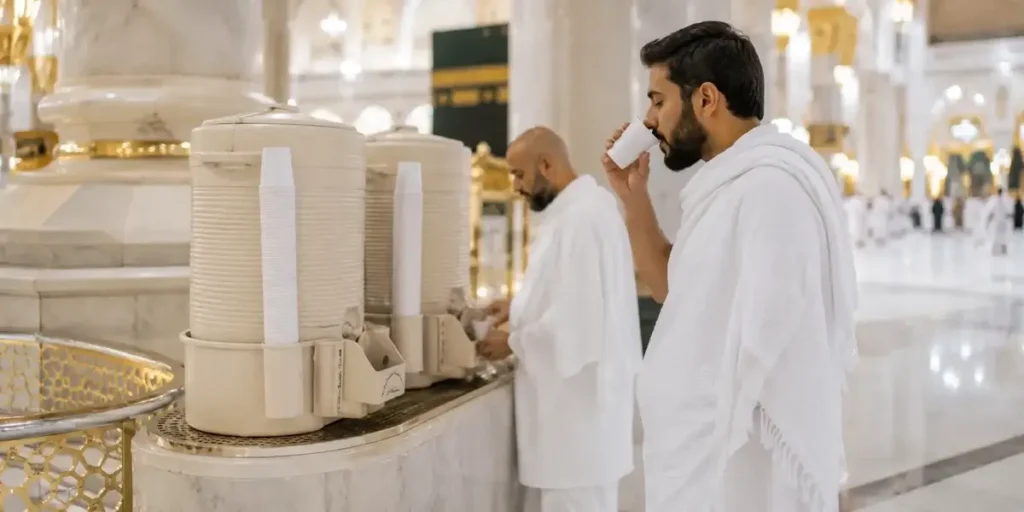
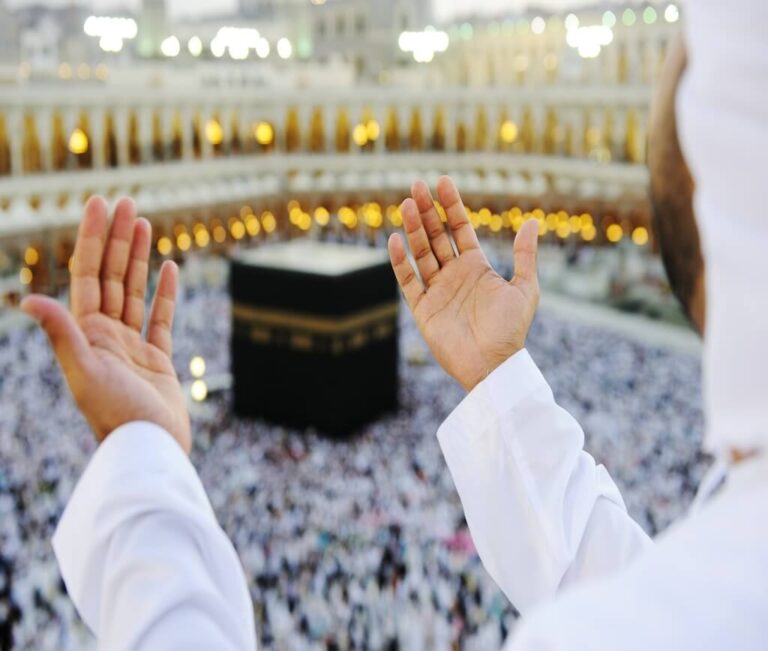
Zamzam water comes from the historic Zamzam Well within Masjid al-Haram, the Grand Mosque in Makkah, Saudi Arabia. The well is situated close to the Kaaba and has been associated with Islamic pilgrimage for centuries.
Muslims regard Zamzam as blessed because of its connection to Prophet Ismail (AS), his mother Hajar, and the mercy of Allah.
Today, Zamzam is distributed through facilities serving visitors to the Two Holy Mosques. Its religious meaning and its role in helping pilgrims remain hydrated make it an important part of many Muslim travelers’ experiences.
The History of Zamzam Water in Islam
The story of Zamzam begins with Prophet Ibrahim (AS), his wife Hajar, and their young son Ismail (AS).
According to Islamic tradition, Prophet Ibrahim left Hajar and Ismail in the valley of Makkah in obedience to Allah’s command.
As their supply of water ran out, Hajar searched desperately for help. She moved between the hills of Safa and Marwah, looking for water or someone who could assist her.
Allah provided water through the miraculous emergence of Zamzam near Ismail.
This event became a lasting reminder of trust in Allah, perseverance during hardship, and divine mercy.
The story is preserved in Islamic tradition, including Sahih al-Bukhari 3364. The historical significance of the well is also explained by Saudi authorities responsible for the Two Holy Mosques.
The Connection Between Zamzam and Sa’i
During Hajj and Umrah, pilgrims perform Sa’i by walking between Safa and Marwah.
This act commemorates Hajar’s search for water and reflects her determination and reliance upon Allah.
Understanding this history helps pilgrims appreciate why Zamzam holds such deep emotional and religious significance.
What Are the Main Benefits of Zamzam Water?
The benefits of Zamzam water can be understood in three categories: spiritual significance, hydration, and its natural mineral composition.
| Benefit | Explanation |
|---|---|
| Spiritual significance | Zamzam is regarded as blessed in Islamic tradition |
| Connection with Islamic history | It reminds Muslims of Hajar, Ismail and reliance upon Allah |
| Hydration | As drinking water, it helps replenish fluids |
| Mineral content | Contains naturally occurring minerals, including calcium and magnesium |
| Supplication and intention | Islamic narrations connect drinking Zamzam with sincere intention |
| Pilgrimage experience | Provides a meaningful connection to worship and Islamic heritage |
1. Zamzam Water Is Considered Blessed in Islam
Among the most important benefits associated with Zamzam is its spiritual status.
A narration recorded in Sahih Muslim describes Zamzam as blessed and nourishing. Islamic scholars have discussed its special merits through several narrations concerning the Prophet Muhammad (peace be upon him).
For believers, drinking Zamzam can be an opportunity to remember Allah, express gratitude, and make sincere supplication.
2. Zamzam Water Encourages Reflection and Gratitude
The story of Hajar illustrates perseverance in a situation that appeared hopeless.
When pilgrims drink Zamzam, many reflect on the importance of patience, faith, and trust in Allah.
This reflective experience is one of the reasons the water remains so meaningful to Muslims around the world.
3. Zamzam Water Helps with Hydration
Zamzam is drinking water. Like other safe drinking water, it contributes to normal hydration.
This is especially relevant during Hajj and Umrah, when pilgrims may spend long periods walking, praying, or visiting sites in warm weather.
Drinking enough water supports normal body functions, including temperature regulation.
However, Zamzam should not be considered a substitute for sufficient food, medical treatment, or ordinary hydration needs.
4. Zamzam Water Contains Natural Minerals
Zamzam water contains several naturally occurring minerals.
A 2022 study published in the Journal of Trace Elements and Minerals analyzed ten samples collected from Zamzam outlets in Masjid al-Haram.
The researchers reported the presence of calcium, magnesium, sodium and fluoride, among other elements.
The mineral composition is scientifically measurable, but the presence of these minerals does not establish that drinking Zamzam treats disease.
5. Zamzam Water Has Special Significance During Hajj and Umrah
For pilgrims, drinking Zamzam links the present-day journey with the history of Makkah and the life of Prophet Ismail (AS).
Pilgrims often drink it during their visits to Masjid al-Haram and share it with family members where transport regulations permit.
Its significance comes primarily from Islamic belief and tradition rather than from commercial or medical claims.
What Does the Hadith Say About Zamzam Water?
Several Hadith narrations discuss Zamzam.
Zamzam as Blessed and Nourishing
Sahih Muslim 2473 contains a narration concerning the nourishing nature of Zamzam.
This narration forms part of the traditional Islamic understanding of its special status.
Zamzam Water and Sincere Intention
A Hadith recorded in Sunan Ibn Majah 3062 discusses drinking Zamzam according to one’s intention.
Muslims commonly understand this narration as encouragement to drink Zamzam while making sincere dua and placing their trust in Allah.
It should not be interpreted as a scientifically guaranteed medical result.
The Prophet Muhammad (PBUH) Drank Zamzam Water
Sahih Muslim 2027d records that Ibn Abbas served Zamzam water to the Prophet Muhammad (peace be upon him), who drank it while standing.
This establishes an important historical example while also showing that drinking Zamzam is not restricted to a single posture.
Scientific Research on Zamzam Water
Religious significance and scientific evidence answer different questions.
Islamic sources explain why Muslims regard Zamzam as blessed. Scientific studies can investigate its chemical composition, water quality and possible biological effects.
What Minerals Are Found in Zamzam Water?
One published study reported the following concentrations in samples collected at Masjid al-Haram.
| Mineral | Reported concentration |
|---|---|
| Calcium | Approximately 93 mg/L |
| Magnesium | Approximately 42 mg/L |
| Sodium | Approximately 210 mg/L |
| Fluoride | Approximately 0.74 mg/L |
Source: 2022 mineral-composition study. These are sample measurements, not fixed values for every batch of Zamzam water. ScienceDirect
Calcium and magnesium are minerals involved in normal physiological functions. Sodium is an electrolyte involved in fluid balance.
The amounts present in drinking water do not automatically produce special therapeutic effects.
Can Zamzam Water Cure Diseases?
Some Islamic narrations describe healing among the virtues of Zamzam.
From a medical perspective, however, there is insufficient high-quality clinical evidence to establish Zamzam as a proven treatment for specific diseases.
Laboratory research and early studies may investigate possible effects, but their findings should not be presented as guaranteed treatment outcomes.
People with medical conditions should continue prescribed care. Anyone who needs to restrict sodium or fluid intake should follow their clinician’s advice when choosing drinking water.
Is Zamzam Water Safe to Drink?
Official Zamzam distribution is subject to quality-management measures.
Saudi authorities describe laboratory testing, cleanliness procedures and water-treatment systems supporting Zamzam distribution.
For visitors, the practical approach is to use official dispensers and authorized distribution points rather than purchasing water from unverified sellers.
How to Drink Zamzam Water
Muslims commonly approach drinking Zamzam with gratitude, respect and sincere intention.
A simple approach is to:
- Begin by saying Bismillah (in the name of Allah).
- Drink respectfully and without unnecessary waste.
- Make a personal dua for beneficial and permissible matters.
- Thank Allah after drinking.
No particular English or Arabic wording needs to be invented or presented as mandatory.
Drinking Zamzam is a meaningful act, but travelers should avoid treating optional etiquette as a compulsory pilgrimage requirement.
Where Can Pilgrims Find Zamzam Water?
Zamzam Water in Makkah
Zamzam originates from the well at Masjid al-Haram in Makkah.
Visitors can access drinking water through designated distribution points within the Grand Mosque.
The exact locations and arrangements may change with crowd-control measures, maintenance and pilgrimage seasons.
Zamzam Water in Madinah
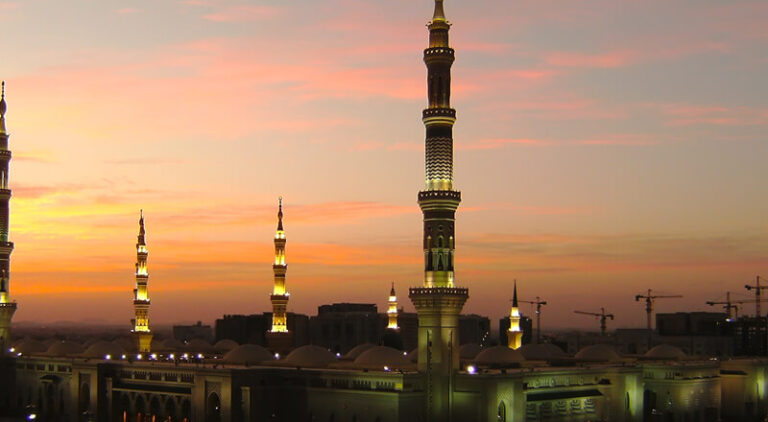
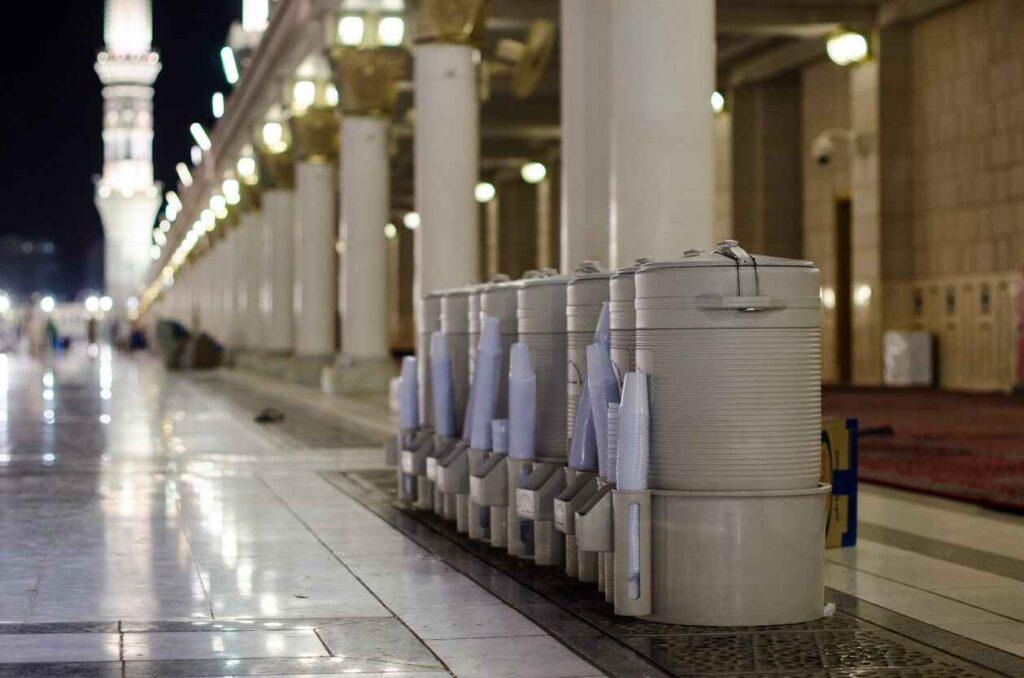
Although the Zamzam Well itself is in Makkah, Zamzam water is also supplied to visitors at Masjid an-Nabawi, the Prophet’s Mosque in Madinah.
The official Prophet’s Mosque administration describes a dedicated system for receiving, testing, storing and distributing Zamzam.
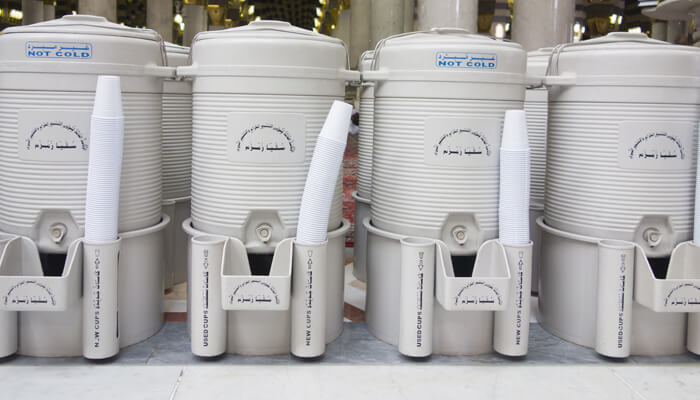
Visitors may encounter cooled and uncooled water containers in designated mosque areas.
This is especially helpful for pilgrims traveling to Madinah after performing Umrah in Makkah.
The availability of particular dispensers or filling facilities may change, so visitors should follow current mosque guidance.
Can You Take Zamzam Water Home?
Many international pilgrims wish to take Zamzam water home for family members.
This is possible under applicable airport and airline rules, but travelers should check requirements before departure.
At King Abdulaziz International Airport in Jeddah, official guidance describes designated Zamzam distribution points, standardized packaging and a one-container-per-passenger system.
It also explains that loose or improperly packaged bottles may not be accepted.
Before traveling, confirm:
- Whether Zamzam is available at your departure airport
- The permitted container size and quantity
- Your airline’s baggage restrictions
- Whether special packaging or separate check-in is required
- Any restrictions imposed by your destination country
Do not assume the rules at Jeddah Airport are identical to those at Prince Mohammad bin Abdulaziz International Airport in Madinah.
Visiting Madinah After Umrah: Practical Travel Tips
Pilgrims frequently combine a visit to Makkah with time in Madinah.
Madinah offers opportunities to pray at Masjid an-Nabawi and visit important locations connected with early Islamic history.
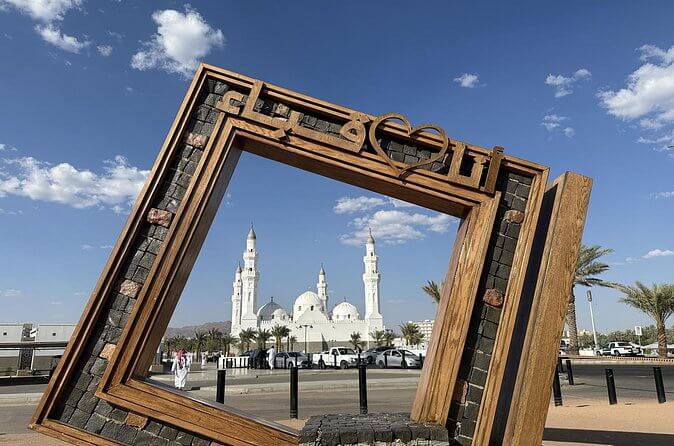
Popular historical sites include Quba Mosque, Mount Uhud, the Uhud Martyrs’ Cemetery and Masjid al-Qiblatain.
Travelers who are staying near the Prophet’s Mosque can plan separate Ziyarat visits around their prayer schedules, weather conditions and family requirements.
For families, elderly visitors and groups, private transportation can make it easier to reach multiple sites without arranging a different vehicle for every stop.
Private Ziyarat Transportation in Madinah
Visitors planning a Madinah sightseeing or Islamic heritage trip can contact Madinah Ziyarat Taxi to discuss hotel pickup, vehicle arrangements and a customized Ziyarat route.
Contact on WhatsAppVisit Official Website WhatsApp: +966 57 4915 372. The service provides transportation for Madinah visitors; it is not presented as a supplier of Zamzam water.
Conclusion: Why Is Zamzam Water Special?
The importance of Zamzam water lies first in its unique place in Islamic history.
From the perseverance of Hajar to the experience of pilgrims visiting Makkah and Madinah today, Zamzam remains a symbol of faith, gratitude and divine mercy.
It also serves the ordinary purpose of providing hydration and contains naturally occurring minerals that researchers can measure.
By understanding both its religious significance and the limits of scientific evidence, visitors can appreciate Zamzam without relying on exaggerated health claims.
For those preparing for Hajj, Umrah or a visit to Madinah, knowing where Zamzam is available and how to transport it can make the journey easier and more meaningful.
FAQs
1. What are the main benefits of Zamzam water?
Zamzam water is considered blessed in Islamic tradition. It provides hydration, contains naturally occurring minerals and reminds Muslims of the story of Hajar and Prophet Ismail (AS). Its spiritual significance is distinct from scientifically established health effects.
2. Why is Zamzam water important in Islam?
Zamzam is associated with Allah providing water for Hajar and Ismail in Makkah. Its importance is also supported by Hadith narrations discussing its blessings and special status.
3. Does Zamzam water have healing properties?
Islamic narrations discuss Zamzam in connection with healing. However, modern clinical research has not established Zamzam as a proven treatment for particular diseases.
4. Is Zamzam water mentioned in the Quran?
The name Zamzam is not explicitly mentioned in the Quran. Its origin and virtues are discussed in Hadith and Islamic historical traditions.
5. Can I drink Zamzam water every day?
Zamzam can be consumed as drinking water. People who have medical restrictions involving sodium, minerals or fluid intake should follow medical advice.
6. What minerals are present in Zamzam water?
Published testing has identified calcium, magnesium, sodium, fluoride and other naturally occurring elements. Concentrations can vary between samples.
7. What dua should I read when drinking Zamzam?
Muslims may make sincere personal supplications for beneficial matters, such as guidance, knowledge and well-being. There is no need to invent a compulsory wording.
8. Should Zamzam water be drunk while standing or sitting?
Sahih Muslim records that the Prophet Muhammad (peace be upon him) drank Zamzam while standing. Drinking respectfully is more important than making an unsupported claim that only one posture is permitted.
9. Where is the Zamzam Well located?
The Zamzam Well is within Masjid al-Haram in Makkah, Saudi Arabia, near the Kaaba.
10. Is Zamzam water available at Masjid an-Nabawi in Madinah?
Yes. The Prophet’s Mosque has an official Zamzam water distribution system. Visitors should follow the current guidance for the designated drinking areas.
11. Can I take Zamzam water on an international flight?
Depending on the airport, airline and destination-country rules, travelers may be able to transport officially packaged Zamzam water. Check the permitted quantity and packaging requirements before departure.
12. Is Zamzam water different from ordinary drinking water?
Zamzam has a particular mineral composition and religious significance. Its composition can be tested scientifically, while its spiritual importance comes from Islamic tradition.
13. Is Zamzam water only for Hajj and Umrah pilgrims?
No. Muslims may drink Zamzam outside the pilgrimage period. Access to official distribution facilities depends on location and applicable arrangements.
14. Can children and elderly visitors drink Zamzam water?
Generally, healthy children and adults may drink safely supplied Zamzam as drinking water. Infants and people with medical dietary restrictions may require individualized guidance.
15. Can I combine a Madinah Ziyarat trip with a visit to Masjid an-Nabawi?
Yes, visitors can plan their time at the Prophet’s Mosque and their travel to nearby historical sites separately. Transportation providers can help arrange routes around prayer times and other visitor needs.